Showing 120 results

Archival description
11 results with digital objects Show results with digital objects
AR_0001 · 1870 - 1940

These objects, linked to a period of approximately 1870-1940, offer a glimpse into the subtle influence of colonial oversight. Field spirits were crafted to protect women and children, homes, crops, domestic animals, and providers (hunters) and also displayed warnings to those venturing onto protected lands, fields, homes, or pilfering from the property owner. The reliance on such objects indicates that longstanding conversion to Christianity among the Fante did not replace traditional beliefs about the security of homes, crops, domestic animals, and people.

These examples of field spirits are rare because they were tools, not created to be objects of art, but crafted to offer specific protection and security for the people who placed them in the fields. Environmental exposure and insects, particularly termites, destroy wooden objects in West Africa very quickly. It is precisely because such field spirits were normally left in the fields that very few remain.

Nana Araba Apt
History of FAMU
Meek-Eaton Archival Collection AR_0007

For more than 130 years, Florida A&M University has served the citizens of the State of Florida and the nation by providing preeminent educational programs...programs that were the building blocks of a legacy of academic excellence with caring. FAMU, “Florida’s Opportunity University,” is committed to meeting the challenges and needs of future generations.

In 1884, Thomas Van Renssaler Gibbs, a Duval County educator, was elected to the Florida legislature. Although his political career ended abruptly because of the resurgence of segregation, Representative Gibbs successfully orchestrated the passage of House Bill 133 in 1884. This bill established a white normal school in Gainesville and a school for African Americans in Jacksonville. The bill passed, creating both institutions; however, the state decided to relocate the school for African Americans to Tallahassee.

After the bill’s passage, FAMU was founded on October 3, 1887. It began classes with 15 students and two (2) instructors. Thomas DeSaille Tucker (1887-1901), an attorney from Pensacola, was chosen as the first president. Former State Representative Gibbs joined Mr. Tucker as the second faculty member.

In 1891, the College received $7,500 under the Second Morrill Act for agricultural and mechanical arts education. The State Normal College for Colored Students became Florida’s land grant institution for African Americans, and its name was changed to the State Normal and Industrial College for Colored Students.

In 1905, the management of the College was transferred from the Board of Education to the Board of Control. This significant event officially designated the College as an institution of higher education.
In 1909 the name was changed from The State Normal College for Colored Students to Florida Agricultural and Mechanical College for Negroes (FAMC). The following year, with an enrollment of 317 students, the college awarded its first degrees.

President Nathan B. Young (1901-1923) directed the growth of the College to a four-year degree-granting institution, despite limited resources, offering the Bachelor of Science degree in education, science, home economics, agriculture, and mechanical arts.

Under the administration of John Robert Edward Lee Sr. (1924-1944), the College acquired much of the physical and academic image it has today. More faculty were hired, courses were upgraded, and accreditation was received from several state agencies. By the end of Lee’s term, FAMC had 812 students and 122 staff members.

In 1949, under William H. Gray Jr. (1944-1949), expansion and reorganization continued. The College obtained an Army ROTC unit, and student enrollment grew to more than 2,000.

FAMU Hospital Collection
Meek-Eaton Archival Collection AR_0007_007 · Collection

The Florida A&M University Hospital Collection documents the establishment, development, and administration of the Florida A&M College (FAMC) Hospital, later known as the Florida A&M University (FAMU) Hospital. Spanning the mid-twentieth century, this collection provides insight into the critical role the hospital played in serving the African American community during the era of segregation, when access to quality healthcare for Black patients was severely limited in the South.

The materials within this collection highlight the planning and funding efforts that led to the hospital’s creation, including correspondence, financial records, and reports related to state appropriations, community support, and institutional advocacy. Documentation of the building and expansion of the hospital illustrates the physical and infrastructural development of the facility, reflecting broader efforts to improve healthcare access and medical education opportunities for African Americans in Florida.

Additionally, the collection contains administrative records that detail the hospital’s operations, governance, and staff organization. These records may include internal memoranda, policy documents, personnel files, and reports that provide insight into the day-to-day management of the institution. Collectively, these materials offer valuable historical context on the intersection of healthcare, education, and racial inequality, and demonstrate the significance of FAMU Hospital as both a medical facility and a training ground for African American healthcare professionals.

FAMU Hospital Collection
AR_0007_007 · 1931 - 1981

Location: R.4.A.4.1.1

The FAMU Hospital first started in 1911 as a sanitorium supervised by Nurse Virginia Hilyer. For many years this clinic served the student population and when an annex was added to the hospital in 1922 services were opened to the larger Tallahassee community, with services provided by doctors from all over the city to all ethnicities. African American physicians in Tallahassee also served at the hospital including, Drs. William G. Gunn, Alpha Omega Campbell, and L.H.B. Foote.

It was under L. H. B. Foote's directorship that the first annual Medical Clinic was hosted on campus in 1926. The Medical Clinic was created to host informational presentations and networking between medical professionals and education groups and later fused with Florida A&M Clinical Association. The clinical association's focus on sharing knowledge, resources, and training opportunities to medical professionals throughout Florida, Georgia, and Alabama added to the overall goal of getting modern medical care to Black patients.
The 1930s saw several initiatives blooming at the campus hospital; continued expansions to the hospital, the campaign to add a nursing training facility, and partnerships with the Florida State Board of Health to host midwife training workshops all created an air of growth, advancement, and modernity. It took twenty ear and two university presidents (J.R.E. Lee and George W. Gore) to establish the full hospital and nurse training unit on the basis of the already existing hospital that would serve African Americans from Tallahassee and surrounding counties.

It took federal grants, support from the Tallahassee City Commission, and a capital campaign that included donations from various civic leagues and from a stymied effort to build a Black hospital in Jacksonville to gather the $2,000,000 needed for the facility but finally it was done. The grand opening was opening liberally celebrated.

Through the 1960s, the FAMU Hospital continued to serve the community but advancements in civil rights for African Americans had a surprising adverse affect--in the effort to integrate both Tallahassee Memorial Hospital and FAMU Hospital both institutions were issued orders to integrate, which should not have been a problem for FAMU Hospital since it had always employed both Black and White doctors and been open to all patients. However, withdrawal of state and federal financial support for the hospital and accusations of mismanagement of funds began to compromise it's efficacy and by the end of the decade plans were already in motion for its closure. The hospital officially closed in 1971 and in 1981 the building housing the hospital was remodeled and rededicated as the Foote-Hilyer Administration Building, containing the University's administrative offices and Student Health Services.

This collection comprises primarily correspondence, reports, and publications of the FAMU Hospital Fund Committee--tasked with raising and organizing funds for the hospital expansion of 1951, and administrative records of the Hospital Advisory Board--tasked with governing the FAMU Hospital during its existence from 1951 to 1971. Much of the correspondence is to or from Dr. George W. Gore, FAMU's eighth University President. Other figures of note are then-Senator Leroy Collins, who served as the Chairman of the Advisory Board; Dr. LH.B. Foote who also served on the Hospital Advisory Board. Other organizations and offices whose activities are recorded in this collection are FAMU Clinical Association; the Board of Regents; the Board of Control; Leon County; and the City of Tallahassee as it relates to the establishment, management, and dissolution of the FAMU Hospital.

Some of the significant topics represented in these files are the complexities of desegregation and integration; Black hospital management; public health; nurse training and education; professional development; fundraising.

Items were arranged in series by type of communication object, sorted into folders chronologically, and each series arranged alphabetically. Attachments are listed alphanumerically starting with the item number of the document they were originally attached to. All hardware was removed and documents sleeved. Some documents will require flattening, cleaning, and other conservation efforts.

Meek-Eaton Archival Collection AR_0012 · Collection

Location: AC.2.A.1.6.3 - AC.2.A.2.3.1; AC.3.B.3.3.1 - AC.3.B.3.3.2; AC.8.B.1.2.3 - AC.8.B.1.3.2

In 1975, James N. Eaton spearheaded the effort that ultimately gave rise to the creation of FAMU’s Black Archives. By 1976, the ‘Black Archives Research Center and Museum’ came into existence, and Eaton was recognized and appointed as its inaugural archivist, curator, and director.

For the next three decades, he helped amass a collection of memorabilia and printed records that now comprise one of the region’s most extensive collections of first-source material relating to the history, culture and contributions of people of African descent living in the United States.

James Eaton constructed in 1976 the first exhibits, using historical memorabilia from his own family. Afterward, he petitioned the university and community members to contribute historical material to the repository. Ilis call was answered by the first Black Archives donors and volunteers, who included: Donald Hill, Frank Pinder, John F. Matheus, and a host of other individuals and groups. Thus, the Research Center was chartered in 1976 and was officially opened in 1977.

The Rosewood Massacre Papers
Meek-Eaton Archival Collection MS_0001 · Collection · 1900 - 1996

Location: AC.6.B.2.4.7-AC.6.B.3.4.4

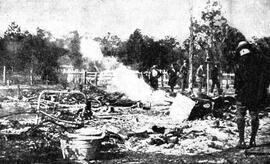
The Rosewood Massacre was a racially motivated attack on the predominantly African American town of Rosewood, Florida, in January 1923. Sparked by false accusations and fueled by racial tensions under Jim Crow segregation, white mobs destroyed homes, churches, and businesses, forcing residents to flee and permanently abandon the town. For decades, the event remained largely suppressed in public memory until renewed attention in 1982 by journalist Gary Moore prompted survivors and descendants to seek justice. Their efforts led to a state investigation and compensation legislation, marking one of the first instances of reparations for racial violence in the United States.

Archival Description:
The Rosewood Massacre Papers Collection spans 35 boxes with materials dating from 1900 to 1996 and documents the historical, legal, and commemorative efforts surrounding the 1923 massacre. The collection includes narrative reports, multiple versions of documented histories, survivor affidavits, administrative files, correspondence, interview transcripts, handwritten notes, vital records such as birth certificates, census records including the 1920 U.S. Census, property records such as Levy County deed indexes, and materials related to claims verification.

Folders within the collection contain complete narrative reports and reproduced copies used for research, review, and preservation; affidavits from survivors including Bertha Fagin, Ivory T. Fuller, Vera G. Goins Hamilton, Thelma Hawkins, and Dorothy G. Hosey; correspondence from agencies such as the Florida State Department of Health and Rehabilitative Services and Offices of Vital Statistics; as well as administrative communications, genealogical documentation, and evidentiary records supporting compensation claims.

Collectively, these materials document both the historical reconstruction of the Rosewood Massacre and the legal and administrative processes undertaken to verify survivors, establish lineage, and secure restitution.

Meek-Eaton Archival Collection MS_0002 · File · 1938 - 1984

Location: AC.2.A.3.3.1 - AC.2.A.3.5.2

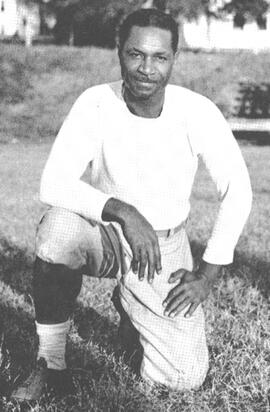
Born April 11, 1903 in Dayton, Tennessee, Alonzo S. "Jake" Gaither was head football coach of the FAMC Rattlers from 1945 to 1969. During his 25-year tenure, Gaither compiled a record of 203 wins, 36 losses, and 4 ties - for a winning percentage of .844, the highest for any college coach of his time, Black or white, with 200 victories.

Forty-two student athletes under Gaither's coaching went on to play in the National Football League including: "Bullet" Bob Hayes, a star wide receiver for the Dallas Cowboys who also earned two gold medals for track during the 1964 Summer Olympics in Tokyo; Willie Galimore, an acclaimed running back with the Chicago Bears; Ken Riley, a defensive back with the Cincinnati Bengals; and Robert Paremore, a halfback with the St. Louis Cardinals. Under his leadership, the Rattlers won 6 Negro Collegiate Football championships. Recognizing the dynamic impact of his coaching career, Gaither was inducted into the National Football Foundation Hall of Fame in 1975.

Gaither retired on August 31, 1973. He died February 18, 1994, at the age of 90. In Tallahassee, a FAMU gymnasium, community playground, public golf course, recreation center, street, and neighborhood are named in his honor. His private home, located at 212 Young Street, which he shared for more than 40 years with his late wife, Sadie (an English professor at Florida A&M University), has been preserved as a cultural center and museum to honor the Gaithers, the people of Tallahassee, the State of Florida, the nation, and the world. A historic marker was also installed in the home’s hilltop yard and the home listed on the National Register of Historic Places.

Jake Gaither
MS_0003

Location: AC.3.B.3.1.2- AC.3.B.3.2.2

Dr. Leonard Hobson Buchanan Foote was born April 11, 1898 in Cockeysville, Maryland, son of John L. and Emma A. Foote. In 1926, Dr. Foote accepted a number of positions at the Florida Agricultural and Mechanical College including college physician, director of student health, medical director and administrator of FAMU Hospital. He died on May 31, 1993.

-https://www.floridamemory.com/items/show/44584

Leonard H. B. Foote