
Civil Rights

Área de elementos

Taxonomía

Código

Nota(s) sobre el alcance

    Nota(s) sobre el origen

      Mostrar nota(s)

        Términos jerárquicos

        Civil Rights

          Términos equivalentes

          Civil Rights

            Términos asociados

            Civil Rights

              36 Descripción archivística resultados para Civil Rights

              36 resultados directamente relacionados Excluir términos relacionados
              Gore, President George W.
              Meek-Eaton Archival Collection AR_0007-_001-_005-Box 24 · 1950 - 1967
              Parte de History of FAMU

              This file contains administrative papers and related records dating from 1950 to 1967 generated during the presidency of Florida Agricultural and Mechanical University (FAMU) President George W. Gore Jr. The materials are arranged alphabetically by subject title and reflect the routine administrative, disciplinary, and student-affairs activities of the Office of the President during this period.

              The papers include documentation related to student demonstrations, including discipline notices, arrest and conviction records, and student arrest lists. The file also contains records concerning FAMU student activities, such as materials related to entertainment funds, senior receptions, and correspondence and documentation to and from the Acting Director and PAM Week. Additional materials include general student correspondence, correspondence addressing racial segregation incidents, and records from the FAMU Student Council. Topics represented include student governance, campus discipline, student life programming, racial climate and unrest, and institutional responses to student activism.

              Collectively, these papers provide insight into student life and administrative responses at Florida A&M University during a period marked by heightened student activism and civil rights–era tensions. The materials illustrate the role of the university presidency in overseeing student affairs, maintaining campus order, and navigating issues of race, discipline, and student expression during the mid-twentieth century.
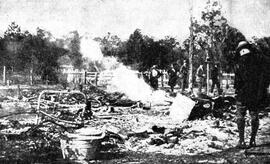
              The Rosewood Massacre Papers
              Meek-Eaton Archival Collection MS_0001 · Colección · 1900 - 1996

              Location: AC.6.B.2.4.7-AC.6.B.3.4.4

              The Rosewood Massacre was a racially motivated attack on the predominantly African American town of Rosewood, Florida, in January 1923. Sparked by false accusations and fueled by racial tensions under Jim Crow segregation, white mobs destroyed homes, churches, and businesses, forcing residents to flee and permanently abandon the town. For decades, the event remained largely suppressed in public memory until renewed attention in 1982 by journalist Gary Moore prompted survivors and descendants to seek justice. Their efforts led to a state investigation and compensation legislation, marking one of the first instances of reparations for racial violence in the United States.

              Archival Description:
              The Rosewood Massacre Papers Collection spans 35 boxes with materials dating from 1900 to 1996 and documents the historical, legal, and commemorative efforts surrounding the 1923 massacre. The collection includes narrative reports, multiple versions of documented histories, survivor affidavits, administrative files, correspondence, interview transcripts, handwritten notes, vital records such as birth certificates, census records including the 1920 U.S. Census, property records such as Levy County deed indexes, and materials related to claims verification.

              Folders within the collection contain complete narrative reports and reproduced copies used for research, review, and preservation; affidavits from survivors including Bertha Fagin, Ivory T. Fuller, Vera G. Goins Hamilton, Thelma Hawkins, and Dorothy G. Hosey; correspondence from agencies such as the Florida State Department of Health and Rehabilitative Services and Offices of Vital Statistics; as well as administrative communications, genealogical documentation, and evidentiary records supporting compensation claims.

              Collectively, these materials document both the historical reconstruction of the Rosewood Massacre and the legal and administrative processes undertaken to verify survivors, establish lineage, and secure restitution.

              Kidd, Arthur L.
              Meek-Eaton Archival Collection MS_0013-Box 03 · 1954 - 1963
              Parte de Arthur L. Kidd Collection

              The materials in Box 3 of the Arthur L. Kidd Collection document organizational activities and related materials connected to civil rights and community relations, with records dating from 1954 to 1963. This box consists of fifteen folders containing documents on organizations, including materials related to the Florida and Tallahassee Council on Human Relations, as well as publications and additional supporting records that reflect efforts to address issues of segregation, race relations, and social reform.

              These materials highlight the role of local and regional organizations in promoting dialogue, advocacy, and policy changes during the Civil Rights Movement. The publications and organizational records provide insight into the strategies, programs, and initiatives developed to improve human relations and advance equality within communities.

              The folders within this box are arranged in alphabetical order, allowing for organized access by subject and organization. Collectively, Box 3 offers valuable documentation of institutional and community-based efforts to address civil rights issues and foster social change during the mid-twentieth century.