
Education

Área de elementos

Taxonomía

Código

Nota(s) sobre el alcance

    Nota(s) sobre el origen

      Mostrar nota(s)

        Términos jerárquicos

        Education

          Términos equivalentes

          Education

            Términos asociados

            Education

              63 Descripción archivística resultados para Education

              63 resultados directamente relacionados Excluir términos relacionados
              Meek-Eaton Archival Collection MS_0010 · Colección · 1941 - 1987

              Location: AC.8.B.1.2.1 - AC.8.B.1.2.2

              This file documents the life, professional career, and institutional impact of Dean Maxwell S. Thomas, a highly respected educator, administrator, and advocate for students at Florida A&M University. Spanning the years 1941 to 1987, with concentrated materials dating from 1973 to 1983, the collection provides a comprehensive view of Thomas’s contributions to higher education, his involvement in key university initiatives, and his broader engagement with community and professional organizations.

              Born on June 24, 1907, in Ocala, Florida, Dean Maxwell S. Thomas served as Dean of Mechanical Arts at Florida A&M University and was widely recognized for his leadership, commitment to student development, and dedication to institutional advancement. The materials within this collection reflect his extensive professional network and influence, including correspondence with university presidents, faculty, and external organizations. His work with entities such as the Orange Blossom Classic Committee and the FAMU Foundation is well represented, illustrating his role in shaping both academic and extracurricular aspects of the university. In addition to documenting his professional achievements, the collection also captures personal dimensions of his life, including biographical materials, handwritten notes, and correspondence addressed to his wife, Jacqueline Holloway-Thomas, particularly letters of condolence following his passing in 1983.

              The collection consists of manuscripts, photographs, publications, reports, correspondence, organizational records, programs, and printed materials that collectively highlight Thomas’s contributions to Florida A&M University and the broader educational landscape. These materials include annual and financial reports, institutional evaluations, program development documents, and publications that reflect the evolving priorities of the university during the mid- to late-twentieth century. News articles and obituaries further contextualize his legacy, emphasizing his impact as an educator and leader within the Tallahassee community and beyond.

              At the time of processing, the collection had no discernible original order. The materials were therefore reorganized by subject and record type, with correspondences grouped by date and organizational records categorized by affiliated institutions or committees. Items were arranged in both alphabetical and chronological order to enhance accessibility and preserve contextual relationships. The collection was rehoused in acid-free folders and archival boxes, expanding to two boxes totaling approximately one linear foot. Processing also included preparation for digitization and the replacement of deteriorating fasteners with archival-safe materials. This collection serves as a significant resource for researchers examining the history of Florida A&M University, African American leadership in higher education, and the institutional development of historically Black colleges and universities during the twentieth century.
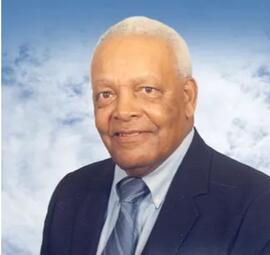
              Florida State Teachers Association
              MS_0122 · 1957 - 1963

              Location: AC.7.A.4.3.1 - AC.7.A.4.3.2

              The Florida State Teachers Association Collection documents the activities and advocacy of the Florida State Teachers Association (FSTA), a professional organization composed of African American educators, administrators, school staff, and parents across the state of Florida. The materials date from 1957 to 1963, a critical period during the Civil Rights Movement when Black teachers and educational leaders actively confronted systemic inequality within segregated school systems.

              During this era, African American educators faced widespread discrimination, including unequal pay, limited resources, and underfunded schools. In response, members of the FSTA organized collectively to advocate for improved working conditions, equitable educational opportunities for Black students, and broader social change. The association served not only as a professional network but also as a platform for activism, positioning educators at the forefront of efforts to challenge segregation and promote civil rights.

              The collection consists of organizational and administrative records that reflect the operations and impact of the association. Materials include correspondence, meeting minutes, conference and workshop documentation, reports, and publications that highlight the planning and execution of statewide initiatives. These records illustrate collaboration among educators and community stakeholders, as well as the development of strategies aimed at addressing disparities in education.

              Collectively, the Florida State Teachers Association Collection provides valuable insight into the role of Black educators as advocates for equity and justice in mid-twentieth-century Florida. The materials underscore the importance of professional organizations in advancing civil rights and demonstrate the lasting impact of the FSTA’s efforts to improve educational access and opportunities for African American communities.

              Gray, President William H.
              Meek-Eaton Archival Collection AR_0007-_001-_004-Box 12
              Parte de History of FAMU

              This file contains special correspondence dating from 1940 to 1949 generated during the presidency of Florida A&M College President Dr. William H. Gray, Jr. The materials are arranged alphabetically by correspondent and institution and primarily consist of communications between President Gray and high school principals, secondary school administrators, and educational leaders throughout Florida and across the United States.

              The correspondence documents institutional relationships between Florida A&M College and secondary educational institutions, particularly those serving African American students during the segregation era. Topics represented within these files include student recruitment and admissions pipelines, curriculum coordination, teacher training, accreditation standards, institutional development, and collaborative educational initiatives between Florida A&M College and feeder high schools.

              Collectively, these materials provide insight into the role of Florida A&M College as a central hub for Black secondary and higher education networks during the mid-twentieth century. The correspondence illustrates administrative leadership, educational advocacy, and institutional expansion efforts undertaken by President Gray while strengthening partnerships with secondary schools that supported African American educational advancement throughout the South and beyond

              Gray, President William H.
              Meek-Eaton Archival Collection AR_0007-_001-_004-Box 20 · 1941 - 1972
              Parte de History of FAMU

              This file contains materials dating from 1941 to 1972 generated during the presidency of Florida A&M College (FAMC) President Dr. William H. Gray, Jr. The records are arranged alphabetically by subject and correspondent and include correspondence with other universities, colleges, public officials, and educational institutions. The alphabetical arrangement reflects Gray’s administrative filing structure, particularly in relation to inter-institutional communications and external partnerships.

              The materials document President Gray’s leadership during a critical period of institutional expansion, wartime transition, post-war growth, and early civil rights advocacy. Correspondence with other universities and schools illustrates academic collaboration, graduate program development, faculty advancement, accreditation matters, and broader discussions affecting historically Black colleges and universities (HBCUs).

              In addition to university correspondence, the files include administrative records, speeches, research materials, legislative interactions, financial documentation, public statements, community program materials, and personal papers. Collectively, these records provide insight into FAMC’s governance, academic planning, public engagement, and institutional development from the early 1940s through the early 1970s. They reflect the evolving role of FAMC within state and national educational frameworks and document Dr. Gray’s impact on higher education leadership during the segregation and early desegregation eras.

              Gilbert Porter Collection
              Meek-Eaton Archival Collection MS_0021 · Colección · 1947 - 1977

              Location: AC.3.A.2.6.1 - AC.3.A.3.1.3

              Dr. Gilbert Lawrence Porter was an educational pioneer in the state of Florida who devoted more than five decades of his life to advancing educational equality during the era of segregation and desegregation. Born on January 6, 1909, in Kansas, Porter pursued higher education at Talladega College, where he earned a Bachelor of Arts in Chemistry. He later obtained a master’s degree in educational administration from the University of Michigan and a Ph.D. in philosophy from The Ohio State University, becoming the first African American to receive this distinguished degree from the institution. Throughout his career, Porter remained committed to improving the quality of education for all students while advocating for equal salaries, professional recognition, and civil rights for African American teachers within a segregated and unequal educational system.

              The Gilbert Porter Desegregation Files document Porter’s extensive work in educational reform, particularly in relation to school integration and policy development in Florida. The collection consists of Dade County school reports, national reports on desegregation plans and procedures, and materials related to organizations such as the Florida Conference of Social Welfare and the Florida Conference of Social Work. A significant portion of the collection includes newspaper clippings that highlight race relations and integration efforts in Dade County and throughout the state of Florida.

              The records reflect the administrative, social, and political challenges surrounding desegregation and provide insight into the strategies and policies implemented during this transformative period.

              Porter, Gilbert
              Meek-Eaton Archival Collection MS_0021-Box 01 · 1947 - 1977
              Parte de Gilbert Porter Collection

              The materials in this box of the Gilbert Porter Collection document Dr. Gilbert L. Porter’s work and involvement in educational reform and desegregation efforts in Florida, with records dating from 1947 to 1977. The box consists primarily of public school reports, publications, and materials related to integration and desegregation, including general reports and those specifically focused on Dade County. These records reflect the development and implementation of desegregation plans, as well as the broader impact of integration on teachers, administrators, and educational institutions.

              Also included are publications such as The History of the Florida State Teachers Association by Gilbert L. Porter and Leedell W. Neyland, along with supporting materials that provide additional context to Porter’s contributions to educational policy and advocacy. The records illustrate both local and statewide efforts to address inequalities within the public school system and highlight the administrative and social challenges associated with desegregation.

              The folders within this box are arranged in alphabetical order, with materials organized to reflect subject groupings and record types. Collectively, this box provides valuable insight into the policies, programs, and institutional responses that shaped the transition from segregation to integration in Florida’s educational system, as well as Dr. Porter’s significant role in advancing educational equity.