
Education

Elements area

Taxonomy

Code

Scope note(s)

    Source note(s)

      Display note(s)

        Hierarchical terms

        Education

          Equivalent terms

          Education

            Associated terms

            Education

              14 Archival description results for Education

              14 results directly related Exclude narrower terms
              Meek-Eaton Archival Collection MS_0022 · Collection

              Location: AC.2.B.2.3.2 - AC.2.B.2.3.5

              Reverend Dr. James L. Hudson, Sr. (1904–1980) was a minister, educator, and civil rights leader. Born in Birmingham, Alabama, he graduated from Morehouse College in 1926 and later earned a divinity degree from Colgate-Rochester School of Religion in 1931. He served as a chaplain at Leland College until 1946 before completing doctoral studies at Boston College. Dr. Hudson later joined Florida A&M University as a chaplain and professor, where he founded the Department of Religion and Philosophy and served as its first chair. A close associate of Rev. Charles K. Steele, he played a key role in civil rights efforts, including the 1956 Tallahassee Bus Boycott, and was active in organizations such as the Tallahassee Ministerial Alliance and the Inter-Civic Council.

              The Reverend Dr. James Hudson, Sr. Collection documents Hudson’s career in ministry, education, and civil rights activism. The collection contains materials related to his work at Florida A&M University, including records associated with the establishment of the Department of Religion and Philosophy, as well as documents reflecting his role as a chaplain and educator.

              Additional materials highlight his involvement in civil rights initiatives in Tallahassee, including his collaboration with local religious and community leaders. The collection may include correspondence, sermons, speeches, and organizational records that illustrate his leadership in religious and civic life. Collectively, these materials provide insight into Hudson’s lasting contributions to higher education, faith leadership, and the advancement of social justice.
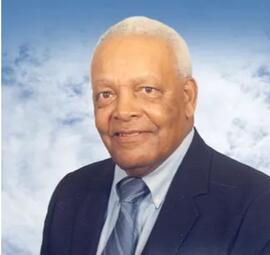
              Presidential Papers
              Meek-Eaton Archival Collection AR_0007-_001
              Part of History of FAMU

              October 3, 1887. It began classes with 15 students and two (2) instructors. Thomas DeSaille Tucker (1887-1901), an attorney from Pensacola, was chosen to be the first president. Former State Representative Gibbs joined Mr. Tucker as the second faculty member.

              President Nathan B. Young (1901-1923) directed the growth of the College to a four-year degree-granting institution, despite limited resources, offering the Bachelor of Science degree in education, science, home economics, agriculture, and mechanical arts.

              Under the administration of John Robert Edward Lee Sr. (1924-1944), the College acquired much of the physical and academic image it has today.

              In 1949, under William H. Gray Jr. (1944-1949), expansion and reorganization continued.

              Perhaps one of the most outstanding achievements came under the presidency of Dr. George W. Gore (1950-1968).

              With Dr. Benjamin L. Perry, Jr., at the helm, the 1970s brought further growth to the University.

              The 1980s served as a model for productive development. Under the administration of Dr. Walter L. Smith, the University grew to eleven schools and colleges and a division of graduate studies, research, and continuing education.

              In 1985, the construction of a new corridor of history began as Dr. Frederick S. Humphries became the eighth president of Florida A&M University. Under his leadership, FAMU experienced significant growth and unsurpassed accomplishments.

              Under Dr. Robinson’s leadership, FAMU continues to thrive, has implemented new recruitment and retention strategies, has strengthened the university’s academic programs, and more!

              Meek-Eaton Archival Collection MS_0116 · 1956 - 1973

              Location: AC.3.B.1.4.4 - AC.3.B.1.5.1

              The Mrs. Willie Ziegler White Collection consists of 5 boxes of materials documenting her involvement in education and parent-teacher organizations, particularly within the Florida State Congress of Colored Parents and Teachers and related networks. The collection reflects her role as an educator and community leader engaged in advancing African American education and parental involvement during the era of segregation.

              The collection includes correspondence, news clippings, directories, handbooks, ledgers, notepads, and record books, as well as files related to Parent Teacher Association activities. These materials document both administrative functions and community outreach efforts. Also included are records from affiliated organizations such as the National Congress of Colored Parents and Teachers, the National Convention of Christians and Jews, and the Georgia Congress of Colored Parents and Teachers.

              Additional materials consist of songs, poems, manuals, publications, and magazines that reflect the educational, cultural, and organizational priorities of the groups with which Mrs. White was associated. Correspondence within the collection highlights communication between educators, administrators, and community members involved in improving educational opportunities.

              Collectively, the collection provides insight into the leadership, organization, and advocacy efforts of African American educators and parent organizations, as well as the broader network of institutions working to support Black education in the early to mid-twentieth century.

              History of FAMU
              Meek-Eaton Archival Collection AR_0007

              For more than 130 years, Florida A&M University has served the citizens of the State of Florida and the nation by providing preeminent educational programs...programs that were the building blocks of a legacy of academic excellence with caring. FAMU, “Florida’s Opportunity University,” is committed to meeting the challenges and needs of future generations.

              In 1884, Thomas Van Renssaler Gibbs, a Duval County educator, was elected to the Florida legislature. Although his political career ended abruptly because of the resurgence of segregation, Representative Gibbs successfully orchestrated the passage of House Bill 133 in 1884. This bill established a white normal school in Gainesville and a school for African Americans in Jacksonville. The bill passed, creating both institutions; however, the state decided to relocate the school for African Americans to Tallahassee.

              After the bill’s passage, FAMU was founded on October 3, 1887. It began classes with 15 students and two (2) instructors. Thomas DeSaille Tucker (1887-1901), an attorney from Pensacola, was chosen as the first president. Former State Representative Gibbs joined Mr. Tucker as the second faculty member.

              In 1891, the College received $7,500 under the Second Morrill Act for agricultural and mechanical arts education. The State Normal College for Colored Students became Florida’s land grant institution for African Americans, and its name was changed to the State Normal and Industrial College for Colored Students.

              In 1905, the management of the College was transferred from the Board of Education to the Board of Control. This significant event officially designated the College as an institution of higher education.
              In 1909 the name was changed from The State Normal College for Colored Students to Florida Agricultural and Mechanical College for Negroes (FAMC). The following year, with an enrollment of 317 students, the college awarded its first degrees.

              President Nathan B. Young (1901-1923) directed the growth of the College to a four-year degree-granting institution, despite limited resources, offering the Bachelor of Science degree in education, science, home economics, agriculture, and mechanical arts.

              Under the administration of John Robert Edward Lee Sr. (1924-1944), the College acquired much of the physical and academic image it has today. More faculty were hired, courses were upgraded, and accreditation was received from several state agencies. By the end of Lee’s term, FAMC had 812 students and 122 staff members.

              In 1949, under William H. Gray Jr. (1944-1949), expansion and reorganization continued. The College obtained an Army ROTC unit, and student enrollment grew to more than 2,000.

              Gilbert Porter Collection
              Meek-Eaton Archival Collection MS_0021 · Collection · 1947 - 1977

              Location: AC.3.A.2.6.1 - AC.3.A.3.1.3

              Dr. Gilbert Lawrence Porter was an educational pioneer in the state of Florida who devoted more than five decades of his life to advancing educational equality during the era of segregation and desegregation. Born on January 6, 1909, in Kansas, Porter pursued higher education at Talladega College, where he earned a Bachelor of Arts in Chemistry. He later obtained a master’s degree in educational administration from the University of Michigan and a Ph.D. in philosophy from The Ohio State University, becoming the first African American to receive this distinguished degree from the institution. Throughout his career, Porter remained committed to improving the quality of education for all students while advocating for equal salaries, professional recognition, and civil rights for African American teachers within a segregated and unequal educational system.

              The Gilbert Porter Desegregation Files document Porter’s extensive work in educational reform, particularly in relation to school integration and policy development in Florida. The collection consists of Dade County school reports, national reports on desegregation plans and procedures, and materials related to organizations such as the Florida Conference of Social Welfare and the Florida Conference of Social Work. A significant portion of the collection includes newspaper clippings that highlight race relations and integration efforts in Dade County and throughout the state of Florida.

              The records reflect the administrative, social, and political challenges surrounding desegregation and provide insight into the strategies and policies implemented during this transformative period.

              Gibbs, Attorney Joseph
              Meek-Eaton Archival Collection MS_0020-Box 01 · 1967 - 1978
              Part of Attorney Joseph Gibbs Collection

              The materials in this box of the Attorney Joseph Gibbs Collection document his legal and professional work related to education and civil rights, with records dating from 1967 to 1978. This box consists of forty folders containing correspondence and court case materials that reflect Gibbs’ involvement in legal efforts addressing school desegregation, higher education policy, and the protection of civil rights during a critical period of social and institutional change.

              The correspondence files include communication with legal organizations, government officials, and educational institutions, while the court case materials document significant litigation and legal developments pertaining to integration and equal educational opportunity. Together, these records provide insight into the legal strategies, challenges, and policy discussions surrounding civil rights and education during the late twentieth century.

              The folders within this box are arranged in alphabetical order, allowing for organized access by subject, correspondent, and case name. Collectively, this box offers valuable documentation of Attorney Joseph Gibbs’ contributions to advancing educational equity and civil rights.

              Meek-Eaton Archival Collection MS_0105 · File · 1949 - 1960

              Location: AC.3.B.1.3.5 - AC.3.B.1.4.3

              Genevieve Josephine Wheeler Thomas (1914–December 24, 2006) was an educator whose career spanned 36 years in the field of home economics. She served as a classroom instructor before becoming Dean of the School of Home Economics, where she played a significant role in advancing academic programming and facilities. During her administration, notable developments included the construction and furnishing of a new Home Economics annex within the Perry-Paige Agriculture and Home Economics Building. She concluded her tenure in 1977 after returning to classroom instruction, leaving a lasting impact on both students and institutional growth.

              The Genevieve J. Wheeler Thomas Collection consists of three boxes of materials dating from 1949 to 1960, documenting her professional contributions to education and academic administration. The collection includes instructional materials, meeting minutes, correspondence, and related documents that reflect her work as both an educator and administrator.

              These materials provide insight into curriculum development, departmental operations, and the evolution of home economics education during the mid-twentieth century. The collection also highlights Wheeler Thomas’s leadership and involvement in institutional planning, particularly during a period of expansion and modernization. Collectively, the records offer valuable documentation of her career and the broader educational landscape in which she served.

              Meek-Eaton Archival Collection MS_0018 · 1943 - 2012

              Location: AC.7.A.4.1.2-AC.7.A.4.1.4

              This collection, titled Florida’s Black Junior Colleges, spans the years 1943–2012, with the bulk of materials concentrated between 1958 and 1966. The collection documents the lives, administration, and institutional development of Black junior colleges in Florida that operated primarily from the late 1940s through their closure in 1966 during the era of desegregation. It provides insight into the educational experiences of students, as well as the professional and administrative networks that sustained these institutions.

              The collection consists of a wide variety of paper-based and photographic materials, including agendas, applications, correspondence, directories, meeting minutes, memoranda, reports, newsletters, programs, speeches, yearbooks, and photographs. Also included are items such as guidebooks, maps, manuals, musical compositions, poems, resolutions, and personnel records. These materials reflect both the daily operations and broader cultural and academic environments of the institutions.

              Of particular significance is a comprehensive study conducted by Dr. Walter L. Smith titled “A Study of Black Junior Colleges in Florida 1957–1966,” which documents key events, institutional challenges, and the lasting impact of these colleges on students, faculty, and surrounding communities. The collection also contains extensive correspondence that highlights collaboration among administrators, educators, and state officials during a pivotal period in Florida’s educational history.

              Arranged across three boxes, the collection captures themes of education, segregation, integration, and desegregation within the state of Florida, with a strong emphasis on the role of historically Black colleges and universities (HBCUs) and their junior college counterparts. The materials provide valuable context for understanding the transition from segregated educational systems to integrated institutions and the effects of these changes on Black communities.

              Meek-Eaton Archival Collection MS_0121 · 1995 - 2003

              Location: AC.7.A.3.5.1 - AC.7.A.3.6.1

              The Florida African American History Education Task Force Files document the development, implementation, and advancement of statewide initiatives to incorporate African American history into Florida’s public school curriculum. The materials date from 1995 to 2003 and are closely tied to the legislative mandate established by the State of Florida in 1994 through Florida Statute 1003.42, which required the teaching of the history, culture, experiences, and contributions of African Americans in K–12 education.

              Following the passage of this legislation, the African American History Task Force (AAHTF) was established to ensure the effective execution and sustainability of this mandate. The Task Force played a central role in guiding curriculum development, supporting teacher training, and promoting educational equity through the integration of African American history across grade levels. Grant-supported initiatives were also developed under the Task Force’s direction to provide resources, workshops, and programming aligned with the original intent of the statute.

              The collection consists of administrative and programmatic records that reflect the operations and impact of the Task Force. Materials include correspondence, meeting minutes, reports, grant documentation, curriculum guides, workshop and conference materials, and educational publications. These records highlight collaboration among educators, policymakers, and community stakeholders working to institutionalize African American history education throughout Florida’s school system. The files also document outreach efforts, training sessions for teachers, and the evaluation of program effectiveness.

              Collectively, the Florida African American History Education Task Force Files provide valuable insight into the institutionalization of African American history within public education in Florida. The collection underscores the role of legislative action, educational advocacy, and community engagement in shaping inclusive curricula and preserving the historical narratives of African Americans for future generations.

              Meek-Eaton Archival Collection MS_0010 · Collection · 1941 - 1987

              Location: AC.8.B.1.2.1 - AC.8.B.1.2.2

              This file documents the life, professional career, and institutional impact of Dean Maxwell S. Thomas, a highly respected educator, administrator, and advocate for students at Florida A&M University. Spanning the years 1941 to 1987, with concentrated materials dating from 1973 to 1983, the collection provides a comprehensive view of Thomas’s contributions to higher education, his involvement in key university initiatives, and his broader engagement with community and professional organizations.

              Born on June 24, 1907, in Ocala, Florida, Dean Maxwell S. Thomas served as Dean of Mechanical Arts at Florida A&M University and was widely recognized for his leadership, commitment to student development, and dedication to institutional advancement. The materials within this collection reflect his extensive professional network and influence, including correspondence with university presidents, faculty, and external organizations. His work with entities such as the Orange Blossom Classic Committee and the FAMU Foundation is well represented, illustrating his role in shaping both academic and extracurricular aspects of the university. In addition to documenting his professional achievements, the collection also captures personal dimensions of his life, including biographical materials, handwritten notes, and correspondence addressed to his wife, Jacqueline Holloway-Thomas, particularly letters of condolence following his passing in 1983.

              The collection consists of manuscripts, photographs, publications, reports, correspondence, organizational records, programs, and printed materials that collectively highlight Thomas’s contributions to Florida A&M University and the broader educational landscape. These materials include annual and financial reports, institutional evaluations, program development documents, and publications that reflect the evolving priorities of the university during the mid- to late-twentieth century. News articles and obituaries further contextualize his legacy, emphasizing his impact as an educator and leader within the Tallahassee community and beyond.

              At the time of processing, the collection had no discernible original order. The materials were therefore reorganized by subject and record type, with correspondences grouped by date and organizational records categorized by affiliated institutions or committees. Items were arranged in both alphabetical and chronological order to enhance accessibility and preserve contextual relationships. The collection was rehoused in acid-free folders and archival boxes, expanding to two boxes totaling approximately one linear foot. Processing also included preparation for digitization and the replacement of deteriorating fasteners with archival-safe materials. This collection serves as a significant resource for researchers examining the history of Florida A&M University, African American leadership in higher education, and the institutional development of historically Black colleges and universities during the twentieth century.