Aperçu avant impression Fermer

Affichage de 21 résultats

Description archivistique
8 résultats avec objets numériques Afficher les résultats avec des objets numériques
Attorney Joseph Gibbs Collection
Meek-Eaton Archival Collection MS_0020 · Collection · 1967 - 1978

Location: AC.2.A.3.6.1

Attorney Joseph Gibbs was a law professor and professor of political science at Florida A&M College. In the early 1950s, when the Florida A&M College of Law was first established, he served as the Librarian for the Law School. He would later serve as an associate professor of law. When the FAMU College of Law closed in 1986, Gibbs served as an associate professor of political science and public management. During the period of racial desegregation and school integration, Gibbs served on numerous legal committees and research teams such as the National Association for Equal Opportunity in Higher Education (NAFEO), in efforts of devising and monitoring desegregation programs that were fair and equitable to all citizens, especially African Americans.

Gibbs was born in Caroline County, Maryland, and attended school in Chester, Pennsylvania. He attended Morgan State College in Baltimore, Maryland, where he studied education and economics. He served in the United States military during World War II and afterward enrolled at St. Johns University Law School, where he earned a Bachelor of Laws (LLB) degree in 1949. Gibbs also earned a master's degree from Temple University, where he majored in public administration and economics. He and his wife Cordelia lived in Fayetteville, North Carolina, before he began his teaching career at FAMCEE. Gibbs retired from FAMU in 1982 and lived in Clearwater, Florida, until his death in the mid-1990s.

The records in this collection consist of the professional papers of Attorney Joseph Gibbs. The records include correspondence, court cases, publications, reports and research logs. The documents reflect Gibbs' legal activities and work regarding school integration at the college level during the late 1960s and early 1970s. The main threat and growing trend at this time was to close historically black colleges and universities (HBCUs) and merge them with large white institutions. Numerous public and private HBCUs joined alliances in efforts to retain their sovereignty.
Meek-Eaton Archival Collection MS_0015 · Collection · 1922 - 1987

Location: AC.7A.3.1.2- AC.7A.3.2.2

The Central Life Insurance Company of Florida Collection documents the operations, administrative activities, and historical record of the Central Life Insurance Company of Florida through corporate records, certificates, photographs, and ephemera spanning from 1922 to 1987. The collection includes blank certificates, certificates issued to policyholders, stock certificates, occupational licenses, newspaper clippings, and photographic materials documenting company personnel, activities, and community engagement. Together, these materials provide insight into the business practices, visual history, and public presence of the company during the twentieth century.
This collection consists of administrative records, financial documentation, and visual materials related to the Central Life Insurance Company of Florida. The records include blank certificates used by the company, certificates issued to policyholders, occupational licenses, stock certificates, and a stockholders list. The collection also contains newspaper clippings documenting company activities and public recognition. Photographic materials form a significant portion of the collection and include black-and-white prints in various sizes, snapshot photographs, oblong photographs, oversized prints, and photographic negatives depicting company employees, events, and community involvement.

These records provide documentation of the company’s corporate operations as well as its role within the broader community. The materials date from 1922 through 1987 and reflect both the administrative and public-facing aspects of the organization.

The materials are arranged by record type and subject. Administrative documents and certificates appear first, followed by miscellaneous materials and printed ephemera, with photographic materials organized by size and format. Stock certificates and a stockholders list conclude the collection.

The records were processed following a preliminary survey of the materials. Documents were sorted by record type and subject. Rusting hardware was removed, and the materials were rehoused in acid-free folders and archival boxes. The files were arranged alphabetically and by format where appropriate.

The Central Life Insurance Company of Florida records were transferred to the Black Archives from the Florida Department of Insurance.

Joe Nash Collection
Meek-Eaton Archival Collection MS_0019 · Collection

Location: AC.8.B.4.4.1 - AC.8.B.4.7.1

The Joe Nash Collection documents a range of cultural, social, and media-related materials reflecting aspects of public life and community engagement. The collection includes advertisements, books, magazines, news clippings, newsletters, photographs, programs, and other publications such as theatrical playbills and posters.

These materials provide insight into entertainment, communication, and cultural expression across various contexts. The presence of theatrical playbills, programs, and posters highlights performance and artistic activity, while magazines, newsletters, and news clippings capture contemporary events, trends, and public discourse.

Photographs within the collection offer visual documentation that complements the printed materials, enhancing its research value. Collectively, the Joe Nash Collection preserves a diverse array of media formats, serving as a resource for understanding cultural production and the ways information and experiences were shared within communities.

Meek-Eaton Archival Collection MS_0014 · Collection · 2015 - 2021

Location: AC.8.A.2.2.4

The Attorney Armstrong Purdee Collection documents the life, legacy, and historical significance of one of Jackson County’s earliest African American legal professionals. The collection contains photographs, commemorative materials, newspaper articles, publications, and digital resources that highlight Purdee’s professional accomplishments and the lasting impact of his work within the community.

Materials include images of commemorative events, a photograph of Purdee’s gravesite, and newspaper coverage discussing his life and contributions. The collection also contains publications related to African American history in Jackson County, including a family reunion cookbook and a scrapbook documenting the legacy of African Americans in the region.

In addition to printed materials, the collection includes a video link documenting a Black History Month program featuring the Jackson County NAACP and the Jackson County School Board. Together, these materials provide insight into community efforts to preserve the historical legacy of Attorney Armstrong Purdee and the broader history of African American leadership and civic engagement in Jackson County, Florida.

The collection is arranged in a single box and organized by subject and material type, including commemorations, news articles, photographs, and publications related to Attorney Armstrong Purdee.

Chester L. Davis, Sr. Collection
Meek-Eaton Archival Collection MS_0016 · Collection · 1942 - 2017

Location: AC.8.B.1.6.2

This file documents the life, military service, and posthumous recognition of Chester Lee Davis, Sr., one of the pioneering African American Marines trained at Montford Point during World War II. Spanning the years 1942 to 2017, this collection provides valuable insight into both Davis’s individual experiences and the broader historical significance of African American service members who served under segregated conditions in the United States Marine Corps.

Chester Lee Davis, Sr. (1923–1981) was born in Quincy, Florida, to Tommie and Iola Davis and was raised in a large farming family. Prior to the outbreak of World War II, his family relocated to Orlando, Florida. In 1943, at the age of eighteen, Davis enlisted in the United States Marine Corps, becoming part of the first generation of African American Marines admitted into service. Due to racial segregation, he trained at Montford Point Camp in North Carolina, a facility established specifically for Black Marines and located near Camp Lejeune, where white Marines trained. Despite facing systemic discrimination and harsh conditions, Davis served with distinction as a member of the 2nd and 3rd Marine Depot Companies. His responsibilities included transporting ammunition and supplies to troops on the frontlines, and he later participated in combat operations throughout the Pacific theater, including assignments in New Caledonia, Guadalcanal, the Solomon Islands, the Marshall Islands, Guam, and Okinawa. After completing his service, Davis returned home as a corporal and lived in Gadsden County, Florida, where he raised a family. He passed away in 1981 at the age of 58. In 2011, his service, along with that of fellow Montford Point Marines, was formally recognized when the United States Congress awarded them the Congressional Gold Medal, a distinction signed into law by President Barack Obama.

Donated to the Meek-Eaton Black Archives by Chester L. Davis, Jr. on June 13, 2017, the collection reflects a deliberate effort to preserve and share the legacy of Davis and other Montford Point Marines. The materials within the collection collectively document Davis’s military career, his contributions during World War II, and the national, state, and local recognition he received posthumously. The collection includes correspondence, legislative recognitions from the United States Congress, the State of Florida, and the City of Quincy, news articles, photographs depicting medals, military service, and commemorative events, as well as official service records and cassette tapes. These materials not only highlight Davis’s individual achievements but also situate his experiences within the broader narrative of African American military service and the struggle for equality within the armed forces.

At the time of processing in February 2017, the collection lacked an original order. As a result, the materials were organized by subject matter and date, then arranged alphabetically and housed in acid-free folders within a single archival storage box. Where applicable, items within individual files have been arranged chronologically to preserve contextual relationships. The collection was processed and cataloged by Dr. Murell Dawson, Senior Archivist, with assistance from undergraduate intern Shaarnè Morris, and is currently stored in the archival storage area on the third floor. As a cohesive body of records, this collection provides an important resource for understanding the experiences of Montford Point Marines and the enduring legacy of their service, sacrifice, and recognition within American military and social history.

Harper's Magazine Collection
Meek-Eaton Archival Collection MS_0113 · Collection · 1876 - 1965

Location: AC.6.B.1.2.1

The Harper’s Magazine Collection consists of one box of materials spanning the years 1876 to 1965, documenting a significant portion of one of America’s oldest and most influential general-interest monthly publications. Founded in 1850 by the New York publishing firm Harper & Brothers, Harper’s Magazine quickly gained national prominence, with its early issues achieving widespread circulation and establishing the publication as a leading forum for intellectual and cultural discourse.

This collection reflects the magazine’s longstanding commitment to exploring the issues that shape American society through long-form journalism, essays, fiction, and critical commentary. Emphasizing fine writing and original thought, Harper’s Magazine has historically provided readers with insightful perspectives on politics, social conditions, the environment, and cultural life. The materials within this collection illustrate the breadth of topics addressed in the magazine and its role in fostering national conversation across generations.

The collection includes a selection of issues and related materials that highlight contributions from both emerging writers and prominent literary figures. Known for publishing influential voices in American letters, the magazine has featured authors such as Annie Dillard, Barbara Ehrenreich, Jonathan Franzen, Mary Gaitskill, David Foster Wallace, and Tom Wolfe.

Collectively, this collection offers valuable insight into the evolution of American journalism, literary expression, and public discourse from the late nineteenth century through the mid-twentieth century.

Joseph Lang Kershaw, Sr. Collection
Meek-Eaton Archival Collection MS_0009 · Collection

Location: AC.8.B.1.1.1-AC.8.B.1.1.3

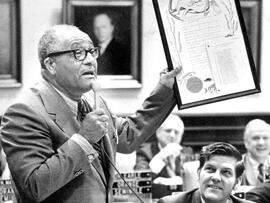
Joseph “Joe” Lang Kershaw, Sr. (June 27, 1911–November 7, 1999) was the first African American elected to the Florida Legislature since Reconstruction. Born in Live Oak, Florida, he attended Florida A&M University in the 1930s, where he was involved in early campus life, including the beginnings of the football program, and pledged Kappa Alpha Psi. He later worked as a teacher in Miami-Dade County and as a janitor in the Florida Legislature before entering politics. Elected to the Florida House of Representatives in 1968, Kershaw served for fourteen years and chaired the Elections Committee, contributing to the establishment of the Florida Human Rights Commission.

The Joseph Lang Kershaw, Sr. Collection documents Kershaw’s life, career, and contributions to Florida’s political and educational history. The collection contains materials related to his personal and academic background, as well as records reflecting his tenure in the Florida House of Representatives.

Included are documents that highlight his legislative work, professional activities, and community involvement. The collection also contains materials pertaining to his family, including references to his father, A. J. Kershaw, as well as correspondence and documents related to colleagues and contemporaries such as Gwendolyn Cherry and Althea Gibson. Collectively, these records provide insight into Kershaw’s role as a pioneering African American legislator and his broader impact on civil rights and public service in Florida.

Bishop David Henry Sims Collection
Meek-Eaton Archival Collection MS_0023 · Collection · 1931 - 1938

Location: AC.8.A.2.4.3
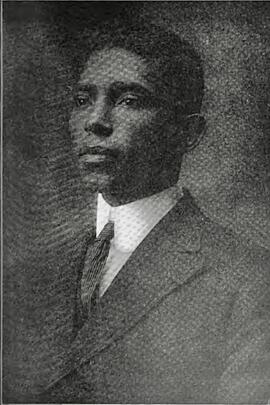
Bishop David Henry Sims was a prominent African American religious leader, educator, and administrator in the African Methodist Episcopal (A.M.E.) Church during the early twentieth century. Born in 1889 in Talladega, Alabama, he was the son of Reverend Felix Rice Sims, a well-educated minister who greatly influenced his early life and commitment to education and faith. Sims pursued higher education at several institutions, including Livingstone College, Oberlin College, and Yale University, where he completed advanced theological training.

Throughout his career, Sims held numerous leadership roles in both religious and academic settings. He served as a professor of education and later as vice president at Morris Brown College in Atlanta, Georgia. His work within the A.M.E. Church included pastoral leadership, administrative service, and participation in major church conferences. In 1932, he was elected Bishop in the A.M.E. Church, marking a significant achievement in his career.

Sims was also involved in broader social and political efforts, including service on commissions related to education and public affairs. His work extended internationally, particularly in South Africa, where he contributed to missionary and educational initiatives. His life and career reflect a deep commitment to religious leadership, education, and the advancement of African American communities during a period of significant social change.

The majority of the records in this collection are handwritten letters from Bishop Sims to his sister, Mrs. Miriam Sims-Tooke. These letters provide a detailed and intimate account of his daily life, thoughts, and activities, particularly during the period in which he was working in South Africa. Through this correspondence, the collection highlights Sims’ involvement in missionary work, his observations of social and cultural conditions abroad, and his ongoing connection to family in the United States.

In addition to correspondence, the collection includes greeting cards and photographs that further document Sims’ personal and professional networks. These materials complement the letters by providing visual and contextual evidence of his life and relationships during this period.

The collection was processed in 1985 and is arranged at the file level, reflecting a coherent grouping of personal papers centered on correspondence and related materials. Collectively, the Bishop David Henry Sims Collection offers a unique perspective on the experiences of an African American religious leader working in an international context, while also shedding light on familial bonds, missionary efforts, and transnational connections within the African diaspora during the early twentieth century.

Reverend Elvis W. Spearman Collection
Meek-Eaton Archival Collection MS_0017 · Collection

Location: AC.3.A.3.5.6

The Reverend Elvis W. Spearman Collection consists of one box of materials documenting the professional and spiritual life of Rev. Elvis W. Spearman. Spearman served as postmaster at Florida A&M University until his retirement in 1964 and also held the role of hospital chaplain from 1955 to 1964. He earned an A.B. degree from Legal College and pursued additional studies at Florida A&M University, the University of Chicago, and Deering Community Center.

The collection primarily contains speeches and sermons delivered by Rev. Spearman, reflecting his work in ministry and his engagement with religious and community life. Most of the materials are undated, though they provide valuable insight into his theological perspectives, public speaking, and role as a spiritual leader.

In addition to sermons, the collection includes a small number of documents related to his administrative duties at Florida A&M University. Collectively, these materials offer a glimpse into Spearman’s dual roles in institutional service and religious leadership, highlighting his contributions to the university and its broader community.

Julian "Cannonball" Adderley Collection
Meek-Eaton Archival Collection MS_0005 · Collection · 1948 - 2001

Location:AC.1.B.1.4.1 - AC.1.B.1.4.2

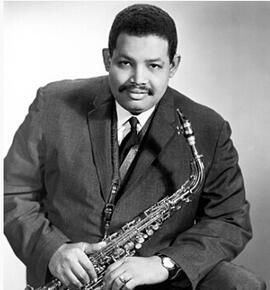
The Julian “Cannonball” Adderley Memorial Jazz Collection documents the life, career, and legacy of renowned jazz saxophonist Cannonball Adderley. The collection includes both archival records and museum objects relating to Adderley’s professional achievements, public recognition, and cultural influence.

Materials in the collection consist of awards, photographs, publications, magazines, newspaper articles, sheet music, recordings, correspondence, and exhibit artifacts. Several items relate directly to Adderley’s connection with Florida A&M University, including his academic degree and alumni publications. Additional materials document his musical career, honors, memorial recognitions, and media coverage following his illness and death.

The collection also contains museum exhibit items, including plaques, medals, framed artwork, photographs, and audio recordings associated with Adderley and his brother Nat Adderley. Printed sources such as magazines and newspapers highlight his role in jazz history and the broader cultural recognition of his contributions to American music. The collection is arranged by subject and material type. Printed materials and memorabilia were first sorted by format, then organized alphabetically and placed in acid-free folders and boxes for long-term preservation.