Aperçu avant impression Fermer

Affichage de 47 résultats

Description archivistique
12 résultats avec objets numériques Afficher les résultats avec des objets numériques
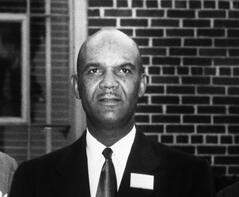
Dr. Leonard H.B. Foote Collection
Meek-Eaton Archival Collection MS_0003

AC.3.B.3.1.2- AC.3.B.3.2.2

Dr. Leonard Hobson Buchanan Foote was born April 11, 1898 in Cockeysville, Maryland, son of John L. and Emma A. Foote. In 1926, Dr. Foote accepted a number of positions at the Florida Agricultural and Mechanical College including college physician, director of student health, medical director and administrator of FAMU Hospital. He died on May 31, 1993.

-https://www.floridamemory.com/items/show/44584

Sans titre
Dr. Joseph Avent Collection
Meek-Eaton Archival Collection MS_0008

AC.1.B.1.4.3

Dr. Joseph Avent was a prominent FAMC professor who was known for his contributions to the institution's development and his engagement with students.

Dr. Patricia Stephens Due Collection
Meek-Eaton Archival Collection MS_0040

AC.2.A.1.5.7

Patricia Stephens Due (1939–2012) was a prominent civil rights activist and leader in the movement for racial equality, particularly in Florida. Born in Quincy, Florida, she became actively involved in the struggle against segregation while a student at Florida A&M University. As a key member of the Congress of Racial Equality (CORE), Due helped organize sit-ins and protests, including the historic 1960 Tallahassee “jail-in,” where she and other students chose imprisonment over paying fines for challenging segregation laws.
Throughout her life, Due remained committed to civil rights advocacy, working to desegregate public spaces and increase voter registration among African Americans. She later co-authored Freedom in the Family with her daughter, documenting her experiences in the movement. Her legacy endures as a symbol of courage, resilience, and lifelong dedication to justice.

https://www.thehistorymakers.org/biography/patricia-stephens-due-41

Bishop David Henry Sims Collection
Meek-Eaton Archival Collection MS_0023 · Collection · 1931 - 1939

Location: AC.8.A.2.4.3
Bishop David Henry Sims was a prominent African American religious leader, educator, and administrator in the African Methodist Episcopal (A.M.E.) Church during the early twentieth century. Born in 1889 in Talladega, Alabama, he was the son of Reverend Felix Rice Sims, a well-educated minister who greatly influenced his early life and commitment to education and faith. Sims pursued higher education at several institutions, including Livingstone College, Oberlin College, and Yale University, where he completed advanced theological training.

Throughout his career, Sims held numerous leadership roles in both religious and academic settings. He served as a professor of education and later as vice president at Morris Brown College in Atlanta, Georgia. His work within the A.M.E. Church included pastoral leadership, administrative service, and participation in major church conferences. In 1932, he was elected Bishop in the A.M.E. Church, marking a significant achievement in his career.

Sims was also involved in broader social and political efforts, including service on commissions related to education and public affairs. His work extended internationally, particularly in South Africa, where he contributed to missionary and educational initiatives. His life and career reflect a deep commitment to religious leadership, education, and the advancement of African American communities during a period of significant social change.

The majority of the records in this collection are handwritten letters from Bishop Sims to his sister, Mrs. Miriam Sims-Tooke. These letters provide a detailed and intimate account of his daily life, thoughts, and activities, particularly during the period in which he was working in South Africa. Through this correspondence, the collection highlights Sims’ involvement in missionary work, his observations of social and cultural conditions abroad, and his ongoing connection to family in the United States.

In addition to correspondence, the collection includes greeting cards and photographs that further document Sims’ personal and professional networks. These materials complement the letters by providing visual and contextual evidence of his life and relationships during this period.

The collection was processed in 1985 and is arranged at the file level, reflecting a coherent grouping of personal papers centered on correspondence and related materials. Collectively, the Bishop David Henry Sims Collection offers a unique perspective on the experiences of an African American religious leader working in an international context, while also shedding light on familial bonds, missionary efforts, and transnational connections within the African diaspora during the early twentieth century.

Meek-Eaton Archival Collection MS_0014 · Collection · 2015 - 2021

Location: AC.8.A.2.2.4

The Attorney Armstrong Purdee Collection documents the life, legacy, and historical significance of one of Jackson County’s earliest African American legal professionals. The collection contains photographs, commemorative materials, newspaper articles, publications, and digital resources that highlight Purdee’s professional accomplishments and the lasting impact of his work within the community.

Materials include images of commemorative events, a photograph of Purdee’s gravesite, and newspaper coverage discussing his life and contributions. The collection also contains publications related to African American history in Jackson County, including a family reunion cookbook and a scrapbook documenting the legacy of African Americans in the region.

In addition to printed materials, the collection includes a video link documenting a Black History Month program featuring the Jackson County NAACP and the Jackson County School Board. Together, these materials provide insight into community efforts to preserve the historical legacy of Attorney Armstrong Purdee and the broader history of African American leadership and civic engagement in Jackson County, Florida.

The collection is arranged in a single box and organized by subject and material type, including commemorations, news articles, photographs, and publications related to Attorney Armstrong Purdee.

Reverend Elvis W. Spearman Collection
Meek-Eaton Archival Collection MS_0017 · Collection

Location: AC.3.A.3.5.6

The Reverend Elvis W. Spearman Collection consists of one box of materials documenting the professional and spiritual life of Rev. Elvis W. Spearman. Spearman served as postmaster at Florida A&M University until his retirement in 1964 and also held the role of hospital chaplain from 1955 to 1964. He earned an A.B. degree from Legal College and pursued additional studies at Florida A&M University, the University of Chicago, and Deering Community Center.

The collection primarily contains speeches and sermons delivered by Rev. Spearman, reflecting his work in ministry and his engagement with religious and community life. Most of the materials are undated, though they provide valuable insight into his theological perspectives, public speaking, and role as a spiritual leader.

In addition to sermons, the collection includes a small number of documents related to his administrative duties at Florida A&M University. Collectively, these materials offer a glimpse into Spearman’s dual roles in institutional service and religious leadership, highlighting his contributions to the university and its broader community.

Julian "Cannonball" Adderley Collection
Meek-Eaton Archival Collection MS_0005 · Collection · 1948 - 2001

Location:AC.1.B.1.4.1 - AC.1.B.1.4.2

The Julian “Cannonball” Adderley Memorial Jazz Collection documents the life, career, and legacy of renowned jazz saxophonist Cannonball Adderley. The collection includes both archival records and museum objects relating to Adderley’s professional achievements, public recognition, and cultural influence.

Materials in the collection consist of awards, photographs, publications, magazines, newspaper articles, sheet music, recordings, correspondence, and exhibit artifacts. Several items relate directly to Adderley’s connection with Florida A&M University, including his academic degree and alumni publications. Additional materials document his musical career, honors, memorial recognitions, and media coverage following his illness and death.

The collection also contains museum exhibit items, including plaques, medals, framed artwork, photographs, and audio recordings associated with Adderley and his brother Nat Adderley. Printed sources such as magazines and newspapers highlight his role in jazz history and the broader cultural recognition of his contributions to American music. The collection is arranged by subject and material type. Printed materials and memorabilia were first sorted by format, then organized alphabetically and placed in acid-free folders and boxes for long-term preservation.

FAMU Hospital Collection
Meek-Eaton Archival Collection AR_0007_007 · Collection

The Florida A&M University Hospital Collection documents the establishment, development, and administration of the Florida A&M College (FAMC) Hospital, later known as the Florida A&M University (FAMU) Hospital. Spanning the mid-twentieth century, this collection provides insight into the critical role the hospital played in serving the African American community during the era of segregation, when access to quality healthcare for Black patients was severely limited in the South.

The materials within this collection highlight the planning and funding efforts that led to the hospital’s creation, including correspondence, financial records, and reports related to state appropriations, community support, and institutional advocacy. Documentation of the building and expansion of the hospital illustrates the physical and infrastructural development of the facility, reflecting broader efforts to improve healthcare access and medical education opportunities for African Americans in Florida.

Additionally, the collection contains administrative records that detail the hospital’s operations, governance, and staff organization. These records may include internal memoranda, policy documents, personnel files, and reports that provide insight into the day-to-day management of the institution. Collectively, these materials offer valuable historical context on the intersection of healthcare, education, and racial inequality, and demonstrate the significance of FAMU Hospital as both a medical facility and a training ground for African American healthcare professionals.

John F. Matheus Collection
Meek-Eaton Archival Collection MS_0056 · Dossier · 1909-1983

Location: AC.2.B.3.6.2 - AC.3.A.1.2.8

The John F. Matheus Collection documents the life, literary career, and intellectual contributions of John Frederick Matheus, an American writer and scholar associated with the Harlem Renaissance of the 1920s. The materials in this collection date from 1909 to 1983 and provide insight into Matheus’s development as a prominent literary figure known for his short stories, as well as his work in essays, plays, and poetry.

Matheus gained national recognition for his literary achievements, including his short story “Fog,” which won first place in Opportunity magazine’s literary contest in 1925 and was subsequently published in The New Negro. He continued to receive acclaim with his story “Swamp Moccasin,” which earned first prize in The Crisis magazine’s contest in 1926. His writing reflects the broader artistic and cultural movements of the Harlem Renaissance and was influenced by earlier literary figures such as Harriet Beecher Stowe, Edgar Allan Poe, Phillis Wheatley, and Paul Laurence Dunbar.

The collection consists of personal papers and literary materials that illustrate both Matheus’s professional accomplishments and personal life. Included are correspondence, original manuscripts, notes, and newspaper articles that document his writing process and engagement with literary communities. Photographs and personal items further contextualize his experiences and relationships within the cultural and intellectual circles of his time.

Collectively, the John F. Matheus Collection provides valuable documentation of an important voice of the Harlem Renaissance and offers researchers insight into early twentieth-century African American literature, artistic expression, and scholarly thought.