MS_0109
Location: AC.3.B.1.7.1

Location: AC.3.B.1.7.1
The Florida A&M University Marching 100 is one of the most renowned collegiate marching bands in the United States, known for its precision, high-energy performances, and cultural impact. Founded in 1946, the band gained national prominence under the leadership of legendary director William P. Foster.
The Marching 100 has performed at major events including Super Bowls, presidential inaugurations, and international venues, showcasing the excellence of Florida A&M University. Celebrated for its musical innovation and showmanship, the band continues to be a symbol of pride, tradition, and excellence in HBCU culture.
These objects, linked to a period of approximately 1870-1940, offer a glimpse into the subtle influence of colonial oversight. Field spirits were crafted to protect women and children, homes, crops, domestic animals, and providers (hunters) and also displayed warnings to those venturing onto protected lands, fields, homes, or pilfering from the property owner. The reliance on such objects indicates that longstanding conversion to Christianity among the Fante did not replace traditional beliefs about the security of homes, crops, domestic animals, and people.
These examples of field spirits are rare because they were tools, not created to be objects of art, but crafted to offer specific protection and security for the people who placed them in the fields. Environmental exposure and insects, particularly termites, destroy wooden objects in West Africa very quickly. It is precisely because such field spirits were normally left in the fields that very few remain.
Sem títuloLocation: AC.8.B.2.4.3
Mr. Charles Hamilton was an African-American landowner, farmer, and businessman who lived
in Marion County, Florida, during the late 1800s and turn of the twentieth century. Marion
The county is located in Central Florida. According to information from the 1900 US Census, the
Hamilton Family patriarch, listed as Charly Hamilton, was born during slavery in 1853 and
possibly migrated to Florida from South Carolina after the Civil War. Charly and his wife
Georgia had three sons, Richard, Charlie, and Jonas, and two daughters, Estelle and Texella.
Hamilton and his descendants also owned property and conducted business in neighboring Levy
County.
Location: AC.3.B.1.5.2
"The nation’s first Black junior college, Booker T. Washington Junior College, opened in Pensacola, Florida, in 1949 on the campus of all-black Booker T. Washington High School. The two institutions shared a name, a building, and an administrator: Dr. Garrett T. Wiggins.
Dr. Garrett T. Wiggins was, at the time, the only educator in all of northwest Florida with an earned doctorate, and he served as founding (and only) president and dean of the college and principal of the high school and was known as “the smartest man in the county.”
Before landing at Booker T. Washington, Wiggins served on the faculty at Florida A&M University. He’s remembered as “an educational catalyst, dedicated to the concept that black children must realize the importance of receiving an education.”
Booker T. Washington Junior College provided many Black students with a foundation to transfer into Bethune-Cookman College, Edward Waters College, and Florida A&M University with a solid foundation in teaching, medicine, law, and theology.
In 1965, Booker T. Washington “merged” with then Pensacola Junior College, and Wiggins went on to serve as Pensacola Junior College’s Director of Research until his retirement. However, many argue the school was effectively closed, as Pensacola Junior College did not make a great effort to include the Booker T. Washington’s students or faculty into the fabric of the institution.”
Location: AC.2.B.3.2.2- AC.2.B.3.2.5
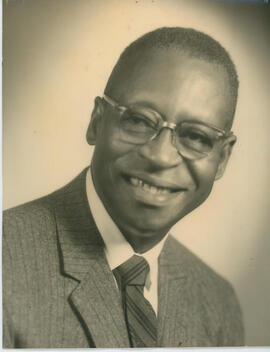
This collection consists of personal papers from Florida A&M University’s Arthur L. Kidd. Kidd, a native of Pennsylvania, earned a B.A. degree in 1924 from the University of Michigan, and in 1929, a Masters of Arts degree from Columbia University. Kidd also did additional studying at the University of Iowa, Columbia University, and New York University. He began his teaching career at Tuskegee Institute in 1924 before accepting a position at Florida A&M College (FAMCEE) in 1925 as Principal of the High School. Kidd worked at FAMCEE until 1944. During his nineteen years of service to the college, Kidd worked in numerous positions, including: Head of the Department of History, Acting Director of the Extension Division, Acting Dean for the College of Arts and Sciences and College Registrar. In October 1944, Kidd left his position at FAMCEE to work with the United Nations Relief and Rehabilitation Administration, where he worked in various capacities in Washington, D.C., and abroad in locations including France, Germany, and Holland. He returned to the United States in 1950 and worked for a year at Maryland State College before accepting a second appointment at FAMCEE in 1951 as Director of the Division of Social Studies. Upon the college reaching university status in 1954, in the academic re-organization, Kidd consequently became the Associate Dean of the College of Arts and Sciences. Until 1969, he served FAMU in various capacities, including director of institutional studies and director of university administrative planning.
The material type in this collection were mainly magazines, news articles, and news clippings from 1949-19687 that followed local and national events affecting Negro people and occurrences impacting their lives. The records of this collection are especially important and informative in that they as resources that document firsthand the many historic events that occurred during the American Negro Civil Rights Years. Most of the records document the passing of school integration and public desegregation legislation, mass boycotts, sit-ins, and other forms of protest, as well as the brutal, nationwide social turbulence that accompanied this period. Additionally, a small amount of materials related to Kidd's instructional duties at FAMU are included.
Biographical data and inclusive subjects were acquired from Murell Dawson circa 2002.
Location: AC.3.A.2.6.1 - AC.3.A.3.1.3
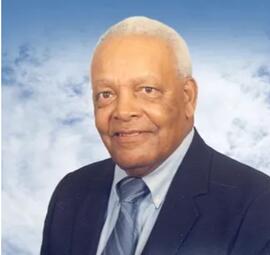
Dr. Gilbert Lawrence Porter was an educational pioneer in the state of Florida who devoted more than five decades of his life to advancing educational equality during the era of segregation and desegregation. Born on January 6, 1909, in Kansas, Porter pursued higher education at Talladega College, where he earned a Bachelor of Arts in Chemistry. He later obtained a master’s degree in educational administration from the University of Michigan and a Ph.D. in philosophy from The Ohio State University, becoming the first African American to receive this distinguished degree from the institution. Throughout his career, Porter remained committed to improving the quality of education for all students while advocating for equal salaries, professional recognition, and civil rights for African American teachers within a segregated and unequal educational system.
The Gilbert Porter Desegregation Files document Porter’s extensive work in educational reform, particularly in relation to school integration and policy development in Florida. The collection consists of Dade County school reports, national reports on desegregation plans and procedures, and materials related to organizations such as the Florida Conference of Social Welfare and the Florida Conference of Social Work. A significant portion of the collection includes newspaper clippings that highlight race relations and integration efforts in Dade County and throughout the state of Florida.
The records reflect the administrative, social, and political challenges surrounding desegregation and provide insight into the strategies and policies implemented during this transformative period.
Location: AC.2.A.1.6.3 - AC.2.A.2.3.1; AC.3.B.3.3.1 - AC.3.B.3.3.2; AC.8.B.1.2.3 - AC.8.B.1.3.2
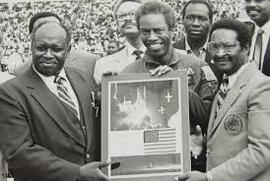
In 1975, James N. Eaton spearheaded the effort that ultimately gave rise to the creation of FAMU’s Black Archives. By 1976, the ‘Black Archives Research Center and Museum’ came into existence, and Eaton was recognized and appointed as its inaugural archivist, curator, and director.
For the next three decades, he helped amass a collection of memorabilia and printed records that now comprise one of the region’s most extensive collections of first-source material relating to the history, culture and contributions of people of African descent living in the United States.
James Eaton constructed in 1976 the first exhibits, using historical memorabilia from his own family. Afterward, he petitioned the university and community members to contribute historical material to the repository. Ilis call was answered by the first Black Archives donors and volunteers, who included: Donald Hill, Frank Pinder, John F. Matheus, and a host of other individuals and groups. Thus, the Research Center was chartered in 1976 and was officially opened in 1977.
Location: AC.8.B.1.2.1 - AC.8.B.1.2.2
This file documents the life, professional career, and institutional impact of Dean Maxwell S. Thomas, a highly respected educator, administrator, and advocate for students at Florida A&M University. Spanning the years 1941 to 1987, with concentrated materials dating from 1973 to 1983, the collection provides a comprehensive view of Thomas’s contributions to higher education, his involvement in key university initiatives, and his broader engagement with community and professional organizations.
Born on June 24, 1907, in Ocala, Florida, Dean Maxwell S. Thomas served as Dean of Mechanical Arts at Florida A&M University and was widely recognized for his leadership, commitment to student development, and dedication to institutional advancement. The materials within this collection reflect his extensive professional network and influence, including correspondence with university presidents, faculty, and external organizations. His work with entities such as the Orange Blossom Classic Committee and the FAMU Foundation is well represented, illustrating his role in shaping both academic and extracurricular aspects of the university. In addition to documenting his professional achievements, the collection also captures personal dimensions of his life, including biographical materials, handwritten notes, and correspondence addressed to his wife, Jacqueline Holloway-Thomas, particularly letters of condolence following his passing in 1983.
The collection consists of manuscripts, photographs, publications, reports, correspondence, organizational records, programs, and printed materials that collectively highlight Thomas’s contributions to Florida A&M University and the broader educational landscape. These materials include annual and financial reports, institutional evaluations, program development documents, and publications that reflect the evolving priorities of the university during the mid- to late-twentieth century. News articles and obituaries further contextualize his legacy, emphasizing his impact as an educator and leader within the Tallahassee community and beyond.
At the time of processing, the collection had no discernible original order. The materials were therefore reorganized by subject and record type, with correspondences grouped by date and organizational records categorized by affiliated institutions or committees. Items were arranged in both alphabetical and chronological order to enhance accessibility and preserve contextual relationships. The collection was rehoused in acid-free folders and archival boxes, expanding to two boxes totaling approximately one linear foot. Processing also included preparation for digitization and the replacement of deteriorating fasteners with archival-safe materials. This collection serves as a significant resource for researchers examining the history of Florida A&M University, African American leadership in higher education, and the institutional development of historically Black colleges and universities during the twentieth century.
George Whitefield Conoly (1902–1980) played a central role in developing the Florida A&M University National Alumni Association. Beginning in 1925, he worked on alumni organizing as an unfunded personal project, traveling across the United States in his free time to connect graduates with one another and encourage their continued involvement with the university. Over a long career at FAMU, he served as a faculty member, executive secretary, and director of Alumni Affairs.
The collection documents Conoly’s work to build FAMU’s alumni network through alumni chapter meeting records, financial records, photographs, and correspondence. It also includes personal effects belonging to George and Eunice Conoly.
Arrangement and processing: Items are arranged in series by communication or record type, then in alphanumeric order within each series. Attachments are listed chronologically by year. Documents were sleeved, and hardware was removed.