
Showing 34 results

Archival description
12 results with digital objects Show results with digital objects
Meek-Eaton Archival Collection MS_0010 · Collection · 1941 - 1987

Location: AC.8.B.1.2.1 - AC.8.B.1.2.2

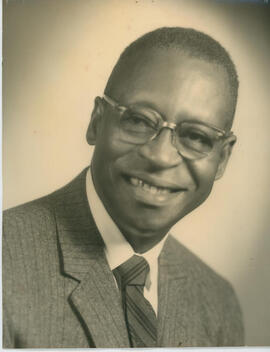
This file documents the life, professional career, and institutional impact of Dean Maxwell S. Thomas, a highly respected educator, administrator, and advocate for students at Florida A&M University. Spanning the years 1941 to 1987, with concentrated materials dating from 1973 to 1983, the collection provides a comprehensive view of Thomas’s contributions to higher education, his involvement in key university initiatives, and his broader engagement with community and professional organizations.

Born on June 24, 1907, in Ocala, Florida, Dean Maxwell S. Thomas served as Dean of Mechanical Arts at Florida A&M University and was widely recognized for his leadership, commitment to student development, and dedication to institutional advancement. The materials within this collection reflect his extensive professional network and influence, including correspondence with university presidents, faculty, and external organizations. His work with entities such as the Orange Blossom Classic Committee and the FAMU Foundation is well represented, illustrating his role in shaping both academic and extracurricular aspects of the university. In addition to documenting his professional achievements, the collection also captures personal dimensions of his life, including biographical materials, handwritten notes, and correspondence addressed to his wife, Jacqueline Holloway-Thomas, particularly letters of condolence following his passing in 1983.

The collection consists of manuscripts, photographs, publications, reports, correspondence, organizational records, programs, and printed materials that collectively highlight Thomas’s contributions to Florida A&M University and the broader educational landscape. These materials include annual and financial reports, institutional evaluations, program development documents, and publications that reflect the evolving priorities of the university during the mid- to late-twentieth century. News articles and obituaries further contextualize his legacy, emphasizing his impact as an educator and leader within the Tallahassee community and beyond.

At the time of processing, the collection had no discernible original order. The materials were therefore reorganized by subject and record type, with correspondences grouped by date and organizational records categorized by affiliated institutions or committees. Items were arranged in both alphabetical and chronological order to enhance accessibility and preserve contextual relationships. The collection was rehoused in acid-free folders and archival boxes, expanding to two boxes totaling approximately one linear foot. Processing also included preparation for digitization and the replacement of deteriorating fasteners with archival-safe materials. This collection serves as a significant resource for researchers examining the history of Florida A&M University, African American leadership in higher education, and the institutional development of historically Black colleges and universities during the twentieth century.
Meek-Eaton Archival Collection MS_0012 · Collection

Location: AC.3.B.1.5.2

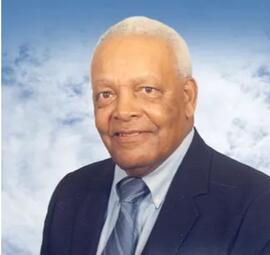
"The nation’s first Black junior college, Booker T. Washington Junior College, opened in Pensacola, Florida, in 1949 on the campus of all-black Booker T. Washington High School. The two institutions shared a name, a building, and an administrator: Dr. Garrett T. Wiggins.

Dr. Garrett T. Wiggins was, at the time, the only educator in all of northwest Florida with an earned doctorate, and he served as founding (and only) president and dean of the college and principal of the high school and was known as “the smartest man in the county.”

Before landing at Booker T. Washington, Wiggins served on the faculty at Florida A&M University. He’s remembered as “an educational catalyst, dedicated to the concept that black children must realize the importance of receiving an education.”

Booker T. Washington Junior College provided many Black students with a foundation to transfer into Bethune-Cookman College, Edward Waters College, and Florida A&M University with a solid foundation in teaching, medicine, law, and theology.

In 1965, Booker T. Washington “merged” with then Pensacola Junior College, and Wiggins went on to serve as Pensacola Junior College’s Director of Research until his retirement. However, many argue the school was effectively closed, as Pensacola Junior College did not make a great effort to include the Booker T. Washington’s students or faculty into the fabric of the institution.”

https://a2arnett.medium.com/february-10-remembering-dr-garrett-t-wiggins-and-booker-t-washington-junior-college-b1b3d85bf650

Meek-Eaton Archival Collection MS_0037 · Collection

George Whitefield Conoly, (born 1902, died 1980) was instrumental in developing the Florida A&M University National Alumni Association and served Florida A&M University for almost 36 years as executive secretary and director of FAMU Alumni Affairs. He founded the FAMU Alumni Association in 1925 as an unfunded personal project. He spent his free time traveling across the U.S. to meet with alums and build deeper comradery; deeper social, professional, and financial commitment to FAMU; and continued participation in University affairs.

This collection contains alumni chapter meeting records, financial records, photographs, and correspondences from the years George Conoly was most active in build the Florida A&M University alumni network, along with some of the personal effects of George and Eunice Conoly.

FAMU Hospital Collection
Meek-Eaton Archival Collection AR_0007_007 · Collection

The Florida A&M University Hospital Collection documents the establishment, development, and administration of the Florida A&M College (FAMC) Hospital, later known as the Florida A&M University (FAMU) Hospital. Spanning the mid-twentieth century, this collection provides insight into the critical role the hospital played in serving the African American community during the era of segregation, when access to quality healthcare for Black patients was severely limited in the South.

The materials within this collection highlight the planning and funding efforts that led to the hospital’s creation, including correspondence, financial records, and reports related to state appropriations, community support, and institutional advocacy. Documentation of the building and expansion of the hospital illustrates the physical and infrastructural development of the facility, reflecting broader efforts to improve healthcare access and medical education opportunities for African Americans in Florida.

Additionally, the collection contains administrative records that detail the hospital’s operations, governance, and staff organization. These records may include internal memoranda, policy documents, personnel files, and reports that provide insight into the day-to-day management of the institution. Collectively, these materials offer valuable historical context on the intersection of healthcare, education, and racial inequality, and demonstrate the significance of FAMU Hospital as both a medical facility and a training ground for African American healthcare professionals.

Meek-Eaton Archival Collection MS_0121 · 1995 - 2003

Location: AC.7.A.3.5.1 - AC.7.A.3.6.1

The Florida African American History Education Task Force Files document the development, implementation, and advancement of statewide initiatives to incorporate African American history into Florida’s public school curriculum. The materials date from 1995 to 2003 and are closely tied to the legislative mandate established by the State of Florida in 1994 through Florida Statute 1003.42, which required the teaching of the history, culture, experiences, and contributions of African Americans in K–12 education.

Following the passage of this legislation, the African American History Task Force (AAHTF) was established to ensure the effective execution and sustainability of this mandate. The Task Force played a central role in guiding curriculum development, supporting teacher training, and promoting educational equity through the integration of African American history across grade levels. Grant-supported initiatives were also developed under the Task Force’s direction to provide resources, workshops, and programming aligned with the original intent of the statute.

The collection consists of administrative and programmatic records that reflect the operations and impact of the Task Force. Materials include correspondence, meeting minutes, reports, grant documentation, curriculum guides, workshop and conference materials, and educational publications. These records highlight collaboration among educators, policymakers, and community stakeholders working to institutionalize African American history education throughout Florida’s school system. The files also document outreach efforts, training sessions for teachers, and the evaluation of program effectiveness.

Collectively, the Florida African American History Education Task Force Files provide valuable insight into the institutionalization of African American history within public education in Florida. The collection underscores the role of legislative action, educational advocacy, and community engagement in shaping inclusive curricula and preserving the historical narratives of African Americans for future generations.

Meek-Eaton Archival Collection MS_0117

Location: AC.6.A.1.3.2 - AC.6.A.1.6.4

The Florida Counties Black Community News Collection consists of twenty boxes of materials documenting African American community life across Florida through local newspaper coverage. The collection contains newspaper articles and advertisements highlighting a wide range of events and experiences, including social gatherings, community programs, obituaries, and wedding announcements.

The materials are organized by county, providing a geographically structured view of Black life in various regions throughout the state. This arrangement allows for comparative research and offers insight into both shared and unique community experiences across Florida.

The collection serves as a valuable resource for understanding the social, cultural, and personal histories of African American communities, capturing everyday moments that are often underrepresented in traditional historical records. Through its focus on local news and announcements, the collection preserves the voices, relationships, and milestones that shaped community identity and cohesion across generations.

Meek-Eaton Archival Collection MS_0122 · 1957 - 1963

Location: AC.7.A.4.3.1 - AC.7.A.4.3.2

The Florida State Teachers Association Collection documents the activities and advocacy of the Florida State Teachers Association (FSTA), a professional organization composed of African American educators, administrators, school staff, and parents across the state of Florida. The materials date from 1957 to 1963, a critical period during the Civil Rights Movement when Black teachers and educational leaders actively confronted systemic inequality within segregated school systems.

During this era, African American educators faced widespread discrimination, including unequal pay, limited resources, and underfunded schools. In response, members of the FSTA organized collectively to advocate for improved working conditions, equitable educational opportunities for Black students, and broader social change. The association served not only as a professional network but also as a platform for activism, positioning educators at the forefront of efforts to challenge segregation and promote civil rights.

The collection consists of organizational and administrative records that reflect the operations and impact of the association. Materials include correspondence, meeting minutes, conference and workshop documentation, reports, and publications that highlight the planning and execution of statewide initiatives. These records illustrate collaboration among educators and community stakeholders, as well as the development of strategies aimed at addressing disparities in education.

Collectively, the Florida State Teachers Association Collection provides valuable insight into the role of Black educators as advocates for equity and justice in mid-twentieth-century Florida. The materials underscore the importance of professional organizations in advancing civil rights and demonstrate the lasting impact of the FSTA’s efforts to improve educational access and opportunities for African American communities.

Meek-Eaton Archival Collection MS_0105 · File · 1949 - 1960

Location: AC.3.B.1.3.5 - AC.3.B.1.4.3

Genevieve Josephine Wheeler Thomas (1914–December 24, 2006) was an educator whose career spanned 36 years in the field of home economics. She served as a classroom instructor before becoming Dean of the School of Home Economics, where she played a significant role in advancing academic programming and facilities. During her administration, notable developments included the construction and furnishing of a new Home Economics annex within the Perry-Paige Agriculture and Home Economics Building. She concluded her tenure in 1977 after returning to classroom instruction, leaving a lasting impact on both students and institutional growth.

The Genevieve J. Wheeler Thomas Collection consists of three boxes of materials dating from 1949 to 1960, documenting her professional contributions to education and academic administration. The collection includes instructional materials, meeting minutes, correspondence, and related documents that reflect her work as both an educator and administrator.

These materials provide insight into curriculum development, departmental operations, and the evolution of home economics education during the mid-twentieth century. The collection also highlights Wheeler Thomas’s leadership and involvement in institutional planning, particularly during a period of expansion and modernization. Collectively, the records offer valuable documentation of her career and the broader educational landscape in which she served.

Gilbert Porter Collection
Meek-Eaton Archival Collection MS_0021 · Collection · 1947 - 1977

Location: AC.3.A.2.6.1 - AC.3.A.3.1.3

Dr. Gilbert Lawrence Porter was an educational pioneer in the state of Florida who devoted more than five decades of his life to advancing educational equality during the era of segregation and desegregation. Born on January 6, 1909, in Kansas, Porter pursued higher education at Talladega College, where he earned a Bachelor of Arts in Chemistry. He later obtained a master’s degree in educational administration from the University of Michigan and a Ph.D. in philosophy from The Ohio State University, becoming the first African American to receive this distinguished degree from the institution. Throughout his career, Porter remained committed to improving the quality of education for all students while advocating for equal salaries, professional recognition, and civil rights for African American teachers within a segregated and unequal educational system.

The Gilbert Porter Desegregation Files document Porter’s extensive work in educational reform, particularly in relation to school integration and policy development in Florida. The collection consists of Dade County school reports, national reports on desegregation plans and procedures, and materials related to organizations such as the Florida Conference of Social Welfare and the Florida Conference of Social Work. A significant portion of the collection includes newspaper clippings that highlight race relations and integration efforts in Dade County and throughout the state of Florida.

The records reflect the administrative, social, and political challenges surrounding desegregation and provide insight into the strategies and policies implemented during this transformative period.

Harper's Magazine Collection
Meek-Eaton Archival Collection MS_0113 · Collection · 1876 - 1965

Location: AC.6.B.1.2.1

The Harper’s Magazine Collection consists of one box of materials spanning the years 1876 to 1965, documenting a significant portion of one of America’s oldest and most influential general-interest monthly publications. Founded in 1850 by the New York publishing firm Harper & Brothers, Harper’s Magazine quickly gained national prominence, with its early issues achieving widespread circulation and establishing the publication as a leading forum for intellectual and cultural discourse.

This collection reflects the magazine’s longstanding commitment to exploring the issues that shape American society through long-form journalism, essays, fiction, and critical commentary. Emphasizing fine writing and original thought, Harper’s Magazine has historically provided readers with insightful perspectives on politics, social conditions, the environment, and cultural life. The materials within this collection illustrate the breadth of topics addressed in the magazine and its role in fostering national conversation across generations.

The collection includes a selection of issues and related materials that highlight contributions from both emerging writers and prominent literary figures. Known for publishing influential voices in American letters, the magazine has featured authors such as Annie Dillard, Barbara Ehrenreich, Jonathan Franzen, Mary Gaitskill, David Foster Wallace, and Tom Wolfe.

Collectively, this collection offers valuable insight into the evolution of American journalism, literary expression, and public discourse from the late nineteenth century through the mid-twentieth century.