Florida

Elements area

Taxonomy

Code

Scope note(s)

    Source note(s)

      Display note(s)

        Hierarchical terms

        Florida

          Equivalent terms

          Florida

            Associated terms

            Florida

              90 Archival description results for Florida

              90 results directly related Exclude narrower terms
              Rattler 1955
              Meek-Eaton Archival Collection AR_0007-_006-_001-_01-Box 02-Folder 02 · 1955
              Part of History of FAMU

              Click the image above to view the Yearbook in PDF format.

              Finding Aid Authors
              Autumn Heatrice, Museum Registrar 2026
              Zoey Henry, Intern 2026

              Online Publishing Archivist
              Tellicia Mitchell, Digital Publishing Archivist

              Digitization Publishing
              Timothy A. Barber, Director 2026

              Meek-Eaton Archival Collection AR_0007-_006-_001-_01-Box 02-Folder 01 · 1954
              Part of History of FAMU

              Click the image above to view the Yearbook in PDF format.

              Finding Aid Authors
              Autumn Heatrice, Museum Registrar 2026
              Zoey Henry, Intern 2026

              Online Publishing Archivist
              Tellicia Mitchell, Digital Publishing Archivist

              Digitization Publishing
              Timothy A. Barber, Director 2026

              Rattler
              Meek-Eaton Archival Collection AR_0007-_006-_001-_01-Box 04-Folder 03 · 1964
              Part of History of FAMU
              Presidential Papers
              Meek-Eaton Archival Collection AR_0007-_001
              Part of History of FAMU

              October 3, 1887. It began classes with 15 students and two (2) instructors. Thomas DeSaille Tucker (1887-1901), an attorney from Pensacola, was chosen to be the first president. Former State Representative Gibbs joined Mr. Tucker as the second faculty member.

              President Nathan B. Young (1901-1923) directed the growth of the College to a four-year degree-granting institution, despite limited resources, offering the Bachelor of Science degree in education, science, home economics, agriculture, and mechanical arts.

              Under the administration of John Robert Edward Lee Sr. (1924-1944), the College acquired much of the physical and academic image it has today.

              In 1949, under William H. Gray Jr. (1944-1949), expansion and reorganization continued.

              Perhaps one of the most outstanding achievements came under the presidency of Dr. George W. Gore (1950-1968).

              With Dr. Benjamin L. Perry, Jr., at the helm, the 1970s brought further growth to the University.

              The 1980s served as a model for productive development. Under the administration of Dr. Walter L. Smith, the University grew to eleven schools and colleges and a division of graduate studies, research, and continuing education.

              In 1985, the construction of a new corridor of history began as Dr. Frederick S. Humphries became the eighth president of Florida A&M University. Under his leadership, FAMU experienced significant growth and unsurpassed accomplishments.

              Under Dr. Robinson’s leadership, FAMU continues to thrive, has implemented new recruitment and retention strategies, has strengthened the university’s academic programs, and more!

              Meek-Eaton Archival Collection MS_0116 · 1956 - 1973

              Location: AC.3.B.1.4.4 - AC.3.B.1.5.1

              The Mrs. Willie Ziegler White Collection consists of 5 boxes of materials documenting her involvement in education and parent-teacher organizations, particularly within the Florida State Congress of Colored Parents and Teachers and related networks. The collection reflects her role as an educator and community leader engaged in advancing African American education and parental involvement during the era of segregation.

              The collection includes correspondence, news clippings, directories, handbooks, ledgers, notepads, and record books, as well as files related to Parent Teacher Association activities. These materials document both administrative functions and community outreach efforts. Also included are records from affiliated organizations such as the National Congress of Colored Parents and Teachers, the National Convention of Christians and Jews, and the Georgia Congress of Colored Parents and Teachers.

              Additional materials consist of songs, poems, manuals, publications, and magazines that reflect the educational, cultural, and organizational priorities of the groups with which Mrs. White was associated. Correspondence within the collection highlights communication between educators, administrators, and community members involved in improving educational opportunities.

              Collectively, the collection provides insight into the leadership, organization, and advocacy efforts of African American educators and parent organizations, as well as the broader network of institutions working to support Black education in the early to mid-twentieth century.

              Meek-Eaton Archival Collection MS_0005 · Collection · 1948 - 2001

              Location:AC.1.B.1.4.1 - AC.1.B.1.4.2

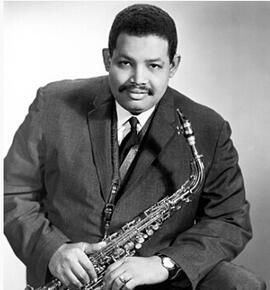
              The Julian “Cannonball” Adderley Memorial Jazz Collection documents the life, career, and legacy of renowned jazz saxophonist Cannonball Adderley. The collection includes both archival records and museum objects relating to Adderley’s professional achievements, public recognition, and cultural influence.

              Materials in the collection consist of awards, photographs, publications, magazines, newspaper articles, sheet music, recordings, correspondence, and exhibit artifacts. Several items relate directly to Adderley’s connection with Florida A&M University, including his academic degree and alumni publications. Additional materials document his musical career, honors, memorial recognitions, and media coverage following his illness and death.

              The collection also contains museum exhibit items, including plaques, medals, framed artwork, photographs, and audio recordings associated with Adderley and his brother Nat Adderley. Printed sources such as magazines and newspapers highlight his role in jazz history and the broader cultural recognition of his contributions to American music. The collection is arranged by subject and material type. Printed materials and memorabilia were first sorted by format, then organized alphabetically and placed in acid-free folders and boxes for long-term preservation.