Mostrar 4 resultados

Descrição arquivística
History of FAMU
Meek-Eaton Archival Collection AR_0007 · Coleção

Every university has a history, but few have a history as unique and impressive as ours. For more than 130 years, Florida A&M University has served the citizens of the State of Florida and the nation by providing preeminent educational programs...programs that were the building blocks of a legacy of academic excellence with caring. FAMU, “Florida’s Opportunity University,” is committed to meeting the challenges and needs of future generations.

In 1884, Thomas Van Renssaler Gibbs, a Duval County educator, was elected to the Florida legislature. Although his political career ended abruptly because of the resurgence of segregation, Representative Gibbs successfully orchestrated the passage of House Bill 133 in 1884. This bill established a white normal school in Gainesville and a school for African Americans in Jacksonville. The bill passed, creating both institutions; however, the state decided to relocate the school for African Americans to Tallahassee.

After the bill’s passage, FAMU was founded on October 3, 1887. It began classes with 15 students and two (2) instructors. Thomas DeSaille Tucker (1887-1901), an attorney from Pensacola, was chosen as the first president. Former State Representative Gibbs joined Mr. Tucker as the second faculty member.

In 1891, the College received $7,500 under the Second Morrill Act for agricultural and mechanical arts education. The State Normal College for Colored Students became Florida’s land grant institution for African Americans, and its name was changed to the State Normal and Industrial College for Colored Students.

In 1905, the management of the College was transferred from the Board of Education to the Board of Control. This significant event officially designated the College as an institution of higher education.
In 1909 the name was changed from The State Normal College for Colored Students to Florida Agricultural and Mechanical College for Negroes (FAMC). The following year, with an enrollment of 317 students, the college awarded its first degrees.

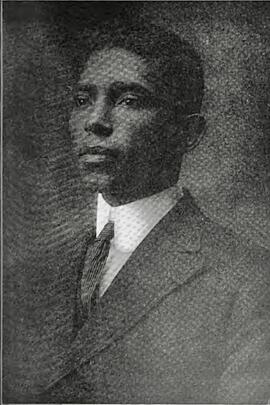
President Nathan B. Young (1901-1923) directed the growth of the College to a four-year degree-granting institution, despite limited resources, offering the Bachelor of Science degree in education, science, home economics, agriculture, and mechanical arts.

Under the administration of John Robert Edward Lee Sr. (1924-1944), the College acquired much of the physical and academic image it has today. More faculty were hired, courses were upgraded, and accreditation was received from several state agencies. By the end of Lee’s term, FAMC had 812 students and 122 staff members.

In 1949, under William H. Gray Jr. (1944-1949), expansion and reorganization continued. The College obtained an Army ROTC unit, and student enrollment grew to more than 2,000.

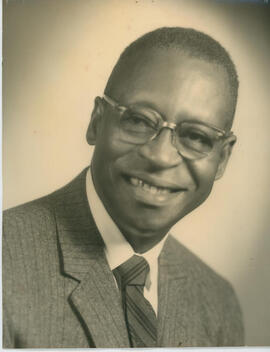
Dr. Garrett T. Wiggins Collection
Meek-Eaton Archival Collection MS_0012 · Coleção

Location: AC.3.B.1.5.2

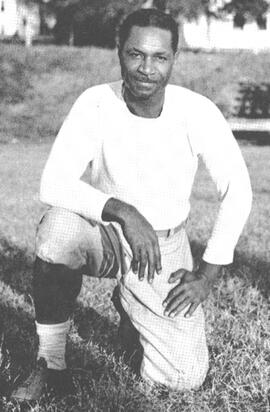
"The nation’s first Black junior college, Booker T. Washington Junior College, opened in Pensacola, Florida, in 1949 on the campus of all-black Booker T. Washington High School. The two institutions shared a name, a building, and an administrator: Dr. Garrett T. Wiggins.

Dr. Garrett T. Wiggins was, at the time, the only educator in all of northwest Florida with an earned doctorate, and he served as founding (and only) president and dean of the college and principal of the high school and was known as “the smartest man in the county.”

Before landing at Booker T. Washington, Wiggins served on the faculty at Florida A&M University. He’s remembered as “an educational catalyst, dedicated to the concept that black children must realize the importance of receiving an education.”

Booker T. Washington Junior College provided many Black students with a foundation to transfer into Bethune-Cookman College, Edward Waters College, and Florida A&M University with a solid foundation in teaching, medicine, law, and theology.

In 1965, Booker T. Washington “merged” with then Pensacola Junior College, and Wiggins went on to serve as Pensacola Junior College’s Director of Research until his retirement. However, many argue the school was effectively closed, as Pensacola Junior College did not make a great effort to include the Booker T. Washington’s students or faculty into the fabric of the institution.”

https://a2arnett.medium.com/february-10-remembering-dr-garrett-t-wiggins-and-booker-t-washington-junior-college-b1b3d85bf650

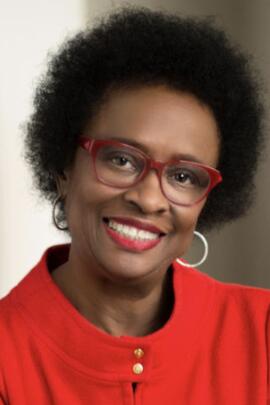
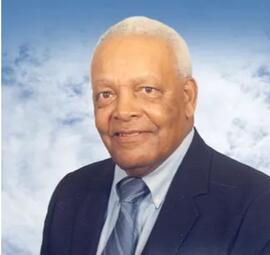
James N. Eaton, Sr. Collection
Meek-Eaton Archival Collection AR_0012 · Coleção

Location: AC.2.A.1.6.3 - AC.2.A.2.3.1; AC.3.B.3.3.1 - AC.3.B.3.3.2; AC.8.B.1.2.3 - AC.8.B.1.3.2

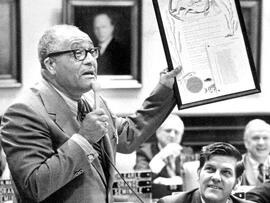
In 1975, James N. Eaton spearheaded the effort that ultimately gave rise to the creation of FAMU’s Black Archives. By 1976, the ‘Black Archives Research Center and Museum’ came into existence, and Eaton was recognized and appointed as its inaugural archivist, curator, and director.

For the next three decades, he helped amass a collection of memorabilia and printed records that now comprise one of the region’s most extensive collections of first-source material relating to the history, culture and contributions of people of African descent living in the United States.

James Eaton constructed in 1976 the first exhibits, using historical memorabilia from his own family. Afterward, he petitioned the university and community members to contribute historical material to the repository. Ilis call was answered by the first Black Archives donors and volunteers, who included: Donald Hill, Frank Pinder, John F. Matheus, and a host of other individuals and groups. Thus, the Research Center was chartered in 1976 and was officially opened in 1977.

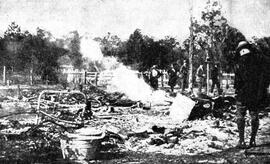
The Rosewood Massacre Papers
Meek-Eaton Archival Collection MS_0001 · Coleção · 1900 - 1996

Location: AC.6.B.2.4.7-AC.6.B.3.4.4

The Rosewood Massacre was a racially motivated attack on the predominantly African American town of Rosewood, Florida, in January 1923. Sparked by false accusations and fueled by racial tensions under Jim Crow segregation, white mobs destroyed homes, churches, and businesses, forcing residents to flee and permanently abandon the town. For decades, the event remained largely suppressed in public memory until renewed attention in 1982 by journalist Gary Moore prompted survivors and descendants to seek justice. Their efforts led to a state investigation and compensation legislation, marking one of the first instances of reparations for racial violence in the United States.

Archival Description:
The Rosewood Massacre Papers Collection spans 35 boxes with materials dating from 1900 to 1996 and documents the historical, legal, and commemorative efforts surrounding the 1923 massacre. The collection includes narrative reports, multiple versions of documented histories, survivor affidavits, administrative files, correspondence, interview transcripts, handwritten notes, vital records such as birth certificates, census records including the 1920 U.S. Census, property records such as Levy County deed indexes, and materials related to claims verification.

Folders within the collection contain complete narrative reports and reproduced copies used for research, review, and preservation; affidavits from survivors including Bertha Fagin, Ivory T. Fuller, Vera G. Goins Hamilton, Thelma Hawkins, and Dorothy G. Hosey; correspondence from agencies such as the Florida State Department of Health and Rehabilitative Services and Offices of Vital Statistics; as well as administrative communications, genealogical documentation, and evidentiary records supporting compensation claims.

Collectively, these materials document both the historical reconstruction of the Rosewood Massacre and the legal and administrative processes undertaken to verify survivors, establish lineage, and secure restitution.