
Mostrar 120 resultados

Descrição arquivística
11 resultados com objetos digitais Mostrar resultados com objetos digitais
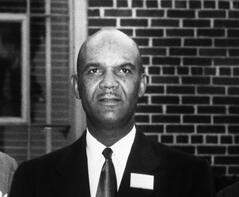
D. E. Williams Collection
Meek-Eaton Archival Collection MS_0123

Location: AC.8.A.3.3.1 - AC.8.A.3.4.4

DeWitt Everett Williams served as the State Agent of Negro Schools in Florida from 1927 to 1962 under the Florida Department of Education. In this role, he was responsible for overseeing and supporting the development of African American education during the era of segregation. His work placed him in direct contact with schools across the state, documenting their conditions, operations, and communities during a critical period in the history of public education in Florida.

The D. E. Williams Collection consists of six boxes of materials documenting African American education in Florida during the Jim Crow era. The collection primarily contains photographs of segregated African American schools across the state, reflecting both rural and urban educational environments. These images provide visual documentation of school buildings, classrooms, students, and faculty, offering insight into the conditions and experiences within segregated educational systems.

The photographs are arranged alphabetically by county, facilitating geographic access and highlighting regional differences in school infrastructure and resources. Collectively, the collection serves as an important resource for understanding the historical landscape of African American education in Florida and the broader social and institutional context of segregation in the twentieth century.

Afro American Life Insurance Company Collection
MS_0006

Location: AC.7.B.1.2.2 - AC.7.B.1.2.3

The Afro-American Life Insurance Company was a pioneering African American–owned business founded in 1901 in Jacksonville, Florida, by Abraham Lincoln Lewis and a group of associates. Established during a time of widespread racial discrimination and segregation in the United States, the company emerged in response to the limited access Black Americans had to essential financial services. Many mainstream insurance companies either denied coverage to Black individuals or offered policies at unaffordable rates, leaving Black communities without the financial protection that life insurance could provide.

In addition to offering life insurance policies, the Afro-American Life Insurance Company played a vital role as a financial institution within the African American community. It provided opportunities for economic stability through services such as mortgages and financial planning, helping to build wealth and security for families who were otherwise excluded from traditional banking systems. The company’s influence extended beyond finance; it was instrumental in the development of American Beach, a recreational resort established in 1935 as a safe and welcoming destination for Black Americans during the era of segregation.

Throughout the early and mid-20th century, the Afro-American Life Insurance Company stood as a symbol of Black entrepreneurship, resilience, and self-sufficiency. However, increasing competition from larger insurance companies in the latter half of the 20th century contributed to its eventual closure in 1990. Despite this, the company’s legacy endures as a significant example of African American economic empowerment and community development. The historic building that once housed the company at 101 East Union Street in Jacksonville has since been renovated and repurposed, continuing to serve the community in new ways. https://unfdhi.org/earthawhite/items/show/49

Oscar C. Gadson Collection
MS_0030

Location: AC.3.B.1.2.3

Oscar C. Gadson Jr. was a distinguished World War II veteran, Tuskegee Airman, and Buffalo Soldier who dedicated his life to military service and public health. As a member of the historic Tuskegee Airmen, he trained as a pilot and later served with the 92nd Infantry Division, one of the only all-Black combat units in the war, participating in major offensives in Italy.

Gadson’s military career reflected both courage and resilience during an era of segregation, earning recognition for his service in multiple campaigns against German forces. After the war, he continued serving others through a 40-year career as a clinical laboratory scientist at the Tuskegee Veterans Affairs medical center.

In later life, Gadson was honored for his contributions, including serving as grand marshal of a Veterans Day parade, where he was recognized for his bravery, strength, and lifelong commitment to his country.

https://news.va.gov/43075/tuskegee-airman-oscar-c-gadson-jr-honored-grand-marshal-veterans-day-parade/

Willie Galimore Collection
MS_0046

Location: AC.2.A.3.5.3
Willie Galimore (1935–1964) was a legendary football player and standout athlete at Florida A&M University. Born in St. Augustine, Florida, he became one of the greatest players in FAMU history, earning All-American honors and leading the Rattlers to multiple conference championships under coach Jake Gaither.

Nicknamed “the Wisp” for his speed and agility, Galimore went on to play professionally for the Chicago Bears, where he was a Pro Bowl selection and helped win the 1963 NFL Championship.

Galimore’s life was tragically cut short at age 29 in an automobile accident, but his legacy endures as one of the most influential athletes in HBCU football history and a member of the College Football Hall of Fame.

https://footballfoundation.org/honors/hall-of-fame/willie-galimore/1830