
Affichage de 118 résultats

Description archivistique
11 résultats avec objets numériques Afficher les résultats avec des objets numériques
Harper's Magazine Collection
Meek-Eaton Archival Collection MS_0113 · Collection · 1876 - 1965

Location: AC.6.B.1.2.1

The Harper’s Magazine Collection consists of one box of materials spanning the years 1876 to 1965, documenting a significant portion of one of America’s oldest and most influential general-interest monthly publications. Founded in 1850 by the New York publishing firm Harper & Brothers, Harper’s Magazine quickly gained national prominence, with its early issues achieving widespread circulation and establishing the publication as a leading forum for intellectual and cultural discourse.

This collection reflects the magazine’s longstanding commitment to exploring the issues that shape American society through long-form journalism, essays, fiction, and critical commentary. Emphasizing fine writing and original thought, Harper’s Magazine has historically provided readers with insightful perspectives on politics, social conditions, the environment, and cultural life. The materials within this collection illustrate the breadth of topics addressed in the magazine and its role in fostering national conversation across generations.

The collection includes a selection of issues and related materials that highlight contributions from both emerging writers and prominent literary figures. Known for publishing influential voices in American letters, the magazine has featured authors such as Annie Dillard, Barbara Ehrenreich, Jonathan Franzen, Mary Gaitskill, David Foster Wallace, and Tom Wolfe.

Collectively, this collection offers valuable insight into the evolution of American journalism, literary expression, and public discourse from the late nineteenth century through the mid-twentieth century.

Attorney Joseph Gibbs Collection
Meek-Eaton Archival Collection MS_0020 · Collection · 1967 - 1978

Location: AC.2.A.3.6.1

Attorney Joseph Gibbs was a law professor and professor of political science at Florida A&M College. In the early 1950s, when the Florida A&M College of Law was first established, he served as the Librarian for the Law School. He would later serve as an associate professor of law. When the FAMU College of Law closed in 1986, Gibbs served as an associate professor of political science and public management. During the period of racial desegregation and school integration, Gibbs served on numerous legal committees and research teams such as the National Association for Equal Opportunity in Higher Education (NAFEO), in efforts of devising and monitoring desegregation programs that were fair and equitable to all citizens, especially African Americans.

Gibbs was born in Caroline County, Maryland, and attended school in Chester, Pennsylvania. He attended Morgan State College in Baltimore, Maryland, where he studied education and economics. He served in the United States military during World War II and afterward enrolled at St. Johns University Law School, where he earned a Bachelor of Laws (LLB) degree in 1949. Gibbs also earned a master's degree from Temple University, where he majored in public administration and economics. He and his wife Cordelia lived in Fayetteville, North Carolina, before he began his teaching career at FAMCEE. Gibbs retired from FAMU in 1982 and lived in Clearwater, Florida, until his death in the mid-1990s.

The records in this collection consist of the professional papers of Attorney Joseph Gibbs. The records include correspondence, court cases, publications, reports and research logs. The documents reflect Gibbs' legal activities and work regarding school integration at the college level during the late 1960s and early 1970s. The main threat and growing trend at this time was to close historically black colleges and universities (HBCUs) and merge them with large white institutions. Numerous public and private HBCUs joined alliances in efforts to retain their sovereignty.

Kimberly Brown Collection
Meek-Eaton Archival Collection MS_0026 · Collection

Location: AC.1.B.1.4.8

Dr. Kimberly Brown Pellum is a historian, author, and two-time Florida A&M University alumna, as well as a former “Miss FAMU” pageant queen. She serves as an assistant professor of history at Florida A&M University and is the founding director of MuseumofBlackBeauty.com, a digital public history initiative. Her scholarship focuses on twentieth-century African American women, beauty culture, southern history, and freedom movements. Dr. Pellum has contributed to major public history institutions, including the Smithsonian National Museum of American History, the National Park Service, and the Rosa Parks Museum. She is the author of Black Beauties: African American Pageant Queens in the Segregated South and Queen Like Me: The True Story of Girls Who Changed the World.

The Kimberly Brown Collection consists of one box of materials centered on Queen Like Me: The True Story of Girls Who Changed the World. The collection includes multiple copies of the publication as well as related materials such as children’s worksheets and miscellaneous documents associated with the book.

These materials reflect Dr. Pellum’s work in public history and youth education, emphasizing themes of empowerment, representation, and African American girlhood. The collection provides insight into the development and educational use of the publication, highlighting its role in promoting positive identity and historical awareness among young readers.

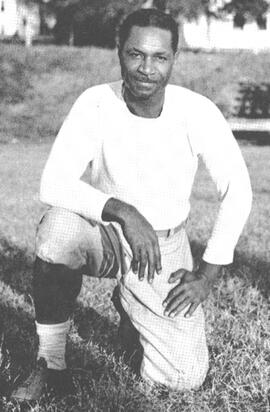
Coach Alonzo "Jake" Gaither Collection
Meek-Eaton Archival Collection MS_0002 · Dossier · 1938 - 1984

Location: AC.2.A.3.3.1 - AC.2.A.3.5.2

Born April 11, 1903 in Dayton, Tennessee, Alonzo S. "Jake" Gaither was head football coach of the FAMC Rattlers from 1945 to 1969. During his 25-year tenure, Gaither compiled a record of 203 wins, 36 losses, and 4 ties - for a winning percentage of .844, the highest for any college coach of his time, Black or white, with 200 victories.

Forty-two student athletes under Gaither's coaching went on to play in the National Football League including: "Bullet" Bob Hayes, a star wide receiver for the Dallas Cowboys who also earned two gold medals for track during the 1964 Summer Olympics in Tokyo; Willie Galimore, an acclaimed running back with the Chicago Bears; Ken Riley, a defensive back with the Cincinnati Bengals; and Robert Paremore, a halfback with the St. Louis Cardinals. Under his leadership, the Rattlers won 6 Negro Collegiate Football championships. Recognizing the dynamic impact of his coaching career, Gaither was inducted into the National Football Foundation Hall of Fame in 1975.

Gaither retired on August 31, 1973. He died February 18, 1994, at the age of 90. In Tallahassee, a FAMU gymnasium, community playground, public golf course, recreation center, street, and neighborhood are named in his honor. His private home, located at 212 Young Street, which he shared for more than 40 years with his late wife, Sadie (an English professor at Florida A&M University), has been preserved as a cultural center and museum to honor the Gaithers, the people of Tallahassee, the State of Florida, the nation, and the world. A historic marker was also installed in the home’s hilltop yard and the home listed on the National Register of Historic Places.

Sans titre
Carrie Meek Collection
MS_0059

Location: AC.3.A.1.4.2 - AC.3.A.1.4.6

Carrie P. Meek (1926–2021) was a pioneering educator, politician, and civil rights advocate who made a lasting impact in Florida and across the nation. Born in Tallahassee, Florida, she graduated from Florida A&M University and later earned a master’s degree from the University of Michigan.

Meek began her career as a teacher and later served as an administrator at Miami-Dade Community College, where she worked to expand access to higher education. She entered politics in the 1970s, becoming one of the first African American women elected to the Florida Legislature. In 1992, she made history as the first Black person elected to the U.S. House of Representatives from Florida since Reconstruction, representing Miami-Dade County.

Throughout her career, Meek was a strong advocate for education, economic opportunity, and social justice. Known for her dedication to underserved communities, she helped secure funding for infrastructure, job programs, and education initiatives. Her legacy endures as a trailblazer who opened doors for future generations in public service and politics.

https://history.house.gov/People/Detail/18110