Mostrar 35 resultados

Descrição arquivística
11 resultados com objetos digitais Mostrar resultados com objetos digitais
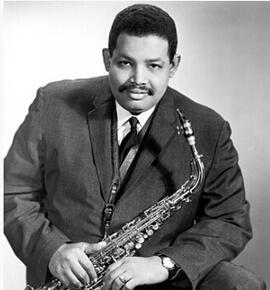
Julian "Cannonball" Adderley Collection
Meek-Eaton Archival Collection MS_0005 · Coleção · 1948 - 2001

Location:AC.1.B.1.4.1 - AC.1.B.1.4.2

The Julian “Cannonball” Adderley Memorial Jazz Collection documents the life, career, and legacy of renowned jazz saxophonist Cannonball Adderley. The collection includes both archival records and museum objects relating to Adderley’s professional achievements, public recognition, and cultural influence.

Materials in the collection consist of awards, photographs, publications, magazines, newspaper articles, sheet music, recordings, correspondence, and exhibit artifacts. Several items relate directly to Adderley’s connection with Florida A&M University, including his academic degree and alumni publications. Additional materials document his musical career, honors, memorial recognitions, and media coverage following his illness and death.

The collection also contains museum exhibit items, including plaques, medals, framed artwork, photographs, and audio recordings associated with Adderley and his brother Nat Adderley. Printed sources such as magazines and newspapers highlight his role in jazz history and the broader cultural recognition of his contributions to American music. The collection is arranged by subject and material type. Printed materials and memorabilia were first sorted by format, then organized alphabetically and placed in acid-free folders and boxes for long-term preservation.

FAMU Hospital Collection
Meek-Eaton Archival Collection AR_0007_007 · Coleção

The Florida A&M University Hospital Collection documents the establishment, development, and administration of the Florida A&M College (FAMC) Hospital, later known as the Florida A&M University (FAMU) Hospital. Spanning the mid-twentieth century, this collection provides insight into the critical role the hospital played in serving the African American community during the era of segregation, when access to quality healthcare for Black patients was severely limited in the South.

The materials within this collection highlight the planning and funding efforts that led to the hospital’s creation, including correspondence, financial records, and reports related to state appropriations, community support, and institutional advocacy. Documentation of the building and expansion of the hospital illustrates the physical and infrastructural development of the facility, reflecting broader efforts to improve healthcare access and medical education opportunities for African Americans in Florida.

Additionally, the collection contains administrative records that detail the hospital’s operations, governance, and staff organization. These records may include internal memoranda, policy documents, personnel files, and reports that provide insight into the day-to-day management of the institution. Collectively, these materials offer valuable historical context on the intersection of healthcare, education, and racial inequality, and demonstrate the significance of FAMU Hospital as both a medical facility and a training ground for African American healthcare professionals.

John F. Matheus Collection
Meek-Eaton Archival Collection MS_0056 · Pasta/Processo · 1909-1983

Location: AC.2.B.3.6.2 - AC.3.A.1.2.8

The John F. Matheus Collection documents the life, literary career, and intellectual contributions of John Frederick Matheus, an American writer and scholar associated with the Harlem Renaissance of the 1920s. The materials in this collection date from 1909 to 1983 and provide insight into Matheus’s development as a prominent literary figure known for his short stories, as well as his work in essays, plays, and poetry.

Matheus gained national recognition for his literary achievements, including his short story “Fog,” which won first place in Opportunity magazine’s literary contest in 1925 and was subsequently published in The New Negro. He continued to receive acclaim with his story “Swamp Moccasin,” which earned first prize in The Crisis magazine’s contest in 1926. His writing reflects the broader artistic and cultural movements of the Harlem Renaissance and was influenced by earlier literary figures such as Harriet Beecher Stowe, Edgar Allan Poe, Phillis Wheatley, and Paul Laurence Dunbar.

The collection consists of personal papers and literary materials that illustrate both Matheus’s professional accomplishments and personal life. Included are correspondence, original manuscripts, notes, and newspaper articles that document his writing process and engagement with literary communities. Photographs and personal items further contextualize his experiences and relationships within the cultural and intellectual circles of his time.

Collectively, the John F. Matheus Collection provides valuable documentation of an important voice of the Harlem Renaissance and offers researchers insight into early twentieth-century African American literature, artistic expression, and scholarly thought.

Genevieve J. Wheeler Thomas Collection
Meek-Eaton Archival Collection MS_0105 · Pasta/Processo · 1949 - 1960

Location: AC.3.B.1.3.5 - AC.3.B.1.4.3

Genevieve Josephine Wheeler Thomas (1914–December 24, 2006) was an educator whose career spanned 36 years in the field of home economics. She served as a classroom instructor before becoming Dean of the School of Home Economics, where she played a significant role in advancing academic programming and facilities. During her administration, notable developments included the construction and furnishing of a new Home Economics annex within the Perry-Paige Agriculture and Home Economics Building. She concluded her tenure in 1977 after returning to classroom instruction, leaving a lasting impact on both students and institutional growth.

The Genevieve J. Wheeler Thomas Collection consists of three boxes of materials dating from 1949 to 1960, documenting her professional contributions to education and academic administration. The collection includes instructional materials, meeting minutes, correspondence, and related documents that reflect her work as both an educator and administrator.

These materials provide insight into curriculum development, departmental operations, and the evolution of home economics education during the mid-twentieth century. The collection also highlights Wheeler Thomas’s leadership and involvement in institutional planning, particularly during a period of expansion and modernization. Collectively, the records offer valuable documentation of her career and the broader educational landscape in which she served.

The Rosewood Massacre Papers
Meek-Eaton Archival Collection MS_0001 · Coleção · 1900 - 1996

Location: AC.6.B.2.4.7-AC.6.B.3.4.4

The Rosewood Massacre was a racially motivated attack on the predominantly African American town of Rosewood, Florida, in January 1923. Sparked by false accusations and fueled by racial tensions under Jim Crow segregation, white mobs destroyed homes, churches, and businesses, forcing residents to flee and permanently abandon the town. For decades, the event remained largely suppressed in public memory until renewed attention in 1982 by journalist Gary Moore prompted survivors and descendants to seek justice. Their efforts led to a state investigation and compensation legislation, marking one of the first instances of reparations for racial violence in the United States.

Archival Description:
The Rosewood Massacre Papers Collection spans 35 boxes with materials dating from 1900 to 1996 and documents the historical, legal, and commemorative efforts surrounding the 1923 massacre. The collection includes narrative reports, multiple versions of documented histories, survivor affidavits, administrative files, correspondence, interview transcripts, handwritten notes, vital records such as birth certificates, census records including the 1920 U.S. Census, property records such as Levy County deed indexes, and materials related to claims verification.

Folders within the collection contain complete narrative reports and reproduced copies used for research, review, and preservation; affidavits from survivors including Bertha Fagin, Ivory T. Fuller, Vera G. Goins Hamilton, Thelma Hawkins, and Dorothy G. Hosey; correspondence from agencies such as the Florida State Department of Health and Rehabilitative Services and Offices of Vital Statistics; as well as administrative communications, genealogical documentation, and evidentiary records supporting compensation claims.

Collectively, these materials document both the historical reconstruction of the Rosewood Massacre and the legal and administrative processes undertaken to verify survivors, establish lineage, and secure restitution.