
Showing 120 results

Archival description
11 results with digital objects Show results with digital objects
Meek-Eaton Archival Collection MS_0023 · Collection · 1931 - 1938

Location: AC.8.A.2.4.3
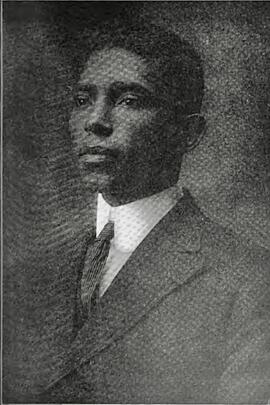
Bishop David Henry Sims was a prominent African American religious leader, educator, and administrator in the African Methodist Episcopal (A.M.E.) Church during the early twentieth century. Born in 1889 in Talladega, Alabama, he was the son of Reverend Felix Rice Sims, a well-educated minister who greatly influenced his early life and commitment to education and faith. Sims pursued higher education at several institutions, including Livingstone College, Oberlin College, and Yale University, where he completed advanced theological training.

Throughout his career, Sims held numerous leadership roles in both religious and academic settings. He served as a professor of education and later as vice president at Morris Brown College in Atlanta, Georgia. His work within the A.M.E. Church included pastoral leadership, administrative service, and participation in major church conferences. In 1932, he was elected Bishop in the A.M.E. Church, marking a significant achievement in his career.

Sims was also involved in broader social and political efforts, including service on commissions related to education and public affairs. His work extended internationally, particularly in South Africa, where he contributed to missionary and educational initiatives. His life and career reflect a deep commitment to religious leadership, education, and the advancement of African American communities during a period of significant social change.

The majority of the records in this collection are handwritten letters from Bishop Sims to his sister, Mrs. Miriam Sims-Tooke. These letters provide a detailed and intimate account of his daily life, thoughts, and activities, particularly during the period in which he was working in South Africa. Through this correspondence, the collection highlights Sims’ involvement in missionary work, his observations of social and cultural conditions abroad, and his ongoing connection to family in the United States.

In addition to correspondence, the collection includes greeting cards and photographs that further document Sims’ personal and professional networks. These materials complement the letters by providing visual and contextual evidence of his life and relationships during this period.

The collection was processed in 1985 and is arranged at the file level, reflecting a coherent grouping of personal papers centered on correspondence and related materials. Collectively, the Bishop David Henry Sims Collection offers a unique perspective on the experiences of an African American religious leader working in an international context, while also shedding light on familial bonds, missionary efforts, and transnational connections within the African diaspora during the early twentieth century.

Southern Workman Collection
Meek-Eaton Archival Collection MS_0118 · 1910 - 1939

Location: AC.6.B.4.3.4 - AC.6.B.4.3.8

The Southern Workman Collection consists of five boxes of materials dating from 1910 to 1939, documenting a significant period in the publication history of The Southern Workman. Published monthly by the Hampton Institute Press at Hampton Institute (now Hampton University), the magazine originated in 1872 as Southern Workman and Hampton School Record and served as an important platform for education, culture, and social commentary.

The collection includes issues of the magazine featuring articles, lectures, essays, and book reviews that reflect the intellectual and cultural life of the institution. Content highlights the activities of Hampton Institute, including information about its faculty, students, and graduates, while also addressing broader social issues of the time.

With a primary focus on African American and Native American history, the materials provide valuable insight into educational practices, cultural expression, and social conditions in the early twentieth century. Collectively, the collection illustrates the role of The Southern Workman as a key publication in advancing knowledge and documenting the experiences and contributions of marginalized communities.

AR_0001 · 1870 - 1940

These objects, linked to a period of approximately 1870-1940, offer a glimpse into the subtle influence of colonial oversight. Field spirits were crafted to protect women and children, homes, crops, domestic animals, and providers (hunters) and also displayed warnings to those venturing onto protected lands, fields, homes, or pilfering from the property owner. The reliance on such objects indicates that longstanding conversion to Christianity among the Fante did not replace traditional beliefs about the security of homes, crops, domestic animals, and people.

These examples of field spirits are rare because they were tools, not created to be objects of art, but crafted to offer specific protection and security for the people who placed them in the fields. Environmental exposure and insects, particularly termites, destroy wooden objects in West Africa very quickly. It is precisely because such field spirits were normally left in the fields that very few remain.

Nana Araba Apt
Reverend Thomas B. Carr
Meek-Eaton Archival Collection MS_0124 · 1912 - 1954

The Reverend Thomas B. Carr Collection documents the life and work of Reverend Thomas B. Carr, an African Methodist Episcopal (AME) minister and landowner in Leon County, Florida, with materials dating from 1912 to 1954, and concentrated between 1924 and 1946. This collection highlights Carr’s religious leadership, agricultural involvement, and community engagement within both ecclesiastical and civic spheres.

The materials consist primarily of textual records, including correspondence, deeds, programs, reports, sermons, financial and legal documents, advertisements, and other printed matter. These records provide insight into Carr’s role within the AME Church, as well as his participation in agricultural and landownership activities. The collection reflects his involvement with organizations such as the Florida State Dairymen’s Association, the Cooperative Extension Office, and the U.S. Department of Agriculture’s Farm Credit Administration.

Significant topics represented in the collection include African American land ownership, agricultural education, and federal, state, and municipal agricultural programs during the early to mid-twentieth century, including the World War II era. The records also document the organization and activities of the Black church in supporting farmers and rural communities. Additionally, the collection contains several of Reverend Carr’s sermons, which address religious observances such as Father’s Day, Mother’s Day, and Psalm 91, offering further perspective on his spiritual leadership.

Overall, the Reverend Thomas B. Carr Collection provides valuable documentation of the intersection of religion, agriculture, and community development among African Americans in Florida during the first half of the twentieth century.

Meek-Eaton Archival Collection MS_0105 · File · 1949 - 1960

Location: AC.3.B.1.3.5 - AC.3.B.1.4.3

Genevieve Josephine Wheeler Thomas (1914–December 24, 2006) was an educator whose career spanned 36 years in the field of home economics. She served as a classroom instructor before becoming Dean of the School of Home Economics, where she played a significant role in advancing academic programming and facilities. During her administration, notable developments included the construction and furnishing of a new Home Economics annex within the Perry-Paige Agriculture and Home Economics Building. She concluded her tenure in 1977 after returning to classroom instruction, leaving a lasting impact on both students and institutional growth.

The Genevieve J. Wheeler Thomas Collection consists of three boxes of materials dating from 1949 to 1960, documenting her professional contributions to education and academic administration. The collection includes instructional materials, meeting minutes, correspondence, and related documents that reflect her work as both an educator and administrator.

These materials provide insight into curriculum development, departmental operations, and the evolution of home economics education during the mid-twentieth century. The collection also highlights Wheeler Thomas’s leadership and involvement in institutional planning, particularly during a period of expansion and modernization. Collectively, the records offer valuable documentation of her career and the broader educational landscape in which she served.

MS_0122 · 1957 - 1963

Location: AC.7.A.4.3.1 - AC.7.A.4.3.2

The Florida State Teachers Association Collection documents the activities and advocacy of the Florida State Teachers Association (FSTA), a professional organization composed of African American educators, administrators, school staff, and parents across the state of Florida. The materials date from 1957 to 1963, a critical period during the Civil Rights Movement when Black teachers and educational leaders actively confronted systemic inequality within segregated school systems.

During this era, African American educators faced widespread discrimination, including unequal pay, limited resources, and underfunded schools. In response, members of the FSTA organized collectively to advocate for improved working conditions, equitable educational opportunities for Black students, and broader social change. The association served not only as a professional network but also as a platform for activism, positioning educators at the forefront of efforts to challenge segregation and promote civil rights.

The collection consists of organizational and administrative records that reflect the operations and impact of the association. Materials include correspondence, meeting minutes, conference and workshop documentation, reports, and publications that highlight the planning and execution of statewide initiatives. These records illustrate collaboration among educators and community stakeholders, as well as the development of strategies aimed at addressing disparities in education.

Collectively, the Florida State Teachers Association Collection provides valuable insight into the role of Black educators as advocates for equity and justice in mid-twentieth-century Florida. The materials underscore the importance of professional organizations in advancing civil rights and demonstrate the lasting impact of the FSTA’s efforts to improve educational access and opportunities for African American communities.

Meek-Eaton Archival Collection MS_0120 · 1954 - 1965

Location: AC.6.B.4.2.7 - AC.6.B.4.3.3

The Southern School News Collection consists of issues of Southern School News, a publication produced by the Southern Education Reporting Service between 1954 and 1965. Established in response to the landmark 1954 Supreme Court decision in Brown v. Board of Education, the Southern Education Reporting Service sought to provide nonpartisan, factual reporting on the evolving landscape of public education in the American South during the era of school desegregation.

The publication was designed to inform school administrators, public officials, educators, and interested citizens about significant developments in education following the Court’s ruling. Reports featured in Southern School News were compiled by southern newspaper editors and educators, offering regionally grounded perspectives on policy changes, legal challenges, community responses, and the progress of desegregation efforts across southern states.

The collection includes serial issues of Southern School News that document key events, debates, and implementation strategies related to desegregation. These materials provide detailed accounts of state and local actions, including legislative measures, court cases, school board decisions, and public reactions. As a contemporary source, the publication captures the complexities and tensions surrounding the transition from segregated to integrated school systems in the South.

Collectively, the Southern School News Collection serves as an important resource for understanding the educational, political, and social transformations that followed the Brown decision. It offers researchers valuable insight into how information about desegregation was disseminated, interpreted, and contested, while also highlighting the role of media and educators in documenting one of the most significant periods in American educational history.

Harper's Magazine Collection
Meek-Eaton Archival Collection MS_0113 · Collection · 1876 - 1965

Location: AC.6.B.1.2.1

The Harper’s Magazine Collection consists of one box of materials spanning the years 1876 to 1965, documenting a significant portion of one of America’s oldest and most influential general-interest monthly publications. Founded in 1850 by the New York publishing firm Harper & Brothers, Harper’s Magazine quickly gained national prominence, with its early issues achieving widespread circulation and establishing the publication as a leading forum for intellectual and cultural discourse.

This collection reflects the magazine’s longstanding commitment to exploring the issues that shape American society through long-form journalism, essays, fiction, and critical commentary. Emphasizing fine writing and original thought, Harper’s Magazine has historically provided readers with insightful perspectives on politics, social conditions, the environment, and cultural life. The materials within this collection illustrate the breadth of topics addressed in the magazine and its role in fostering national conversation across generations.

The collection includes a selection of issues and related materials that highlight contributions from both emerging writers and prominent literary figures. Known for publishing influential voices in American letters, the magazine has featured authors such as Annie Dillard, Barbara Ehrenreich, Jonathan Franzen, Mary Gaitskill, David Foster Wallace, and Tom Wolfe.

Collectively, this collection offers valuable insight into the evolution of American journalism, literary expression, and public discourse from the late nineteenth century through the mid-twentieth century.

Arthur L. Kidd Collection
Meek-Eaton Archival Collection MS_0013 · Collection · 1934 - 1967

Location: AC.2.B.3.2.2- AC.2.B.3.2.5

This collection consists of personal papers from Florida A&M University’s Arthur L. Kidd. Kidd, a native of Pennsylvania, earned a B.A. degree in 1924 from the University of Michigan, and in 1929, a Masters of Arts degree from Columbia University. Kidd also did additional studying at the University of Iowa, Columbia University, and New York University. He began his teaching career at Tuskegee Institute in 1924 before accepting a position at Florida A&M College (FAMCEE) in 1925 as Principal of the High School. Kidd worked at FAMCEE until 1944. During his nineteen years of service to the college, Kidd worked in numerous positions, including: Head of the Department of History, Acting Director of the Extension Division, Acting Dean for the College of Arts and Sciences and College Registrar. In October 1944, Kidd left his position at FAMCEE to work with the United Nations Relief and Rehabilitation Administration, where he worked in various capacities in Washington, D.C., and abroad in locations including France, Germany, and Holland. He returned to the United States in 1950 and worked for a year at Maryland State College before accepting a second appointment at FAMCEE in 1951 as Director of the Division of Social Studies. Upon the college reaching university status in 1954, in the academic re-organization, Kidd consequently became the Associate Dean of the College of Arts and Sciences. Until 1969, he served FAMU in various capacities, including director of institutional studies and director of university administrative planning.

The material type in this collection were mainly magazines, news articles, and news clippings from 1949-19687 that followed local and national events affecting Negro people and occurrences impacting their lives. The records of this collection are especially important and informative in that they as resources that document firsthand the many historic events that occurred during the American Negro Civil Rights Years. Most of the records document the passing of school integration and public desegregation legislation, mass boycotts, sit-ins, and other forms of protest, as well as the brutal, nationwide social turbulence that accompanied this period. Additionally, a small amount of materials related to Kidd's instructional duties at FAMU are included.

Biographical data and inclusive subjects were acquired from Murell Dawson circa 2002.

A. P. Turner Collection
MS_0102 · 1930 - 1972

Location: AC.3.B.1.1.5 - AC.3.B.1.2.1
The A. P. Turner collection is a two-box collection that documents the life of Allen P. Turner, a reverend of the Bethel Missionary Baptist Church and a Morehouse College graduate who wrote and directed dramatic plays at Albany State College and Florida A&M University.
The items within this collection date from 1930 to 1972, and are concentrated between 1940 and 1968. This collection includes academic and business papers, playscripts, letters, and other printed materials that provide valuable insight into Turner’s professional and personal life. His involvement in the Interdenominational Ministers Alliance of Tallahassee and Vicinity, the Young Men’s Christian Association, and the Florida Inter-Scholastic Speech and Drama Association gives this collection a strong representation of his religious, scholarly, and artistic leadership. Although the collection offers a strong foundation for understanding Turner’s leadership within religious and scholarly organizations, many items are untitled and undated, limiting the ability to fully contextualize specific individuals, events, and materials. Overall, the A. P. Turner collection provides valuable documentation of Turner’s life and how his social status as a reverend, playwright, and director contributed to his community.