
Imprimir vista previa Cerrar

Mostrando 120 resultados

Descripción archivística
11 resultados con objetos digitales Muestra los resultados con objetos digitales
Reverend Thomas B. Carr
Meek-Eaton Archival Collection MS_0124 · 1912 - 1954

The Reverend Thomas B. Carr Collection documents the life and work of Reverend Thomas B. Carr, an African Methodist Episcopal (AME) minister and landowner in Leon County, Florida, with materials dating from 1912 to 1954, and concentrated between 1924 and 1946. This collection highlights Carr’s religious leadership, agricultural involvement, and community engagement within both ecclesiastical and civic spheres.

The materials consist primarily of textual records, including correspondence, deeds, programs, reports, sermons, financial and legal documents, advertisements, and other printed matter. These records provide insight into Carr’s role within the AME Church, as well as his participation in agricultural and landownership activities. The collection reflects his involvement with organizations such as the Florida State Dairymen’s Association, the Cooperative Extension Office, and the U.S. Department of Agriculture’s Farm Credit Administration.

Significant topics represented in the collection include African American land ownership, agricultural education, and federal, state, and municipal agricultural programs during the early to mid-twentieth century, including the World War II era. The records also document the organization and activities of the Black church in supporting farmers and rural communities. Additionally, the collection contains several of Reverend Carr’s sermons, which address religious observances such as Father’s Day, Mother’s Day, and Psalm 91, offering further perspective on his spiritual leadership.

Overall, the Reverend Thomas B. Carr Collection provides valuable documentation of the intersection of religion, agriculture, and community development among African Americans in Florida during the first half of the twentieth century.

D. E. Williams Collection
Meek-Eaton Archival Collection MS_0123

Location: AC.8.A.3.3.1 - AC.8.A.3.4.4

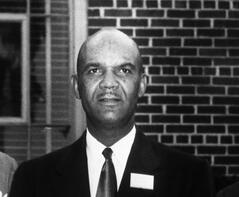
DeWitt Everett Williams served as the State Agent of Negro Schools in Florida from 1927 to 1962 under the Florida Department of Education. In this role, he was responsible for overseeing and supporting the development of African American education during the era of segregation. His work placed him in direct contact with schools across the state, documenting their conditions, operations, and communities during a critical period in the history of public education in Florida.

The D. E. Williams Collection consists of six boxes of materials documenting African American education in Florida during the Jim Crow era. The collection primarily contains photographs of segregated African American schools across the state, reflecting both rural and urban educational environments. These images provide visual documentation of school buildings, classrooms, students, and faculty, offering insight into the conditions and experiences within segregated educational systems.

The photographs are arranged alphabetically by county, facilitating geographic access and highlighting regional differences in school infrastructure and resources. Collectively, the collection serves as an important resource for understanding the historical landscape of African American education in Florida and the broader social and institutional context of segregation in the twentieth century.

Meek-Eaton Archival Collection MS_0121 · 1995 - 2003

Location: AC.7.A.3.5.1 - AC.7.A.3.6.1

The Florida African American History Education Task Force Files document the development, implementation, and advancement of statewide initiatives to incorporate African American history into Florida’s public school curriculum. The materials date from 1995 to 2003 and are closely tied to the legislative mandate established by the State of Florida in 1994 through Florida Statute 1003.42, which required the teaching of the history, culture, experiences, and contributions of African Americans in K–12 education.

Following the passage of this legislation, the African American History Task Force (AAHTF) was established to ensure the effective execution and sustainability of this mandate. The Task Force played a central role in guiding curriculum development, supporting teacher training, and promoting educational equity through the integration of African American history across grade levels. Grant-supported initiatives were also developed under the Task Force’s direction to provide resources, workshops, and programming aligned with the original intent of the statute.

The collection consists of administrative and programmatic records that reflect the operations and impact of the Task Force. Materials include correspondence, meeting minutes, reports, grant documentation, curriculum guides, workshop and conference materials, and educational publications. These records highlight collaboration among educators, policymakers, and community stakeholders working to institutionalize African American history education throughout Florida’s school system. The files also document outreach efforts, training sessions for teachers, and the evaluation of program effectiveness.

Collectively, the Florida African American History Education Task Force Files provide valuable insight into the institutionalization of African American history within public education in Florida. The collection underscores the role of legislative action, educational advocacy, and community engagement in shaping inclusive curricula and preserving the historical narratives of African Americans for future generations.

Southern School News Collection
Meek-Eaton Archival Collection MS_0120 · 1954 - 1965

Location: AC.6.B.4.2.7 - AC.6.B.4.3.3

The Southern School News Collection consists of issues of Southern School News, a publication produced by the Southern Education Reporting Service between 1954 and 1965. Established in response to the landmark 1954 Supreme Court decision in Brown v. Board of Education, the Southern Education Reporting Service sought to provide nonpartisan, factual reporting on the evolving landscape of public education in the American South during the era of school desegregation.

The publication was designed to inform school administrators, public officials, educators, and interested citizens about significant developments in education following the Court’s ruling. Reports featured in Southern School News were compiled by southern newspaper editors and educators, offering regionally grounded perspectives on policy changes, legal challenges, community responses, and the progress of desegregation efforts across southern states.

The collection includes serial issues of Southern School News that document key events, debates, and implementation strategies related to desegregation. These materials provide detailed accounts of state and local actions, including legislative measures, court cases, school board decisions, and public reactions. As a contemporary source, the publication captures the complexities and tensions surrounding the transition from segregated to integrated school systems in the South.

Collectively, the Southern School News Collection serves as an important resource for understanding the educational, political, and social transformations that followed the Brown decision. It offers researchers valuable insight into how information about desegregation was disseminated, interpreted, and contested, while also highlighting the role of media and educators in documenting one of the most significant periods in American educational history.

Black Schools in Florida Collection
Meek-Eaton Archival Collection MS_0119

Location: AC.7.A.1.2.2 - AC.7.A.1.5.3

The Black Schools in Florida Collection documents the history, administration, and cultural life of African American education in Florida during the era of segregation and beyond. Comprising twelve boxes of materials, this collection provides rich insight into the development of Black primary and secondary schools, as well as the educators, administrators, and communities that sustained them. The records collectively highlight the structure of segregated schooling, the professional networks of Black educators, and the efforts toward institutional improvement and accreditation.

The collection consists of a wide range of materials, including correspondences, school records, conference records, and publications that reflect the daily operations and broader educational initiatives of Black schools throughout the state. Printed materials such as programs, event programs, yearbooks, newspapers, and school publications illustrate student life, extracurricular activities, and community engagement. Additional items, including certificates of membership, certificates of accreditation, high school diploma covers, plaques, and school emblems, provide evidence of institutional identity, achievement, and recognition.

Educational development and administrative practices are further represented through instructional materials and reports, including a self-study of Nims Middle School, an instructional book for Duval County middle schools, a junior high school handbook, and documentation related to teacher workshops and professional training. The collection also includes records such as a statewide list of Negro principals and materials pertaining to educators in Gadsden County, offering valuable context on leadership and staffing within Black educational institutions. Notably, one empty box labeled “Foreign Affairs” is present, suggesting either removed or relocated materials.

Photographs within the collection visually document school buildings, faculty, students, and events, complementing the textual records and enhancing the historical narrative. Together, these materials provide a comprehensive view of the educational experiences of African American students and educators in Florida, emphasizing both the challenges of segregation and the resilience and accomplishments of Black school communities.

Southern Workman Collection
Meek-Eaton Archival Collection MS_0118 · 1910 - 1939

Location: AC.6.B.4.3.4 - AC.6.B.4.3.8

The Southern Workman Collection consists of five boxes of materials dating from 1910 to 1939, documenting a significant period in the publication history of The Southern Workman. Published monthly by the Hampton Institute Press at Hampton Institute (now Hampton University), the magazine originated in 1872 as Southern Workman and Hampton School Record and served as an important platform for education, culture, and social commentary.

The collection includes issues of the magazine featuring articles, lectures, essays, and book reviews that reflect the intellectual and cultural life of the institution. Content highlights the activities of Hampton Institute, including information about its faculty, students, and graduates, while also addressing broader social issues of the time.

With a primary focus on African American and Native American history, the materials provide valuable insight into educational practices, cultural expression, and social conditions in the early twentieth century. Collectively, the collection illustrates the role of The Southern Workman as a key publication in advancing knowledge and documenting the experiences and contributions of marginalized communities.

Mrs. Willie Ziegler White Collection
Meek-Eaton Archival Collection MS_0116 · 1956 - 1973

Location: AC.3.B.1.4.4 - AC.3.B.1.5.1

The Mrs. Willie Ziegler White Collection consists of 5 boxes of materials documenting her involvement in education and parent-teacher organizations, particularly within the Florida State Congress of Colored Parents and Teachers and related networks. The collection reflects her role as an educator and community leader engaged in advancing African American education and parental involvement during the era of segregation.

The collection includes correspondence, news clippings, directories, handbooks, ledgers, notepads, and record books, as well as files related to Parent Teacher Association activities. These materials document both administrative functions and community outreach efforts. Also included are records from affiliated organizations such as the National Congress of Colored Parents and Teachers, the National Convention of Christians and Jews, and the Georgia Congress of Colored Parents and Teachers.

Additional materials consist of songs, poems, manuals, publications, and magazines that reflect the educational, cultural, and organizational priorities of the groups with which Mrs. White was associated. Correspondence within the collection highlights communication between educators, administrators, and community members involved in improving educational opportunities.

Collectively, the collection provides insight into the leadership, organization, and advocacy efforts of African American educators and parent organizations, as well as the broader network of institutions working to support Black education in the early to mid-twentieth century.

Harper's Magazine Collection
Meek-Eaton Archival Collection MS_0113 · Colección · 1876 - 1965

Location: AC.6.B.1.2.1

The Harper’s Magazine Collection consists of one box of materials spanning the years 1876 to 1965, documenting a significant portion of one of America’s oldest and most influential general-interest monthly publications. Founded in 1850 by the New York publishing firm Harper & Brothers, Harper’s Magazine quickly gained national prominence, with its early issues achieving widespread circulation and establishing the publication as a leading forum for intellectual and cultural discourse.

This collection reflects the magazine’s longstanding commitment to exploring the issues that shape American society through long-form journalism, essays, fiction, and critical commentary. Emphasizing fine writing and original thought, Harper’s Magazine has historically provided readers with insightful perspectives on politics, social conditions, the environment, and cultural life. The materials within this collection illustrate the breadth of topics addressed in the magazine and its role in fostering national conversation across generations.

The collection includes a selection of issues and related materials that highlight contributions from both emerging writers and prominent literary figures. Known for publishing influential voices in American letters, the magazine has featured authors such as Annie Dillard, Barbara Ehrenreich, Jonathan Franzen, Mary Gaitskill, David Foster Wallace, and Tom Wolfe.

Collectively, this collection offers valuable insight into the evolution of American journalism, literary expression, and public discourse from the late nineteenth century through the mid-twentieth century.

Genevieve J. Wheeler Thomas Collection
Meek-Eaton Archival Collection MS_0105 · Unidad documental compuesta · 1949 - 1960

Location: AC.3.B.1.3.5 - AC.3.B.1.4.3

Genevieve Josephine Wheeler Thomas (1914–December 24, 2006) was an educator whose career spanned 36 years in the field of home economics. She served as a classroom instructor before becoming Dean of the School of Home Economics, where she played a significant role in advancing academic programming and facilities. During her administration, notable developments included the construction and furnishing of a new Home Economics annex within the Perry-Paige Agriculture and Home Economics Building. She concluded her tenure in 1977 after returning to classroom instruction, leaving a lasting impact on both students and institutional growth.

The Genevieve J. Wheeler Thomas Collection consists of three boxes of materials dating from 1949 to 1960, documenting her professional contributions to education and academic administration. The collection includes instructional materials, meeting minutes, correspondence, and related documents that reflect her work as both an educator and administrator.

These materials provide insight into curriculum development, departmental operations, and the evolution of home economics education during the mid-twentieth century. The collection also highlights Wheeler Thomas’s leadership and involvement in institutional planning, particularly during a period of expansion and modernization. Collectively, the records offer valuable documentation of her career and the broader educational landscape in which she served.

Senator Arthenia L. Joyner Collection
Meek-Eaton Archival Collection MS_0071 · Unidad documental compuesta

Location: AC.2.B.2.4.4 - AC.2.B.3.1.3

Arthenia L. Joyner born 1943 in Lakeland, Florida, and raised in Tampa. She emerged as a leader during the Civil Rights Movement, participating in protests as both a high school and college student at Florida A&M University. Joyner attended the original FAMU College of Law, graduating in 1968, and went on to break significant barriers as the first Black woman to practice law in Hillsborough County and the first African American to practice law in Polk County. She later served as a legislative aide to State Representative Joe Lang Kershaw, the first Black legislator in Florida since Reconstruction, and was elected to three terms in the Florida House of Representatives representing the 59th District.

The Senator Arthenia L. Joyner Collection consists of eight boxes of materials documenting her career in law, public service, and civil rights advocacy. The collection includes correspondence, meeting records, travel documents, and speeches that reflect her work as an attorney, legislative aide, and elected official.

These materials provide insight into Joyner’s role in shaping public policy, her legislative activities, and her engagement with constituents and colleagues. The collection also highlights her involvement in civil rights initiatives and her contributions to expanding opportunities for African Americans in the legal and political arenas. Collectively, the records document her impact on Florida’s political landscape and her legacy as a pioneering African American woman in law and government.