
Showing 6 results

Archival description
2 results with digital objects Show results with digital objects
Meek-Eaton Archival Collection MS_0014 · Collection · 2015 - 2021

Location: AC.8.A.2.2.4

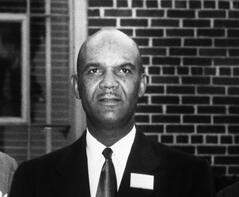
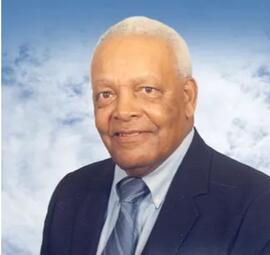
The Attorney Armstrong Purdee Collection documents the life, legacy, and historical significance of one of Jackson County’s earliest African American legal professionals. The collection contains photographs, commemorative materials, newspaper articles, publications, and digital resources that highlight Purdee’s professional accomplishments and the lasting impact of his work within the community.

Materials include images of commemorative events, a photograph of Purdee’s gravesite, and newspaper coverage discussing his life and contributions. The collection also contains publications related to African American history in Jackson County, including a family reunion cookbook and a scrapbook documenting the legacy of African Americans in the region.

In addition to printed materials, the collection includes a video link documenting a Black History Month program featuring the Jackson County NAACP and the Jackson County School Board. Together, these materials provide insight into community efforts to preserve the historical legacy of Attorney Armstrong Purdee and the broader history of African American leadership and civic engagement in Jackson County, Florida.

The collection is arranged in a single box and organized by subject and material type, including commemorations, news articles, photographs, and publications related to Attorney Armstrong Purdee.
Meek-Eaton Archival Collection MS_0119

Location: AC.7.A.1.2.2 - AC.7.A.1.5.3

The Black Schools in Florida Collection documents the history, administration, and cultural life of African American education in Florida during the era of segregation and beyond. Comprising twelve boxes of materials, this collection provides rich insight into the development of Black primary and secondary schools, as well as the educators, administrators, and communities that sustained them. The records collectively highlight the structure of segregated schooling, the professional networks of Black educators, and the efforts toward institutional improvement and accreditation.

The collection consists of a wide range of materials, including correspondences, school records, conference records, and publications that reflect the daily operations and broader educational initiatives of Black schools throughout the state. Printed materials such as programs, event programs, yearbooks, newspapers, and school publications illustrate student life, extracurricular activities, and community engagement. Additional items, including certificates of membership, certificates of accreditation, high school diploma covers, plaques, and school emblems, provide evidence of institutional identity, achievement, and recognition.

Educational development and administrative practices are further represented through instructional materials and reports, including a self-study of Nims Middle School, an instructional book for Duval County middle schools, a junior high school handbook, and documentation related to teacher workshops and professional training. The collection also includes records such as a statewide list of Negro principals and materials pertaining to educators in Gadsden County, offering valuable context on leadership and staffing within Black educational institutions. Notably, one empty box labeled “Foreign Affairs” is present, suggesting either removed or relocated materials.

Photographs within the collection visually document school buildings, faculty, students, and events, complementing the textual records and enhancing the historical narrative. Together, these materials provide a comprehensive view of the educational experiences of African American students and educators in Florida, emphasizing both the challenges of segregation and the resilience and accomplishments of Black school communities.

D. E. Williams Collection
Meek-Eaton Archival Collection MS_0123

Location: AC.8.A.3.3.1 - AC.8.A.3.4.4

DeWitt Everett Williams served as the State Agent of Negro Schools in Florida from 1927 to 1962 under the Florida Department of Education. In this role, he was responsible for overseeing and supporting the development of African American education during the era of segregation. His work placed him in direct contact with schools across the state, documenting their conditions, operations, and communities during a critical period in the history of public education in Florida.

The D. E. Williams Collection consists of six boxes of materials documenting African American education in Florida during the Jim Crow era. The collection primarily contains photographs of segregated African American schools across the state, reflecting both rural and urban educational environments. These images provide visual documentation of school buildings, classrooms, students, and faculty, offering insight into the conditions and experiences within segregated educational systems.

The photographs are arranged alphabetically by county, facilitating geographic access and highlighting regional differences in school infrastructure and resources. Collectively, the collection serves as an important resource for understanding the historical landscape of African American education in Florida and the broader social and institutional context of segregation in the twentieth century.

MS_0122 · 1957 - 1963

Location: AC.7.A.4.3.1 - AC.7.A.4.3.2

The Florida State Teachers Association Collection documents the activities and advocacy of the Florida State Teachers Association (FSTA), a professional organization composed of African American educators, administrators, school staff, and parents across the state of Florida. The materials date from 1957 to 1963, a critical period during the Civil Rights Movement when Black teachers and educational leaders actively confronted systemic inequality within segregated school systems.

During this era, African American educators faced widespread discrimination, including unequal pay, limited resources, and underfunded schools. In response, members of the FSTA organized collectively to advocate for improved working conditions, equitable educational opportunities for Black students, and broader social change. The association served not only as a professional network but also as a platform for activism, positioning educators at the forefront of efforts to challenge segregation and promote civil rights.

The collection consists of organizational and administrative records that reflect the operations and impact of the association. Materials include correspondence, meeting minutes, conference and workshop documentation, reports, and publications that highlight the planning and execution of statewide initiatives. These records illustrate collaboration among educators and community stakeholders, as well as the development of strategies aimed at addressing disparities in education.

Collectively, the Florida State Teachers Association Collection provides valuable insight into the role of Black educators as advocates for equity and justice in mid-twentieth-century Florida. The materials underscore the importance of professional organizations in advancing civil rights and demonstrate the lasting impact of the FSTA’s efforts to improve educational access and opportunities for African American communities.

Gilbert Porter Collection
Meek-Eaton Archival Collection MS_0021 · Collection · 1947 - 1977

Location: AC.3.A.2.6.1 - AC.3.A.3.1.3

Dr. Gilbert Lawrence Porter was an educational pioneer in the state of Florida who devoted more than five decades of his life to advancing educational equality during the era of segregation and desegregation. Born on January 6, 1909, in Kansas, Porter pursued higher education at Talladega College, where he earned a Bachelor of Arts in Chemistry. He later obtained a master’s degree in educational administration from the University of Michigan and a Ph.D. in philosophy from The Ohio State University, becoming the first African American to receive this distinguished degree from the institution. Throughout his career, Porter remained committed to improving the quality of education for all students while advocating for equal salaries, professional recognition, and civil rights for African American teachers within a segregated and unequal educational system.

The Gilbert Porter Desegregation Files document Porter’s extensive work in educational reform, particularly in relation to school integration and policy development in Florida. The collection consists of Dade County school reports, national reports on desegregation plans and procedures, and materials related to organizations such as the Florida Conference of Social Welfare and the Florida Conference of Social Work. A significant portion of the collection includes newspaper clippings that highlight race relations and integration efforts in Dade County and throughout the state of Florida.

The records reflect the administrative, social, and political challenges surrounding desegregation and provide insight into the strategies and policies implemented during this transformative period.

Meek-Eaton Archival Collection MS_0120 · 1954 - 1965

Location: AC.6.B.4.2.7 - AC.6.B.4.3.3

The Southern School News Collection consists of issues of Southern School News, a publication produced by the Southern Education Reporting Service between 1954 and 1965. Established in response to the landmark 1954 Supreme Court decision in Brown v. Board of Education, the Southern Education Reporting Service sought to provide nonpartisan, factual reporting on the evolving landscape of public education in the American South during the era of school desegregation.

The publication was designed to inform school administrators, public officials, educators, and interested citizens about significant developments in education following the Court’s ruling. Reports featured in Southern School News were compiled by southern newspaper editors and educators, offering regionally grounded perspectives on policy changes, legal challenges, community responses, and the progress of desegregation efforts across southern states.

The collection includes serial issues of Southern School News that document key events, debates, and implementation strategies related to desegregation. These materials provide detailed accounts of state and local actions, including legislative measures, court cases, school board decisions, and public reactions. As a contemporary source, the publication captures the complexities and tensions surrounding the transition from segregated to integrated school systems in the South.

Collectively, the Southern School News Collection serves as an important resource for understanding the educational, political, and social transformations that followed the Brown decision. It offers researchers valuable insight into how information about desegregation was disseminated, interpreted, and contested, while also highlighting the role of media and educators in documenting one of the most significant periods in American educational history.