
Location: AC.3.B.1.1.5 - AC.3.B.1.2.1
The A. P. Turner collection is a two-box collection that documents the life of Allen P. Turner, a reverend of the Bethel Missionary Baptist Church and a Morehouse College graduate who wrote and directed dramatic plays at Albany State College and Florida A&M University.
The items within this collection date from 1930 to 1972, and are concentrated between 1940 and 1968. This collection includes academic and business papers, playscripts, letters, and other printed materials that provide valuable insight into Turner’s professional and personal life. His involvement in the Interdenominational Ministers Alliance of Tallahassee and Vicinity, the Young Men’s Christian Association, and the Florida Inter-Scholastic Speech and Drama Association gives this collection a strong representation of his religious, scholarly, and artistic leadership. Although the collection offers a strong foundation for understanding Turner’s leadership within religious and scholarly organizations, many items are untitled and undated, limiting the ability to fully contextualize specific individuals, events, and materials. Overall, the A. P. Turner collection provides valuable documentation of Turner’s life and how his social status as a reverend, playwright, and director contributed to his community.
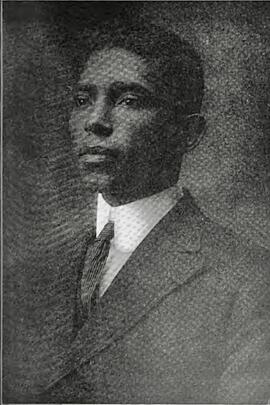
Location: AC.8.A.2.4.3
Bishop David Henry Sims was a prominent African American religious leader, educator, and administrator in the African Methodist Episcopal (A.M.E.) Church during the early twentieth century. Born in 1889 in Talladega, Alabama, he was the son of Reverend Felix Rice Sims, a well-educated minister who greatly influenced his early life and commitment to education and faith. Sims pursued higher education at several institutions, including Livingstone College, Oberlin College, and Yale University, where he completed advanced theological training.
Throughout his career, Sims held numerous leadership roles in both religious and academic settings. He served as a professor of education and later as vice president at Morris Brown College in Atlanta, Georgia. His work within the A.M.E. Church included pastoral leadership, administrative service, and participation in major church conferences. In 1932, he was elected Bishop in the A.M.E. Church, marking a significant achievement in his career.
Sims was also involved in broader social and political efforts, including service on commissions related to education and public affairs. His work extended internationally, particularly in South Africa, where he contributed to missionary and educational initiatives. His life and career reflect a deep commitment to religious leadership, education, and the advancement of African American communities during a period of significant social change.
The majority of the records in this collection are handwritten letters from Bishop Sims to his sister, Mrs. Miriam Sims-Tooke. These letters provide a detailed and intimate account of his daily life, thoughts, and activities, particularly during the period in which he was working in South Africa. Through this correspondence, the collection highlights Sims’ involvement in missionary work, his observations of social and cultural conditions abroad, and his ongoing connection to family in the United States.
In addition to correspondence, the collection includes greeting cards and photographs that further document Sims’ personal and professional networks. These materials complement the letters by providing visual and contextual evidence of his life and relationships during this period.
The collection was processed in 1985 and is arranged at the file level, reflecting a coherent grouping of personal papers centered on correspondence and related materials. Collectively, the Bishop David Henry Sims Collection offers a unique perspective on the experiences of an African American religious leader working in an international context, while also shedding light on familial bonds, missionary efforts, and transnational connections within the African diaspora during the early twentieth century.