
Desegregation

Elements area

Taxonomy

Code

Scope note(s)

    Source note(s)

      Display note(s)

        Hierarchical terms

        Desegregation

          Equivalent terms

          Desegregation

            Associated terms

            Desegregation

              22 Archival description results for Desegregation

              22 results directly related Exclude narrower terms
              Porter, Gilbert
              Meek-Eaton Archival Collection MS_0021-Box 01 · 1947 - 1977
              Part of Gilbert Porter Collection

              The materials in this box of the Gilbert Porter Collection document Dr. Gilbert L. Porter’s work and involvement in educational reform and desegregation efforts in Florida, with records dating from 1947 to 1977. The box consists primarily of public school reports, publications, and materials related to integration and desegregation, including general reports and those specifically focused on Dade County. These records reflect the development and implementation of desegregation plans, as well as the broader impact of integration on teachers, administrators, and educational institutions.

              Also included are publications such as The History of the Florida State Teachers Association by Gilbert L. Porter and Leedell W. Neyland, along with supporting materials that provide additional context to Porter’s contributions to educational policy and advocacy. The records illustrate both local and statewide efforts to address inequalities within the public school system and highlight the administrative and social challenges associated with desegregation.

              The folders within this box are arranged in alphabetical order, with materials organized to reflect subject groupings and record types. Collectively, this box provides valuable insight into the policies, programs, and institutional responses that shaped the transition from segregation to integration in Florida’s educational system, as well as Dr. Porter’s significant role in advancing educational equity.
              Gilbert Porter Collection
              Meek-Eaton Archival Collection MS_0021 · Collection · 1947 - 1977

              Location: AC.3.A.2.6.1 - AC.3.A.3.1.3

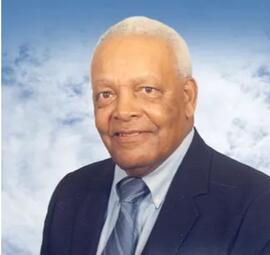
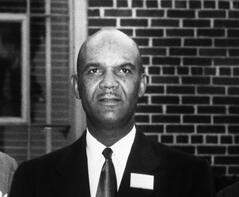
              Dr. Gilbert Lawrence Porter was an educational pioneer in the state of Florida who devoted more than five decades of his life to advancing educational equality during the era of segregation and desegregation. Born on January 6, 1909, in Kansas, Porter pursued higher education at Talladega College, where he earned a Bachelor of Arts in Chemistry. He later obtained a master’s degree in educational administration from the University of Michigan and a Ph.D. in philosophy from The Ohio State University, becoming the first African American to receive this distinguished degree from the institution. Throughout his career, Porter remained committed to improving the quality of education for all students while advocating for equal salaries, professional recognition, and civil rights for African American teachers within a segregated and unequal educational system.

              The Gilbert Porter Desegregation Files document Porter’s extensive work in educational reform, particularly in relation to school integration and policy development in Florida. The collection consists of Dade County school reports, national reports on desegregation plans and procedures, and materials related to organizations such as the Florida Conference of Social Welfare and the Florida Conference of Social Work. A significant portion of the collection includes newspaper clippings that highlight race relations and integration efforts in Dade County and throughout the state of Florida.

              The records reflect the administrative, social, and political challenges surrounding desegregation and provide insight into the strategies and policies implemented during this transformative period.

              MS_0122 · 1957 - 1963

              Location: AC.7.A.4.3.1 - AC.7.A.4.3.2

              The Florida State Teachers Association Collection documents the activities and advocacy of the Florida State Teachers Association (FSTA), a professional organization composed of African American educators, administrators, school staff, and parents across the state of Florida. The materials date from 1957 to 1963, a critical period during the Civil Rights Movement when Black teachers and educational leaders actively confronted systemic inequality within segregated school systems.

              During this era, African American educators faced widespread discrimination, including unequal pay, limited resources, and underfunded schools. In response, members of the FSTA organized collectively to advocate for improved working conditions, equitable educational opportunities for Black students, and broader social change. The association served not only as a professional network but also as a platform for activism, positioning educators at the forefront of efforts to challenge segregation and promote civil rights.

              The collection consists of organizational and administrative records that reflect the operations and impact of the association. Materials include correspondence, meeting minutes, conference and workshop documentation, reports, and publications that highlight the planning and execution of statewide initiatives. These records illustrate collaboration among educators and community stakeholders, as well as the development of strategies aimed at addressing disparities in education.

              Collectively, the Florida State Teachers Association Collection provides valuable insight into the role of Black educators as advocates for equity and justice in mid-twentieth-century Florida. The materials underscore the importance of professional organizations in advancing civil rights and demonstrate the lasting impact of the FSTA’s efforts to improve educational access and opportunities for African American communities.

              Davis, Chester L. Sr.
              Meek-Eaton Archival Collection MS_0016-Box 01 · 1942 - 2017
              Part of Chester L. Davis, Sr. Collection

              This box provides a focused view of Davis’s contributions within the broader historical context of African American military service during segregation, as well as the continued efforts to honor his legacy at the local, state, and national levels.

              The records within this box consist of a variety of formats, including correspondence, legislative recognitions, photographs, news articles, cassette tapes, and official service-related documentation. Early materials dating from the 1940s reflect Davis’s World War II service and include photographic and documentary evidence associated with the Congressional Gold Medal and other recognitions tied to the Montford Point Marines. These records highlight the significance of Davis’s role within one of the first groups of African Americans to serve in the United States Marine Corps.

              Correspondence files within the box provide insight into communication between Davis or his representatives and notable individuals and institutions, including the Marine Corps Archives and various public officials. Legislative recognitions from entities such as the United States Congress, the State of Florida, and the City of Quincy further emphasize the long-overdue acknowledgment of Davis’s service and sacrifice. Photographic materials document both his military-related achievements and commemorative events, including images of medals, awards, and presentations involving public figures and family members.

              Additional materials, including news articles and cassette tapes, contribute to a broader understanding of how Davis’s story has been preserved, interpreted, and shared over time. The inclusion of official service records and undated photographs provides further documentation of his military experience and personal life. Collectively, these materials illustrate the enduring impact of Davis’s service, as well as the evolving recognition of Montford Point Marines in American history.

              The records in Box 1 are arranged by subject and record type, with files organized alphabetically and materials within files arranged chronologically where applicable. This organization facilitates access while preserving the contextual relationships between documents. As a cohesive unit, Box 1 serves as a significant resource for researchers examining African American military history, World War II service, and the legacy of the Montford Point Marines.

              D. E. Williams Collection
              Meek-Eaton Archival Collection MS_0123

              Location: AC.8.A.3.3.1 - AC.8.A.3.4.4

              DeWitt Everett Williams served as the State Agent of Negro Schools in Florida from 1927 to 1962 under the Florida Department of Education. In this role, he was responsible for overseeing and supporting the development of African American education during the era of segregation. His work placed him in direct contact with schools across the state, documenting their conditions, operations, and communities during a critical period in the history of public education in Florida.

              The D. E. Williams Collection consists of six boxes of materials documenting African American education in Florida during the Jim Crow era. The collection primarily contains photographs of segregated African American schools across the state, reflecting both rural and urban educational environments. These images provide visual documentation of school buildings, classrooms, students, and faculty, offering insight into the conditions and experiences within segregated educational systems.

              The photographs are arranged alphabetically by county, facilitating geographic access and highlighting regional differences in school infrastructure and resources. Collectively, the collection serves as an important resource for understanding the historical landscape of African American education in Florida and the broader social and institutional context of segregation in the twentieth century.