Civil Rights

Elements area

Taxonomy

Code

Scope note(s)

    Source note(s)

      Display note(s)

        Hierarchical terms

        Civil Rights

          Equivalent terms

          Civil Rights

            Associated terms

            Civil Rights

              36 Archival description results for Civil Rights

              36 results directly related Exclude narrower terms
              MS_0040

              Location: AC.2.A.1.5.7

              Patricia Stephens Due (1939–2012) was a prominent civil rights activist and leader in the movement for racial equality, particularly in Florida. Born in Quincy, Florida, she became actively involved in the struggle against segregation while a student at Florida A&M University. As a key member of the Congress of Racial Equality (CORE), Due helped organize sit-ins and protests, including the historic 1960 Tallahassee “jail-in,” where she and other students chose imprisonment over paying fines for challenging segregation laws.
              Throughout her life, Due remained committed to civil rights advocacy, working to desegregate public spaces and increase voter registration among African Americans. She later co-authored Freedom in the Family with her daughter, documenting her experiences in the movement. Her legacy endures as a symbol of courage, resilience, and lifelong dedication to justice.

              https://www.thehistorymakers.org/biography/patricia-stephens-due-41

              Meek-Eaton Archival Collection AR_0007-_001-_004 · 1933 - 1972
              Part of History of FAMU

              Location: AC.4B.3.1.1- AC.4B.3.4.6

              The William H. Gray Jr. Collection, preserved at the Meek-Eaton Black Archives Research Center and Museum at Florida A&M University, is a substantial and multifaceted body of primary source material documenting presidential leadership, institutional governance, and the broader landscape of Black higher education in the mid-twentieth-century American South. The collection is anchored in Gray’s presidency during the 1940s—a period shaped by World War II, postwar transition, and intensified struggles over educational equity within the rigid framework of Jim Crow segregation.

              The collection contains extensive correspondence, manuscripts, and administrative documents that illuminate Gray’s executive decision-making and strategic vision for Florida A&M University. Presidential and institutional correspondence reflects sustained engagement with state officials, accrediting bodies, faculty leadership, alumni, and external partners, revealing the political and financial negotiations required to sustain and advance a public historically Black institution. Manuscripts and policy drafts further document Gray’s intellectual approach to higher education leadership, institutional planning, and the articulation of Florida A&M University’s public mission.

              Faculty-related materials—including reports, evaluations, appointments, and governance documentation—provide insight into academic labor, professionalization, and the development of instructional and administrative standards during a period of institutional growth and constraint. Of particular significance are documents related to the Florida A&M University Hospital, which underscore the university’s role in professional training, public health, and community service, and highlight the intersection of education, medicine, and racial equity in segregated Florida.

              The collection also preserves records pertaining to major cultural and athletic initiatives, most notably the Orange Blossom Classic, situating the event as both a site of institutional visibility and a locus of African American cultural expression, economic impact, and alumni engagement. News clippings, printed programs, and ephemera document how Florida A&M University and its leadership were represented in regional and national media, offering scholars valuable perspectives on public perception, advocacy, and the university’s evolving national profile.

              Collectively, these materials document Gray’s efforts to expand campus infrastructure, stabilize governance, strengthen academic and professional programs, and position Florida A&M University as a flagship public HBCU amid persistent racial discrimination and structural underfunding. As an archival resource, the William H. Gray Jr. Collection supports advanced research in African American history, higher education administration, public policy, health and medical history, and cultural studies. It offers a critical lens through which to examine the intersections of race, leadership, and institutional resilience, while affirming Florida A&M University’s central role in the historical development of Black higher education in the United States.
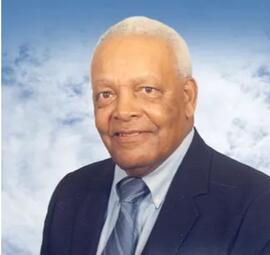
              William H. Gray Jr.
              Meek-Eaton Archival Collection MS_0121 · 1995 - 2003

              Location: AC.7.A.3.5.1 - AC.7.A.3.6.1

              The Florida African American History Education Task Force Files document the development, implementation, and advancement of statewide initiatives to incorporate African American history into Florida’s public school curriculum. The materials date from 1995 to 2003 and are closely tied to the legislative mandate established by the State of Florida in 1994 through Florida Statute 1003.42, which required the teaching of the history, culture, experiences, and contributions of African Americans in K–12 education.

              Following the passage of this legislation, the African American History Task Force (AAHTF) was established to ensure the effective execution and sustainability of this mandate. The Task Force played a central role in guiding curriculum development, supporting teacher training, and promoting educational equity through the integration of African American history across grade levels. Grant-supported initiatives were also developed under the Task Force’s direction to provide resources, workshops, and programming aligned with the original intent of the statute.

              The collection consists of administrative and programmatic records that reflect the operations and impact of the Task Force. Materials include correspondence, meeting minutes, reports, grant documentation, curriculum guides, workshop and conference materials, and educational publications. These records highlight collaboration among educators, policymakers, and community stakeholders working to institutionalize African American history education throughout Florida’s school system. The files also document outreach efforts, training sessions for teachers, and the evaluation of program effectiveness.

              Collectively, the Florida African American History Education Task Force Files provide valuable insight into the institutionalization of African American history within public education in Florida. The collection underscores the role of legislative action, educational advocacy, and community engagement in shaping inclusive curricula and preserving the historical narratives of African Americans for future generations.

              Gibbs, Attorney Joseph
              Meek-Eaton Archival Collection MS_0020-Box 02 · 1967 - 1978
              Part of Attorney Joseph Gibbs Collection

              The materials in Box 2 of the Attorney Joseph Gibbs Collection document his continued legal research and advocacy related to education and civil rights, with records dating from 1967 to 1978. This box consists of twenty-seven folders containing court case materials, publications, Black college research logs, and special reports from the White House, all of which reflect Gibbs’ involvement in the analysis and development of policies affecting higher education and desegregation efforts.

              The court case files provide documentation of significant legal decisions and proceedings related to school integration and equal educational opportunity, while the publications and reports offer broader context on national and regional policy discussions. The inclusion of Black college research logs highlights Gibbs’ systematic study of historically Black colleges and universities during a period when many faced restructuring, consolidation, or closure.

              The folders within this box are arranged in alphabetical order, allowing for organized access by subject and record type. Collectively, Box 2 complements the correspondence and legal materials found in Box 1 by providing deeper insight into Gibbs’ research, policy engagement, and contributions to the advancement of civil rights and educational equity.

              Gibbs, Attorney Joseph
              Meek-Eaton Archival Collection MS_0020-Box 01 · 1967 - 1978
              Part of Attorney Joseph Gibbs Collection

              The materials in this box of the Attorney Joseph Gibbs Collection document his legal and professional work related to education and civil rights, with records dating from 1967 to 1978. This box consists of forty folders containing correspondence and court case materials that reflect Gibbs’ involvement in legal efforts addressing school desegregation, higher education policy, and the protection of civil rights during a critical period of social and institutional change.

              The correspondence files include communication with legal organizations, government officials, and educational institutions, while the court case materials document significant litigation and legal developments pertaining to integration and equal educational opportunity. Together, these records provide insight into the legal strategies, challenges, and policy discussions surrounding civil rights and education during the late twentieth century.

              The folders within this box are arranged in alphabetical order, allowing for organized access by subject, correspondent, and case name. Collectively, this box offers valuable documentation of Attorney Joseph Gibbs’ contributions to advancing educational equity and civil rights.

              Gilbert Porter Collection
              Meek-Eaton Archival Collection MS_0021 · Collection · 1947 - 1977

              Location: AC.3.A.2.6.1 - AC.3.A.3.1.3

              Dr. Gilbert Lawrence Porter was an educational pioneer in the state of Florida who devoted more than five decades of his life to advancing educational equality during the era of segregation and desegregation. Born on January 6, 1909, in Kansas, Porter pursued higher education at Talladega College, where he earned a Bachelor of Arts in Chemistry. He later obtained a master’s degree in educational administration from the University of Michigan and a Ph.D. in philosophy from The Ohio State University, becoming the first African American to receive this distinguished degree from the institution. Throughout his career, Porter remained committed to improving the quality of education for all students while advocating for equal salaries, professional recognition, and civil rights for African American teachers within a segregated and unequal educational system.

              The Gilbert Porter Desegregation Files document Porter’s extensive work in educational reform, particularly in relation to school integration and policy development in Florida. The collection consists of Dade County school reports, national reports on desegregation plans and procedures, and materials related to organizations such as the Florida Conference of Social Welfare and the Florida Conference of Social Work. A significant portion of the collection includes newspaper clippings that highlight race relations and integration efforts in Dade County and throughout the state of Florida.

              The records reflect the administrative, social, and political challenges surrounding desegregation and provide insight into the strategies and policies implemented during this transformative period.

              Gore, President George W.
              Meek-Eaton Archival Collection AR_0007-_001-_005-Box 13 · 1954 - 1963
              Part of History of FAMU

              This file contains general correspondence dating from 1954 to 1963 generated during the presidency of Florida Agricultural and Mechanical University (FAMU) President George W. Gore Jr. The materials are arranged alphabetically by name and organization and reflect the routine administrative, professional, and external communications of the Office of the President during this period.

              The correspondence documents interactions between President Gore Jr. and organizations including the 100 Per Cent Wrong Club, the National Education Association, the National Commission for the Defense of Democracy, the National Council of the YMCA, and matters related to the American Legion Parade. The file also includes correspondence with civil rights activists; dentists; physicians affiliated with W. T. Edwards Tuberculosis Hospital; and leaders and deans from institutions such as Howard University, Suwannee River Junior College, the University of Illinois Law School, and Columbia University. Additional correspondence includes communications with notable FAMU alumni; ambassadors from Ghana and Great Britain; attorneys; members of boards of county commissioners; the Director of the Psychology Department of the Florida Farm Colony; and representatives of an architectural firm. Topics represented include higher education administration, civil rights advocacy, public health, alumni relations, civic engagement, legal and governmental affairs, international relations, and campus planning and development.

              Collectively, these papers provide insight into Florida A&M University’s extensive professional, civic, and international networks during the mid-twentieth century. The correspondence illustrates the breadth of the university presidency’s responsibilities and relationships within educational, governmental, civil rights, healthcare, architectural, and diplomatic contexts during the segregation era.

              Gore, President George W.
              Meek-Eaton Archival Collection AR_0007-_001-_005-Box 07 · 1949 - 1968
              Part of History of FAMU

              This file contains general correspondence dating from 1949 to 1968 generated during the presidency of Florida Agricultural and Mechanical University (FAMU) President George W. Gore Jr. The materials are arranged alphabetically by college and university names and reflect the routine administrative, academic, and external communications of the Office of the President during this period.

              The correspondence documents interactions between President Gore Jr. and college and university leaders from Prairie View A&M College, North Carolina A&T College, Texas College, Talladega College, Voorhees School and Junior College, Tulane University, University of Arizona, Stillman College, University of Rhode Island, Spelman College, Morehouse College, University of Florida, Bethune-Cookman College, Tuskegee Institute, Fort Valley State College, Edward Waters College, and North Carolina College at Durham. The file also includes correspondence between President Gore Jr. and members of the Florida Legislature and state and local government officials, including State Senator Leroy Collins, Secretary of State R. A. Gray, State Senator John Branch, State Representative Farris C. Bryant, Mayor of Jacksonville Haydon Burns, Herbert T. Cooks, and Samuel W. Getzen. Topics represented include higher education policy, institutional planning, legislative affairs, funding and appropriations, inter-institutional collaboration, and matters affecting public higher education in Florida and beyond.

              Collectively, these papers provide insight into Florida A&M University’s administrative leadership, inter-institutional networks, and governmental relationships during the mid-twentieth century. The correspondence illustrates the role of FAMU’s presidency in navigating segregation-era policies, state oversight, and national developments in higher education while advocating for institutional growth and stability.