Aperçu avant impression Fermer

Affichage de 16 résultats

Description archivistique
2 résultats avec objets numériques Afficher les résultats avec des objets numériques
Coach Alonzo "Jake" Gaither Collection
Meek-Eaton Archival Collection MS_0002 · Dossier · 1938 - 1984

Location: AC.2.A.3.3.1 - AC.2.A.3.5.2

Born April 11, 1903 in Dayton, Tennessee, Alonzo S. "Jake" Gaither was head football coach of the FAMC Rattlers from 1945 to 1969. During his 25-year tenure, Gaither compiled a record of 203 wins, 36 losses, and 4 ties - for a winning percentage of .844, the highest for any college coach of his time, Black or white, with 200 victories.

Forty-two student athletes under Gaither's coaching went on to play in the National Football League including: "Bullet" Bob Hayes, a star wide receiver for the Dallas Cowboys who also earned two gold medals for track during the 1964 Summer Olympics in Tokyo; Willie Galimore, an acclaimed running back with the Chicago Bears; Ken Riley, a defensive back with the Cincinnati Bengals; and Robert Paremore, a halfback with the St. Louis Cardinals. Under his leadership, the Rattlers won 6 Negro Collegiate Football championships. Recognizing the dynamic impact of his coaching career, Gaither was inducted into the National Football Foundation Hall of Fame in 1975.

Gaither retired on August 31, 1973. He died February 18, 1994, at the age of 90. In Tallahassee, a FAMU gymnasium, community playground, public golf course, recreation center, street, and neighborhood are named in his honor. His private home, located at 212 Young Street, which he shared for more than 40 years with his late wife, Sadie (an English professor at Florida A&M University), has been preserved as a cultural center and museum to honor the Gaithers, the people of Tallahassee, the State of Florida, the nation, and the world. A historic marker was also installed in the home’s hilltop yard and the home listed on the National Register of Historic Places.

Sans titre
History of FAMU
Meek-Eaton Archival Collection AR_0007 · Collection

Every university has a history, but few have a history as unique and impressive as ours. For more than 130 years, Florida A&M University has served the citizens of the State of Florida and the nation by providing preeminent educational programs...programs that were the building blocks of a legacy of academic excellence with caring. FAMU, “Florida’s Opportunity University,” is committed to meeting the challenges and needs of future generations.

In 1884, Thomas Van Renssaler Gibbs, a Duval County educator, was elected to the Florida legislature. Although his political career ended abruptly because of the resurgence of segregation, Representative Gibbs successfully orchestrated the passage of House Bill 133 in 1884. This bill established a white normal school in Gainesville and a school for African Americans in Jacksonville. The bill passed, creating both institutions; however, the state decided to relocate the school for African Americans to Tallahassee.

After the bill’s passage, FAMU was founded on October 3, 1887. It began classes with 15 students and two (2) instructors. Thomas DeSaille Tucker (1887-1901), an attorney from Pensacola, was chosen as the first president. Former State Representative Gibbs joined Mr. Tucker as the second faculty member.

In 1891, the College received $7,500 under the Second Morrill Act for agricultural and mechanical arts education. The State Normal College for Colored Students became Florida’s land grant institution for African Americans, and its name was changed to the State Normal and Industrial College for Colored Students.

In 1905, the management of the College was transferred from the Board of Education to the Board of Control. This significant event officially designated the College as an institution of higher education.
In 1909 the name was changed from The State Normal College for Colored Students to Florida Agricultural and Mechanical College for Negroes (FAMC). The following year, with an enrollment of 317 students, the college awarded its first degrees.

President Nathan B. Young (1901-1923) directed the growth of the College to a four-year degree-granting institution, despite limited resources, offering the Bachelor of Science degree in education, science, home economics, agriculture, and mechanical arts.

Under the administration of John Robert Edward Lee Sr. (1924-1944), the College acquired much of the physical and academic image it has today. More faculty were hired, courses were upgraded, and accreditation was received from several state agencies. By the end of Lee’s term, FAMC had 812 students and 122 staff members.

In 1949, under William H. Gray Jr. (1944-1949), expansion and reorganization continued. The College obtained an Army ROTC unit, and student enrollment grew to more than 2,000.

Attorney Joseph Gibbs Collection
Meek-Eaton Archival Collection MS_0020 · Collection · 1967 - 1978

Location: AC.2.A.3.6.1

Attorney Joseph Gibbs was a law professor and professor of political science at Florida A&M College. In the early 1950s, when the Florida A&M College of Law was first established, he served as the Librarian for the Law School. He would later serve as an associate professor of law. When the FAMU College of Law closed in 1986, Gibbs served as an associate professor of political science and public management. During the period of racial desegregation and school integration, Gibbs served on numerous legal committees and research teams such as the National Association for Equal Opportunity in Higher Education (NAFEO), in efforts of devising and monitoring desegregation programs that were fair and equitable to all citizens, especially African Americans.

Gibbs was born in Caroline County, Maryland, and attended school in Chester, Pennsylvania. He attended Morgan State College in Baltimore, Maryland, where he studied education and economics. He served in the United States military during World War II and afterward enrolled at St. Johns University Law School, where he earned a Bachelor of Laws (LLB) degree in 1949. Gibbs also earned a master's degree from Temple University, where he majored in public administration and economics. He and his wife Cordelia lived in Fayetteville, North Carolina, before he began his teaching career at FAMCEE. Gibbs retired from FAMU in 1982 and lived in Clearwater, Florida, until his death in the mid-1990s.

The records in this collection consist of the professional papers of Attorney Joseph Gibbs. The records include correspondence, court cases, publications, reports and research logs. The documents reflect Gibbs' legal activities and work regarding school integration at the college level during the late 1960s and early 1970s. The main threat and growing trend at this time was to close historically black colleges and universities (HBCUs) and merge them with large white institutions. Numerous public and private HBCUs joined alliances in efforts to retain their sovereignty.
Eunice and George Conoly Collection
Meek-Eaton Archival Collection MS_0037 · Collection

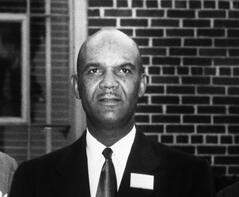
George Whitefield Conoly, (born 1902, died 1980) was instrumental in developing the Florida A&M University National Alumni Association and served Florida A&M University for almost 36 years as executive secretary and director of FAMU Alumni Affairs. He founded the FAMU Alumni Association in 1925 as an unfunded personal project. He spent his free time traveling across the U.S. to meet with alums and build deeper comradery; deeper social, professional, and financial commitment to FAMU; and continued participation in University affairs.

This collection contains alumni chapter meeting records, financial records, photographs, and correspondences from the years George Conoly was most active in build the Florida A&M University alumni network, along with some of the personal effects of George and Eunice Conoly.

Meek-Eaton Archival Collection MS_0010 · Collection · 1941 - 1987

Location: AC.8.B.1.2.1 - AC.8.B.1.2.2

This file documents the life, professional career, and institutional impact of Dean Maxwell S. Thomas, a highly respected educator, administrator, and advocate for students at Florida A&M University. Spanning the years 1941 to 1987, with concentrated materials dating from 1973 to 1983, the collection provides a comprehensive view of Thomas’s contributions to higher education, his involvement in key university initiatives, and his broader engagement with community and professional organizations.

Born on June 24, 1907, in Ocala, Florida, Dean Maxwell S. Thomas served as Dean of Mechanical Arts at Florida A&M University and was widely recognized for his leadership, commitment to student development, and dedication to institutional advancement. The materials within this collection reflect his extensive professional network and influence, including correspondence with university presidents, faculty, and external organizations. His work with entities such as the Orange Blossom Classic Committee and the FAMU Foundation is well represented, illustrating his role in shaping both academic and extracurricular aspects of the university. In addition to documenting his professional achievements, the collection also captures personal dimensions of his life, including biographical materials, handwritten notes, and correspondence addressed to his wife, Jacqueline Holloway-Thomas, particularly letters of condolence following his passing in 1983.

The collection consists of manuscripts, photographs, publications, reports, correspondence, organizational records, programs, and printed materials that collectively highlight Thomas’s contributions to Florida A&M University and the broader educational landscape. These materials include annual and financial reports, institutional evaluations, program development documents, and publications that reflect the evolving priorities of the university during the mid- to late-twentieth century. News articles and obituaries further contextualize his legacy, emphasizing his impact as an educator and leader within the Tallahassee community and beyond.

At the time of processing, the collection had no discernible original order. The materials were therefore reorganized by subject and record type, with correspondences grouped by date and organizational records categorized by affiliated institutions or committees. Items were arranged in both alphabetical and chronological order to enhance accessibility and preserve contextual relationships. The collection was rehoused in acid-free folders and archival boxes, expanding to two boxes totaling approximately one linear foot. Processing also included preparation for digitization and the replacement of deteriorating fasteners with archival-safe materials. This collection serves as a significant resource for researchers examining the history of Florida A&M University, African American leadership in higher education, and the institutional development of historically Black colleges and universities during the twentieth century.

Charles Hamilton Collection
Meek-Eaton Archival Collection MS_0011 · Collection

Mr. Charles Hamilton was an African-American landowner, farmer, and businessman who lived
in Marion County, Florida, during the late 1800s and turn of the twentieth century. Marion
The county is located in Central Florida. According to information from the 1900 US Census, the
Hamilton Family patriarch, listed as Charly Hamilton, was born during slavery in 1853 and
possibly migrated to Florida from South Carolina after the Civil War. Charly and his wife
Georgia had three sons, Richard, Charlie, and Jonas, and two daughters, Estelle and Texella.
Hamilton and his descendants also owned property and conducted business in neighboring Levy
County.

Chester L. Davis, Sr. Collection
Meek-Eaton Archival Collection MS_0016 · Collection · 1942 - 2017

Location: AC.8.B.1.6.2

This file documents the life, military service, and posthumous recognition of Chester Lee Davis, Sr., one of the pioneering African American Marines trained at Montford Point during World War II. Spanning the years 1942 to 2017, this collection provides valuable insight into both Davis’s individual experiences and the broader historical significance of African American service members who served under segregated conditions in the United States Marine Corps.

Chester Lee Davis, Sr. (1923–1981) was born in Quincy, Florida, to Tommie and Iola Davis and was raised in a large farming family. Prior to the outbreak of World War II, his family relocated to Orlando, Florida. In 1943, at the age of eighteen, Davis enlisted in the United States Marine Corps, becoming part of the first generation of African American Marines admitted into service. Due to racial segregation, he trained at Montford Point Camp in North Carolina, a facility established specifically for Black Marines and located near Camp Lejeune, where white Marines trained. Despite facing systemic discrimination and harsh conditions, Davis served with distinction as a member of the 2nd and 3rd Marine Depot Companies. His responsibilities included transporting ammunition and supplies to troops on the frontlines, and he later participated in combat operations throughout the Pacific theater, including assignments in New Caledonia, Guadalcanal, the Solomon Islands, the Marshall Islands, Guam, and Okinawa. After completing his service, Davis returned home as a corporal and lived in Gadsden County, Florida, where he raised a family. He passed away in 1981 at the age of 58. In 2011, his service, along with that of fellow Montford Point Marines, was formally recognized when the United States Congress awarded them the Congressional Gold Medal, a distinction signed into law by President Barack Obama.

Donated to the Meek-Eaton Black Archives by Chester L. Davis, Jr. on June 13, 2017, the collection reflects a deliberate effort to preserve and share the legacy of Davis and other Montford Point Marines. The materials within the collection collectively document Davis’s military career, his contributions during World War II, and the national, state, and local recognition he received posthumously. The collection includes correspondence, legislative recognitions from the United States Congress, the State of Florida, and the City of Quincy, news articles, photographs depicting medals, military service, and commemorative events, as well as official service records and cassette tapes. These materials not only highlight Davis’s individual achievements but also situate his experiences within the broader narrative of African American military service and the struggle for equality within the armed forces.

At the time of processing in February 2017, the collection lacked an original order. As a result, the materials were organized by subject matter and date, then arranged alphabetically and housed in acid-free folders within a single archival storage box. Where applicable, items within individual files have been arranged chronologically to preserve contextual relationships. The collection was processed and cataloged by Dr. Murell Dawson, Senior Archivist, with assistance from undergraduate intern Shaarnè Morris, and is currently stored in the archival storage area on the third floor. As a cohesive body of records, this collection provides an important resource for understanding the experiences of Montford Point Marines and the enduring legacy of their service, sacrifice, and recognition within American military and social history.

James N. Eaton, Sr. Collection
Meek-Eaton Archival Collection AR_0012 · Collection

Location: AC.2.A.1.6.3 - AC.2.A.2.3.1; AC.3.B.3.3.1 - AC.3.B.3.3.2; AC.8.B.1.2.3 - AC.8.B.1.3.2

In 1975, James N. Eaton spearheaded the effort that ultimately gave rise to the creation of FAMU’s Black Archives. By 1976, the ‘Black Archives Research Center and Museum’ came into existence, and Eaton was recognized and appointed as its inaugural archivist, curator, and director.

For the next three decades, he helped amass a collection of memorabilia and printed records that now comprise one of the region’s most extensive collections of first-source material relating to the history, culture and contributions of people of African descent living in the United States.

James Eaton constructed in 1976 the first exhibits, using historical memorabilia from his own family. Afterward, he petitioned the university and community members to contribute historical material to the repository. Ilis call was answered by the first Black Archives donors and volunteers, who included: Donald Hill, Frank Pinder, John F. Matheus, and a host of other individuals and groups. Thus, the Research Center was chartered in 1976 and was officially opened in 1977.

Arthur L. Kidd Collection
Meek-Eaton Archival Collection MS_0013 · Collection · 1934 - 1967

Location: AC.2.B.3.2.2- AC.2.B.3.2.5

This collection consists of personal papers from Florida A&M University’s Arthur L. Kidd. Kidd, a native of Pennsylvania, earned a B.A. degree in 1924 from the University of Michigan, and in 1929, a Masters of Arts degree from Columbia University. Kidd also did additional studying at the University of Iowa, Columbia University, and New York University. He began his teaching career at Tuskegee Institute in 1924 before accepting a position at Florida A&M College (FAMCEE) in 1925 as Principal of the High School. Kidd worked at FAMCEE until 1944. During his nineteen years of service to the college, Kidd worked in numerous positions, including: Head of the Department of History, Acting Director of the Extension Division, Acting Dean for the College of Arts and Sciences and College Registrar. In October 1944, Kidd left his position at FAMCEE to work with the United Nations Relief and Rehabilitation Administration, where he worked in various capacities in Washington, D.C., and abroad in locations including France, Germany, and Holland. He returned to the United States in 1950 and worked for a year at Maryland State College before accepting a second appointment at FAMCEE in 1951 as Director of the Division of Social Studies. Upon the college reaching university status in 1954, in the academic re-organization, Kidd consequently became the Associate Dean of the College of Arts and Sciences. Until 1969, he served FAMU in various capacities, including director of institutional studies and director of university administrative planning.

The material type in this collection were mainly magazines, news articles, and news clippings from 1949-19687 that followed local and national events affecting Negro people and occurrences impacting their lives. The records of this collection are especially important and informative in that they as resources that document firsthand the many historic events that occurred during the American Negro Civil Rights Years. Most of the records document the passing of school integration and public desegregation legislation, mass boycotts, sit-ins, and other forms of protest, as well as the brutal, nationwide social turbulence that accompanied this period. Additionally, a small amount of materials related to Kidd's instructional duties at FAMU are included.

Biographical data and inclusive subjects were acquired from Murell Dawson circa 2002.

Gilbert Porter Collection
Meek-Eaton Archival Collection MS_0021 · Collection · 1947 - 1977

Location: AC.3.A.2.6.1 - AC.3.A.3.1.3

Dr. Gilbert Lawrence Porter was an educational pioneer in the state of Florida who devoted more than five decades of his life to advancing educational equality during the era of segregation and desegregation. Born on January 6, 1909, in Kansas, Porter pursued higher education at Talladega College, where he earned a Bachelor of Arts in Chemistry. He later obtained a master’s degree in educational administration from the University of Michigan and a Ph.D. in philosophy from The Ohio State University, becoming the first African American to receive this distinguished degree from the institution. Throughout his career, Porter remained committed to improving the quality of education for all students while advocating for equal salaries, professional recognition, and civil rights for African American teachers within a segregated and unequal educational system.

The Gilbert Porter Desegregation Files document Porter’s extensive work in educational reform, particularly in relation to school integration and policy development in Florida. The collection consists of Dade County school reports, national reports on desegregation plans and procedures, and materials related to organizations such as the Florida Conference of Social Welfare and the Florida Conference of Social Work. A significant portion of the collection includes newspaper clippings that highlight race relations and integration efforts in Dade County and throughout the state of Florida.

The records reflect the administrative, social, and political challenges surrounding desegregation and provide insight into the strategies and policies implemented during this transformative period.