
Showing 17 results

Archival description
3 results with digital objects Show results with digital objects
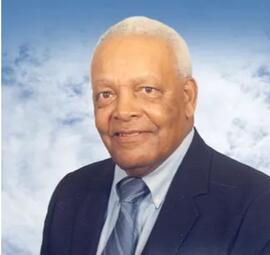
Gilbert Porter Collection
Meek-Eaton Archival Collection MS_0021 · Collection · 1947 - 1977

Location: AC.3.A.2.6.1 - AC.3.A.3.1.3

Dr. Gilbert Lawrence Porter was an educational pioneer in the state of Florida who devoted more than five decades of his life to advancing educational equality during the era of segregation and desegregation. Born on January 6, 1909, in Kansas, Porter pursued higher education at Talladega College, where he earned a Bachelor of Arts in Chemistry. He later obtained a master’s degree in educational administration from the University of Michigan and a Ph.D. in philosophy from The Ohio State University, becoming the first African American to receive this distinguished degree from the institution. Throughout his career, Porter remained committed to improving the quality of education for all students while advocating for equal salaries, professional recognition, and civil rights for African American teachers within a segregated and unequal educational system.

The Gilbert Porter Desegregation Files document Porter’s extensive work in educational reform, particularly in relation to school integration and policy development in Florida. The collection consists of Dade County school reports, national reports on desegregation plans and procedures, and materials related to organizations such as the Florida Conference of Social Welfare and the Florida Conference of Social Work. A significant portion of the collection includes newspaper clippings that highlight race relations and integration efforts in Dade County and throughout the state of Florida.

The records reflect the administrative, social, and political challenges surrounding desegregation and provide insight into the strategies and policies implemented during this transformative period.

History of FAMU
Meek-Eaton Archival Collection AR_0007

For more than 130 years, Florida A&M University has served the citizens of the State of Florida and the nation by providing preeminent educational programs...programs that were the building blocks of a legacy of academic excellence with caring. FAMU, “Florida’s Opportunity University,” is committed to meeting the challenges and needs of future generations.

In 1884, Thomas Van Renssaler Gibbs, a Duval County educator, was elected to the Florida legislature. Although his political career ended abruptly because of the resurgence of segregation, Representative Gibbs successfully orchestrated the passage of House Bill 133 in 1884. This bill established a white normal school in Gainesville and a school for African Americans in Jacksonville. The bill passed, creating both institutions; however, the state decided to relocate the school for African Americans to Tallahassee.

After the bill’s passage, FAMU was founded on October 3, 1887. It began classes with 15 students and two (2) instructors. Thomas DeSaille Tucker (1887-1901), an attorney from Pensacola, was chosen as the first president. Former State Representative Gibbs joined Mr. Tucker as the second faculty member.

In 1891, the College received $7,500 under the Second Morrill Act for agricultural and mechanical arts education. The State Normal College for Colored Students became Florida’s land grant institution for African Americans, and its name was changed to the State Normal and Industrial College for Colored Students.

In 1905, the management of the College was transferred from the Board of Education to the Board of Control. This significant event officially designated the College as an institution of higher education.
In 1909 the name was changed from The State Normal College for Colored Students to Florida Agricultural and Mechanical College for Negroes (FAMC). The following year, with an enrollment of 317 students, the college awarded its first degrees.

President Nathan B. Young (1901-1923) directed the growth of the College to a four-year degree-granting institution, despite limited resources, offering the Bachelor of Science degree in education, science, home economics, agriculture, and mechanical arts.

Under the administration of John Robert Edward Lee Sr. (1924-1944), the College acquired much of the physical and academic image it has today. More faculty were hired, courses were upgraded, and accreditation was received from several state agencies. By the end of Lee’s term, FAMC had 812 students and 122 staff members.

In 1949, under William H. Gray Jr. (1944-1949), expansion and reorganization continued. The College obtained an Army ROTC unit, and student enrollment grew to more than 2,000.

Kimberly Brown Collection
Meek-Eaton Archival Collection MS_0026 · Collection

Location: AC.1.B.1.4.8

Dr. Kimberly Brown Pellum is a historian, author, and two-time Florida A&M University alumna, as well as a former “Miss FAMU” pageant queen. She serves as an assistant professor of history at Florida A&M University and is the founding director of MuseumofBlackBeauty.com, a digital public history initiative. Her scholarship focuses on twentieth-century African American women, beauty culture, southern history, and freedom movements. Dr. Pellum has contributed to major public history institutions, including the Smithsonian National Museum of American History, the National Park Service, and the Rosa Parks Museum. She is the author of Black Beauties: African American Pageant Queens in the Segregated South and Queen Like Me: The True Story of Girls Who Changed the World.

The Kimberly Brown Collection consists of one box of materials centered on Queen Like Me: The True Story of Girls Who Changed the World. The collection includes multiple copies of the publication as well as related materials such as children’s worksheets and miscellaneous documents associated with the book.

These materials reflect Dr. Pellum’s work in public history and youth education, emphasizing themes of empowerment, representation, and African American girlhood. The collection provides insight into the development and educational use of the publication, highlighting its role in promoting positive identity and historical awareness among young readers.

Meek-Eaton Archival Collection MS_0116 · 1956 - 1973

Location: AC.3.B.1.4.4 - AC.3.B.1.5.1

The Mrs. Willie Ziegler White Collection consists of 5 boxes of materials documenting her involvement in education and parent-teacher organizations, particularly within the Florida State Congress of Colored Parents and Teachers and related networks. The collection reflects her role as an educator and community leader engaged in advancing African American education and parental involvement during the era of segregation.

The collection includes correspondence, news clippings, directories, handbooks, ledgers, notepads, and record books, as well as files related to Parent Teacher Association activities. These materials document both administrative functions and community outreach efforts. Also included are records from affiliated organizations such as the National Congress of Colored Parents and Teachers, the National Convention of Christians and Jews, and the Georgia Congress of Colored Parents and Teachers.

Additional materials consist of songs, poems, manuals, publications, and magazines that reflect the educational, cultural, and organizational priorities of the groups with which Mrs. White was associated. Correspondence within the collection highlights communication between educators, administrators, and community members involved in improving educational opportunities.

Collectively, the collection provides insight into the leadership, organization, and advocacy efforts of African American educators and parent organizations, as well as the broader network of institutions working to support Black education in the early to mid-twentieth century.

Meek-Eaton Archival Collection MS_0022 · Collection

Location: AC.2.B.2.3.2 - AC.2.B.2.3.5

Reverend Dr. James L. Hudson, Sr. (1904–1980) was a minister, educator, and civil rights leader. Born in Birmingham, Alabama, he graduated from Morehouse College in 1926 and later earned a divinity degree from Colgate-Rochester School of Religion in 1931. He served as a chaplain at Leland College until 1946 before completing doctoral studies at Boston College. Dr. Hudson later joined Florida A&M University as a chaplain and professor, where he founded the Department of Religion and Philosophy and served as its first chair. A close associate of Rev. Charles K. Steele, he played a key role in civil rights efforts, including the 1956 Tallahassee Bus Boycott, and was active in organizations such as the Tallahassee Ministerial Alliance and the Inter-Civic Council.

The Reverend Dr. James Hudson, Sr. Collection documents Hudson’s career in ministry, education, and civil rights activism. The collection contains materials related to his work at Florida A&M University, including records associated with the establishment of the Department of Religion and Philosophy, as well as documents reflecting his role as a chaplain and educator.

Additional materials highlight his involvement in civil rights initiatives in Tallahassee, including his collaboration with local religious and community leaders. The collection may include correspondence, sermons, speeches, and organizational records that illustrate his leadership in religious and civic life. Collectively, these materials provide insight into Hudson’s lasting contributions to higher education, faith leadership, and the advancement of social justice.

Meek-Eaton Archival Collection MS_0120 · 1954 - 1965

Location: AC.6.B.4.2.7 - AC.6.B.4.3.3

The Southern School News Collection consists of issues of Southern School News, a publication produced by the Southern Education Reporting Service between 1954 and 1965. Established in response to the landmark 1954 Supreme Court decision in Brown v. Board of Education, the Southern Education Reporting Service sought to provide nonpartisan, factual reporting on the evolving landscape of public education in the American South during the era of school desegregation.

The publication was designed to inform school administrators, public officials, educators, and interested citizens about significant developments in education following the Court’s ruling. Reports featured in Southern School News were compiled by southern newspaper editors and educators, offering regionally grounded perspectives on policy changes, legal challenges, community responses, and the progress of desegregation efforts across southern states.

The collection includes serial issues of Southern School News that document key events, debates, and implementation strategies related to desegregation. These materials provide detailed accounts of state and local actions, including legislative measures, court cases, school board decisions, and public reactions. As a contemporary source, the publication captures the complexities and tensions surrounding the transition from segregated to integrated school systems in the South.

Collectively, the Southern School News Collection serves as an important resource for understanding the educational, political, and social transformations that followed the Brown decision. It offers researchers valuable insight into how information about desegregation was disseminated, interpreted, and contested, while also highlighting the role of media and educators in documenting one of the most significant periods in American educational history.

Southern Workman Collection
Meek-Eaton Archival Collection MS_0118 · 1910 - 1939

Location: AC.6.B.4.3.4 - AC.6.B.4.3.8

The Southern Workman Collection consists of five boxes of materials dating from 1910 to 1939, documenting a significant period in the publication history of The Southern Workman. Published monthly by the Hampton Institute Press at Hampton Institute (now Hampton University), the magazine originated in 1872 as Southern Workman and Hampton School Record and served as an important platform for education, culture, and social commentary.

The collection includes issues of the magazine featuring articles, lectures, essays, and book reviews that reflect the intellectual and cultural life of the institution. Content highlights the activities of Hampton Institute, including information about its faculty, students, and graduates, while also addressing broader social issues of the time.

With a primary focus on African American and Native American history, the materials provide valuable insight into educational practices, cultural expression, and social conditions in the early twentieth century. Collectively, the collection illustrates the role of The Southern Workman as a key publication in advancing knowledge and documenting the experiences and contributions of marginalized communities.