MS_0095
Location: AC.3.A.3.5.3

Location: AC.3.A.3.5.3
Location: AC.3.A.3.5.4
Location: AC.3.A.3.6.4
Dr. William Spencer Stevens practiced medicine in Quincy for more than 50 years. His fame spread during the yellow fever outbreak of 1906 and the influenza epidemic of 1918.
https://www.tampabay.com/archive/1994/02/07/the-florida-black-heritage-trail/
Location: AC.3.B.1.1.5 - AC.3.B.1.2.1
The A. P. Turner collection is a two-box collection that documents the life of Allen P. Turner, a reverend of the Bethel Missionary Baptist Church and a Morehouse College graduate who wrote and directed dramatic plays at Albany State College and Florida A&M University.
The items within this collection date from 1930 to 1972, and are concentrated between 1940 and 1968. This collection includes academic and business papers, playscripts, letters, and other printed materials that provide valuable insight into Turner’s professional and personal life. His involvement in the Interdenominational Ministers Alliance of Tallahassee and Vicinity, the Young Men’s Christian Association, and the Florida Inter-Scholastic Speech and Drama Association gives this collection a strong representation of his religious, scholarly, and artistic leadership. Although the collection offers a strong foundation for understanding Turner’s leadership within religious and scholarly organizations, many items are untitled and undated, limiting the ability to fully contextualize specific individuals, events, and materials. Overall, the A. P. Turner collection provides valuable documentation of Turner’s life and how his social status as a reverend, playwright, and director contributed to his community.
The Florida A&M University Marching 100 is one of the most renowned collegiate marching bands in the United States, known for its precision, high-energy performances, and cultural impact. Founded in 1946, the band gained national prominence under the leadership of legendary director William P. Foster.
The Marching 100 has performed at major events including Super Bowls, presidential inaugurations, and international venues, showcasing the excellence of Florida A&M University. Celebrated for its musical innovation and showmanship, the band continues to be a symbol of pride, tradition, and excellence in HBCU culture.
Location: AC.3.B.2.1.1 - AC.3.B.2.1.2
George Whitefield Conoly, (born 1902, died 1980) was instrumental in developing the Florida A&M University National Alumni Association and served Florida A&M University for almost 36 years as executive secretary and director of FAMU Alumni Affairs. He founded the FAMU Alumni Association in 1925 as an unfunded personal project. He spent his free time traveling across the U.S. to meet with alums and build deeper comradery; deeper social, professional, and financial commitment to FAMU; and continued participation in University affairs.
This collection contains alumni chapter meeting records, financial records, photographs, and correspondences from the years George Conoly was most active in build the Florida A&M University alumni network, along with some of the personal effects of George and Eunice Conoly.
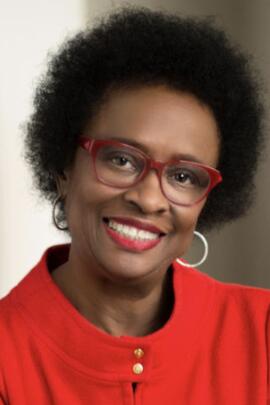
Location: AC.2.B.2.4.4 - AC.2.B.3.1.3
Arthenia L. Joyner born 1943 in Lakeland, Florida, and raised in Tampa. She emerged as a leader during the Civil Rights Movement, participating in protests as both a high school and college student at Florida A&M University. Joyner attended the original FAMU College of Law, graduating in 1968, and went on to break significant barriers as the first Black woman to practice law in Hillsborough County and the first African American to practice law in Polk County. She later served as a legislative aide to State Representative Joe Lang Kershaw, the first Black legislator in Florida since Reconstruction, and was elected to three terms in the Florida House of Representatives representing the 59th District.
The Senator Arthenia L. Joyner Collection consists of eight boxes of materials documenting her career in law, public service, and civil rights advocacy. The collection includes correspondence, meeting records, travel documents, and speeches that reflect her work as an attorney, legislative aide, and elected official.
These materials provide insight into Joyner’s role in shaping public policy, her legislative activities, and her engagement with constituents and colleagues. The collection also highlights her involvement in civil rights initiatives and her contributions to expanding opportunities for African Americans in the legal and political arenas. Collectively, the records document her impact on Florida’s political landscape and her legacy as a pioneering African American woman in law and government.
Location: AC.3.B.1.4.4 - AC.3.B.1.5.1
The Mrs. Willie Ziegler White Collection consists of 5 boxes of materials documenting her involvement in education and parent-teacher organizations, particularly within the Florida State Congress of Colored Parents and Teachers and related networks. The collection reflects her role as an educator and community leader engaged in advancing African American education and parental involvement during the era of segregation.
The collection includes correspondence, news clippings, directories, handbooks, ledgers, notepads, and record books, as well as files related to Parent Teacher Association activities. These materials document both administrative functions and community outreach efforts. Also included are records from affiliated organizations such as the National Congress of Colored Parents and Teachers, the National Convention of Christians and Jews, and the Georgia Congress of Colored Parents and Teachers.
Additional materials consist of songs, poems, manuals, publications, and magazines that reflect the educational, cultural, and organizational priorities of the groups with which Mrs. White was associated. Correspondence within the collection highlights communication between educators, administrators, and community members involved in improving educational opportunities.
Collectively, the collection provides insight into the leadership, organization, and advocacy efforts of African American educators and parent organizations, as well as the broader network of institutions working to support Black education in the early to mid-twentieth century.
Location: AC.8.B.1.2.1 - AC.8.B.1.2.2
This file documents the life, professional career, and institutional impact of Dean Maxwell S. Thomas, a highly respected educator, administrator, and advocate for students at Florida A&M University. Spanning the years 1941 to 1987, with concentrated materials dating from 1973 to 1983, the collection provides a comprehensive view of Thomas’s contributions to higher education, his involvement in key university initiatives, and his broader engagement with community and professional organizations.
Born on June 24, 1907, in Ocala, Florida, Dean Maxwell S. Thomas served as Dean of Mechanical Arts at Florida A&M University and was widely recognized for his leadership, commitment to student development, and dedication to institutional advancement. The materials within this collection reflect his extensive professional network and influence, including correspondence with university presidents, faculty, and external organizations. His work with entities such as the Orange Blossom Classic Committee and the FAMU Foundation is well represented, illustrating his role in shaping both academic and extracurricular aspects of the university. In addition to documenting his professional achievements, the collection also captures personal dimensions of his life, including biographical materials, handwritten notes, and correspondence addressed to his wife, Jacqueline Holloway-Thomas, particularly letters of condolence following his passing in 1983.
The collection consists of manuscripts, photographs, publications, reports, correspondence, organizational records, programs, and printed materials that collectively highlight Thomas’s contributions to Florida A&M University and the broader educational landscape. These materials include annual and financial reports, institutional evaluations, program development documents, and publications that reflect the evolving priorities of the university during the mid- to late-twentieth century. News articles and obituaries further contextualize his legacy, emphasizing his impact as an educator and leader within the Tallahassee community and beyond.
At the time of processing, the collection had no discernible original order. The materials were therefore reorganized by subject and record type, with correspondences grouped by date and organizational records categorized by affiliated institutions or committees. Items were arranged in both alphabetical and chronological order to enhance accessibility and preserve contextual relationships. The collection was rehoused in acid-free folders and archival boxes, expanding to two boxes totaling approximately one linear foot. Processing also included preparation for digitization and the replacement of deteriorating fasteners with archival-safe materials. This collection serves as a significant resource for researchers examining the history of Florida A&M University, African American leadership in higher education, and the institutional development of historically Black colleges and universities during the twentieth century.