Showing 117 results

Archival description
12 results with digital objects Show results with digital objects
Joe Nash Collection
Meek-Eaton Archival Collection MS_0019 · Collection

Location: AC.8.B.4.4.1 - AC.8.B.4.7.1

The Joe Nash Collection documents a range of cultural, social, and media-related materials reflecting aspects of public life and community engagement. The collection includes advertisements, books, magazines, news clippings, newsletters, photographs, programs, and other publications such as theatrical playbills and posters.

These materials provide insight into entertainment, communication, and cultural expression across various contexts. The presence of theatrical playbills, programs, and posters highlights performance and artistic activity, while magazines, newsletters, and news clippings capture contemporary events, trends, and public discourse.

Photographs within the collection offer visual documentation that complements the printed materials, enhancing its research value. Collectively, the Joe Nash Collection preserves a diverse array of media formats, serving as a resource for understanding cultural production and the ways information and experiences were shared within communities.

John F. Matheus Collection
Meek-Eaton Archival Collection MS_0056 · File · 1909-1983

Location: AC.2.B.3.6.2 - AC.3.A.1.2.8

The John F. Matheus Collection documents the life, literary career, and intellectual contributions of John Frederick Matheus, an American writer and scholar associated with the Harlem Renaissance of the 1920s. The materials in this collection date from 1909 to 1983 and provide insight into Matheus’s development as a prominent literary figure known for his short stories, as well as his work in essays, plays, and poetry.

Matheus gained national recognition for his literary achievements, including his short story “Fog,” which won first place in Opportunity magazine’s literary contest in 1925 and was subsequently published in The New Negro. He continued to receive acclaim with his story “Swamp Moccasin,” which earned first prize in The Crisis magazine’s contest in 1926. His writing reflects the broader artistic and cultural movements of the Harlem Renaissance and was influenced by earlier literary figures such as Harriet Beecher Stowe, Edgar Allan Poe, Phillis Wheatley, and Paul Laurence Dunbar.

The collection consists of personal papers and literary materials that illustrate both Matheus’s professional accomplishments and personal life. Included are correspondence, original manuscripts, notes, and newspaper articles that document his writing process and engagement with literary communities. Photographs and personal items further contextualize his experiences and relationships within the cultural and intellectual circles of his time.

Collectively, the John F. Matheus Collection provides valuable documentation of an important voice of the Harlem Renaissance and offers researchers insight into early twentieth-century African American literature, artistic expression, and scholarly thought.

Meek-Eaton Archival Collection MS_0009 · Collection

Location: AC.8.B.1.1.1-AC.8.B.1.1.3

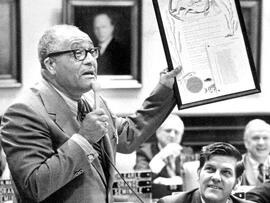
Joseph “Joe” Lang Kershaw, Sr. (June 27, 1911–November 7, 1999) was the first African American elected to the Florida Legislature since Reconstruction. Born in Live Oak, Florida, he attended Florida A&M University in the 1930s, where he was involved in early campus life, including the beginnings of the football program, and pledged Kappa Alpha Psi. He later worked as a teacher in Miami-Dade County and as a janitor in the Florida Legislature before entering politics. Elected to the Florida House of Representatives in 1968, Kershaw served for fourteen years and chaired the Elections Committee, contributing to the establishment of the Florida Human Rights Commission.

The Joseph Lang Kershaw, Sr. Collection documents Kershaw’s life, career, and contributions to Florida’s political and educational history. The collection contains materials related to his personal and academic background, as well as records reflecting his tenure in the Florida House of Representatives.

Included are documents that highlight his legislative work, professional activities, and community involvement. The collection also contains materials pertaining to his family, including references to his father, A. J. Kershaw, as well as correspondence and documents related to colleagues and contemporaries such as Gwendolyn Cherry and Althea Gibson. Collectively, these records provide insight into Kershaw’s role as a pioneering African American legislator and his broader impact on civil rights and public service in Florida.

MS_0053

Location: AC.2.B.1.5.1
Joseph Woodrow Hatchett (1932–2021) was a trailblazing lawyer and judge who made history in Florida and across the United States. Born in Clearwater, Florida, he earned his bachelor’s degree from Florida A&M University and later received his law degree from Howard University School of Law.

In 1975, Hatchett became the first African American justice on the Florida Supreme Court, where he served until 1979 and helped restore public trust in the court during a critical period. He later broke additional barriers when he was appointed to the U.S. Court of Appeals, becoming one of the first Black federal appellate judges in the South.

Throughout his career, Hatchett was known for his commitment to justice, civil rights, and public service. His legacy endures as a pioneering figure who opened doors for future generations in the legal profession.

https://supremecourt.flcourts.gov/the-court/about-the-court/former-justices/Justice-Joseph-Woodrow-Hatchett

Meek-Eaton Archival Collection MS_0005 · Collection · 1948 - 2001

Location:AC.1.B.1.4.1 - AC.1.B.1.4.2

The Julian “Cannonball” Adderley Memorial Jazz Collection documents the life, career, and legacy of renowned jazz saxophonist Cannonball Adderley. The collection includes both archival records and museum objects relating to Adderley’s professional achievements, public recognition, and cultural influence.

Materials in the collection consist of awards, photographs, publications, magazines, newspaper articles, sheet music, recordings, correspondence, and exhibit artifacts. Several items relate directly to Adderley’s connection with Florida A&M University, including his academic degree and alumni publications. Additional materials document his musical career, honors, memorial recognitions, and media coverage following his illness and death.

The collection also contains museum exhibit items, including plaques, medals, framed artwork, photographs, and audio recordings associated with Adderley and his brother Nat Adderley. Printed sources such as magazines and newspapers highlight his role in jazz history and the broader cultural recognition of his contributions to American music. The collection is arranged by subject and material type. Printed materials and memorabilia were first sorted by format, then organized alphabetically and placed in acid-free folders and boxes for long-term preservation.