Showing 117 results

Archival description
12 results with digital objects Show results with digital objects
MS_0044

Location: AC.2.A.2.6.6

Dr. Anne Richardson Gayles-Felton is a distinguished educator and scholar who dedicated her life to advancing education at Florida A&M University. A native of Georgia, she built a remarkable career spanning more than four decades at FAMU, where she served as a professor of secondary education, department chair, and mentor to countless students.

Throughout her career, Dr. Gayles-Felton taught at multiple academic levels and played a key role in shaping teacher education programs, while also contributing to research, writing, and curriculum development. Her legacy is marked by her commitment to improving educational opportunities and supporting future educators, including the establishment of scholarships to assist students pursuing teaching careers.

https://www.tallahassee.com/story/news/local/famu-news/2023/06/01/dr-anne-gayles-felton-to-celebrate-100-years-old-at-famu-gala/70269827007/

MS_0032

Location: AC.1.B.1.6.3

Dr. Alexander Dumas “A.D.” Brickler (1929–2023) was a pioneering physician and respected obstetrician whose decades-long career had a lasting impact on the Tallahassee community. A graduate of Howard University and Meharry Medical College, Brickler began practicing medicine during segregation and became one of the Black physicians who helped integrate local healthcare systems.
Throughout his career, Dr. Brickler delivered more than 30,000 babies and was widely known for his compassion, professionalism, and dedication to equitable care. He worked extensively at the Florida A&M University Hospital and later at Tallahassee Memorial HealthCare, where a women’s pavilion was named in his honor.
In addition to his clinical work, Brickler served as a mentor to generations of medical professionals and remained committed to patient care well into his later years. His legacy endures through the thousands of families he served and his contributions to advancing healthcare in Tallahassee.

Meek-Eaton Archival Collection MS_0010 · Collection · 1941 - 1987

Location: AC.8.B.1.2.1 - AC.8.B.1.2.2

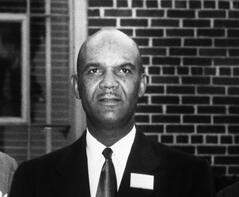
This file documents the life, professional career, and institutional impact of Dean Maxwell S. Thomas, a highly respected educator, administrator, and advocate for students at Florida A&M University. Spanning the years 1941 to 1987, with concentrated materials dating from 1973 to 1983, the collection provides a comprehensive view of Thomas’s contributions to higher education, his involvement in key university initiatives, and his broader engagement with community and professional organizations.

Born on June 24, 1907, in Ocala, Florida, Dean Maxwell S. Thomas served as Dean of Mechanical Arts at Florida A&M University and was widely recognized for his leadership, commitment to student development, and dedication to institutional advancement. The materials within this collection reflect his extensive professional network and influence, including correspondence with university presidents, faculty, and external organizations. His work with entities such as the Orange Blossom Classic Committee and the FAMU Foundation is well represented, illustrating his role in shaping both academic and extracurricular aspects of the university. In addition to documenting his professional achievements, the collection also captures personal dimensions of his life, including biographical materials, handwritten notes, and correspondence addressed to his wife, Jacqueline Holloway-Thomas, particularly letters of condolence following his passing in 1983.

The collection consists of manuscripts, photographs, publications, reports, correspondence, organizational records, programs, and printed materials that collectively highlight Thomas’s contributions to Florida A&M University and the broader educational landscape. These materials include annual and financial reports, institutional evaluations, program development documents, and publications that reflect the evolving priorities of the university during the mid- to late-twentieth century. News articles and obituaries further contextualize his legacy, emphasizing his impact as an educator and leader within the Tallahassee community and beyond.

At the time of processing, the collection had no discernible original order. The materials were therefore reorganized by subject and record type, with correspondences grouped by date and organizational records categorized by affiliated institutions or committees. Items were arranged in both alphabetical and chronological order to enhance accessibility and preserve contextual relationships. The collection was rehoused in acid-free folders and archival boxes, expanding to two boxes totaling approximately one linear foot. Processing also included preparation for digitization and the replacement of deteriorating fasteners with archival-safe materials. This collection serves as a significant resource for researchers examining the history of Florida A&M University, African American leadership in higher education, and the institutional development of historically Black colleges and universities during the twentieth century.

Dale Thomas Collection
MS_0029

Location: AC.3.B.1.1.1 - AC.3.B.1.1.3

Dale Thomas is a Florida A&M University graduate, author, and educator dedicated to preserving the history of Black music and culture. A native of St. Thomas, U.S. Virgin Islands, Thomas attended Florida A&M University beginning in 1980, where he earned a bachelor’s degree in music education. He later obtained master’s degrees in educational administration and leadership and in library and information studies from Florida State University.

Thomas is the author of “Bands on ‘the Hill’: A Pictorial History of Bands at Florida A&M University,” a self-published 236-page book released through his company, Harmonie Publications. The work highlights the legacy of FAMU’s band and instrumental music programs through rare and exclusive photographs, reflecting his passion for African American history and music. Professionally, he serves as an academic advisor at Tallahassee State College, where he continues to support student success while contributing to the preservation of cultural history. https://www.tallahassee.com/story/news/local/2024/09/03/dale-thomas-publishes-pictorial-book-to-highlight-famu-bands/74407038007/

D. E. Williams Collection
Meek-Eaton Archival Collection MS_0123

Location: AC.8.A.3.3.1 - AC.8.A.3.4.4

DeWitt Everett Williams served as the State Agent of Negro Schools in Florida from 1927 to 1962 under the Florida Department of Education. In this role, he was responsible for overseeing and supporting the development of African American education during the era of segregation. His work placed him in direct contact with schools across the state, documenting their conditions, operations, and communities during a critical period in the history of public education in Florida.

The D. E. Williams Collection consists of six boxes of materials documenting African American education in Florida during the Jim Crow era. The collection primarily contains photographs of segregated African American schools across the state, reflecting both rural and urban educational environments. These images provide visual documentation of school buildings, classrooms, students, and faculty, offering insight into the conditions and experiences within segregated educational systems.

The photographs are arranged alphabetically by county, facilitating geographic access and highlighting regional differences in school infrastructure and resources. Collectively, the collection serves as an important resource for understanding the historical landscape of African American education in Florida and the broader social and institutional context of segregation in the twentieth century.

MS_0048

Location: AC.2.B.1.3.3 - AC.2.B.1.4.2
Coach Robert “Pete” Griffin (1916–1998) was a longtime football and track coach at Florida A&M University who played a key role in building the university’s athletic legacy. A former FAMU player, Griffin later served for over two decades as a defensive assistant coach before becoming head football coach for the 1970 season.

In addition to football, he was a highly successful track and field coach, leading FAMU to multiple conference championships and mentoring athletes such as Olympic gold medalist Bob Hayes. Griffin’s decades of service helped shape generations of student-athletes, and he remains recognized as an important figure in FAMU athletics history.

https://www.tampabay.com/archive/1998/05/15/famu-coach-griffin-dies/

MS_0073

Location: AC.2.B.3.2.7
Costa Kittles, affectionately known as “Pop,” was a football and baseball star at Florida A&M University during the late 1940s and 1950s before becoming one of the most successful head baseball coaches in Florida A&M history. He went 401-128 (.758) as the Rattlers’ head coach before retiring in 1982.

https://www.abca.org/ABCA/ABCA/Awards/Hall-of-Fame/Hall-of-Fame-Inductee.aspx?Ordinal=345#:~:text=Costa%20Kittles%2C%20affectionately%20known%20as,coach%20before%20retiring%20in%201982.

Coach Billy Joe Collection
MS_0067

Location: AC.2.B.2.3.8
Billy Joe made the transition from a successful professional playing career to becoming one the most highly decorated black college football coaches in history. After two seasons as an assistant coach he got his first head coaching job at Cheyney State in 1972. He had a winning club that first season and stayed with the Wolves for six more years. Joe then honed his skills with two years as an assistant in the NFL before taking the head job at Central State (OH). There he turned the Marauders into a national black college power. In 13 years at CSU he had six seasons where he lost only one game. His second team made it to the NCAA Division II finals, the first of 11 consecutive playoff teams. In both 1990 and 1992 his teams won the NAIA national championship. In 1994, he moved to Florida A&M. Joe quickly built this program as well. His second team won a league title while his third went to the first of six straight playoff appearances with his 1999 team advancing to the national semi-finals. On the Black College level he won six national championships and is second only to Eddie Robinson on the all-time black coaching win list. Greatly respected by his peers, he served the American Football Coaches Association as both president and vice president. https://footballfoundation.org/honors/hall-of-fame/billy-joe/2191

Meek-Eaton Archival Collection MS_0002 · File · 1938 - 1984

Location: AC.2.A.3.3.1 - AC.2.A.3.5.2

Born April 11, 1903 in Dayton, Tennessee, Alonzo S. "Jake" Gaither was head football coach of the FAMC Rattlers from 1945 to 1969. During his 25-year tenure, Gaither compiled a record of 203 wins, 36 losses, and 4 ties - for a winning percentage of .844, the highest for any college coach of his time, Black or white, with 200 victories.

Forty-two student athletes under Gaither's coaching went on to play in the National Football League including: "Bullet" Bob Hayes, a star wide receiver for the Dallas Cowboys who also earned two gold medals for track during the 1964 Summer Olympics in Tokyo; Willie Galimore, an acclaimed running back with the Chicago Bears; Ken Riley, a defensive back with the Cincinnati Bengals; and Robert Paremore, a halfback with the St. Louis Cardinals. Under his leadership, the Rattlers won 6 Negro Collegiate Football championships. Recognizing the dynamic impact of his coaching career, Gaither was inducted into the National Football Foundation Hall of Fame in 1975.

Gaither retired on August 31, 1973. He died February 18, 1994, at the age of 90. In Tallahassee, a FAMU gymnasium, community playground, public golf course, recreation center, street, and neighborhood are named in his honor. His private home, located at 212 Young Street, which he shared for more than 40 years with his late wife, Sadie (an English professor at Florida A&M University), has been preserved as a cultural center and museum to honor the Gaithers, the people of Tallahassee, the State of Florida, the nation, and the world. A historic marker was also installed in the home’s hilltop yard and the home listed on the National Register of Historic Places.

Jake Gaither