Showing 31 results

Archival description
12 results with digital objects Show results with digital objects
The Rosewood Massacre Papers
Meek-Eaton Archival Collection MS_0001 · Collection · 1900 - 1996

Location: AC.6.B.2.4.7-AC.6.B.3.4.4

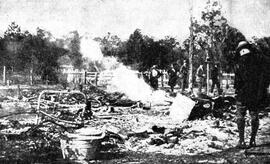
The Rosewood Massacre was a racially motivated attack on the predominantly African American town of Rosewood, Florida, in January 1923. Sparked by false accusations and fueled by racial tensions under Jim Crow segregation, white mobs destroyed homes, churches, and businesses, forcing residents to flee and permanently abandon the town. For decades, the event remained largely suppressed in public memory until renewed attention in 1982 by journalist Gary Moore prompted survivors and descendants to seek justice. Their efforts led to a state investigation and compensation legislation, marking one of the first instances of reparations for racial violence in the United States.

Archival Description:
The Rosewood Massacre Papers Collection spans 35 boxes with materials dating from 1900 to 1996 and documents the historical, legal, and commemorative efforts surrounding the 1923 massacre. The collection includes narrative reports, multiple versions of documented histories, survivor affidavits, administrative files, correspondence, interview transcripts, handwritten notes, vital records such as birth certificates, census records including the 1920 U.S. Census, property records such as Levy County deed indexes, and materials related to claims verification.

Folders within the collection contain complete narrative reports and reproduced copies used for research, review, and preservation; affidavits from survivors including Bertha Fagin, Ivory T. Fuller, Vera G. Goins Hamilton, Thelma Hawkins, and Dorothy G. Hosey; correspondence from agencies such as the Florida State Department of Health and Rehabilitative Services and Offices of Vital Statistics; as well as administrative communications, genealogical documentation, and evidentiary records supporting compensation claims.

Collectively, these materials document both the historical reconstruction of the Rosewood Massacre and the legal and administrative processes undertaken to verify survivors, establish lineage, and secure restitution.
Southern Workman Collection
Meek-Eaton Archival Collection MS_0118 · 1910 - 1939

Location: AC.6.B.4.3.4 - AC.6.B.4.3.8

The Southern Workman Collection consists of five boxes of materials dating from 1910 to 1939, documenting a significant period in the publication history of The Southern Workman. Published monthly by the Hampton Institute Press at Hampton Institute (now Hampton University), the magazine originated in 1872 as Southern Workman and Hampton School Record and served as an important platform for education, culture, and social commentary.

The collection includes issues of the magazine featuring articles, lectures, essays, and book reviews that reflect the intellectual and cultural life of the institution. Content highlights the activities of Hampton Institute, including information about its faculty, students, and graduates, while also addressing broader social issues of the time.

With a primary focus on African American and Native American history, the materials provide valuable insight into educational practices, cultural expression, and social conditions in the early twentieth century. Collectively, the collection illustrates the role of The Southern Workman as a key publication in advancing knowledge and documenting the experiences and contributions of marginalized communities.

Meek-Eaton Archival Collection MS_0071 · File

Location: AC.2.B.2.4.4 - AC.2.B.3.1.3

Arthenia L. Joyner born 1943 in Lakeland, Florida, and raised in Tampa. She emerged as a leader during the Civil Rights Movement, participating in protests as both a high school and college student at Florida A&M University. Joyner attended the original FAMU College of Law, graduating in 1968, and went on to break significant barriers as the first Black woman to practice law in Hillsborough County and the first African American to practice law in Polk County. She later served as a legislative aide to State Representative Joe Lang Kershaw, the first Black legislator in Florida since Reconstruction, and was elected to three terms in the Florida House of Representatives representing the 59th District.

The Senator Arthenia L. Joyner Collection consists of eight boxes of materials documenting her career in law, public service, and civil rights advocacy. The collection includes correspondence, meeting records, travel documents, and speeches that reflect her work as an attorney, legislative aide, and elected official.

These materials provide insight into Joyner’s role in shaping public policy, her legislative activities, and her engagement with constituents and colleagues. The collection also highlights her involvement in civil rights initiatives and her contributions to expanding opportunities for African Americans in the legal and political arenas. Collectively, the records document her impact on Florida’s political landscape and her legacy as a pioneering African American woman in law and government.

Meek-Eaton Archival Collection MS_0017 · Collection

Location: AC.3.A.3.5.6

The Reverend Elvis W. Spearman Collection consists of one box of materials documenting the professional and spiritual life of Rev. Elvis W. Spearman. Spearman served as postmaster at Florida A&M University until his retirement in 1964 and also held the role of hospital chaplain from 1955 to 1964. He earned an A.B. degree from Legal College and pursued additional studies at Florida A&M University, the University of Chicago, and Deering Community Center.

The collection primarily contains speeches and sermons delivered by Rev. Spearman, reflecting his work in ministry and his engagement with religious and community life. Most of the materials are undated, though they provide valuable insight into his theological perspectives, public speaking, and role as a spiritual leader.

In addition to sermons, the collection includes a small number of documents related to his administrative duties at Florida A&M University. Collectively, these materials offer a glimpse into Spearman’s dual roles in institutional service and religious leadership, highlighting his contributions to the university and its broader community.

Meek-Eaton Archival Collection MS_0022 · Collection

Location: AC.2.B.2.3.2 - AC.2.B.2.3.5

Reverend Dr. James L. Hudson, Sr. (1904–1980) was a minister, educator, and civil rights leader. Born in Birmingham, Alabama, he graduated from Morehouse College in 1926 and later earned a divinity degree from Colgate-Rochester School of Religion in 1931. He served as a chaplain at Leland College until 1946 before completing doctoral studies at Boston College. Dr. Hudson later joined Florida A&M University as a chaplain and professor, where he founded the Department of Religion and Philosophy and served as its first chair. A close associate of Rev. Charles K. Steele, he played a key role in civil rights efforts, including the 1956 Tallahassee Bus Boycott, and was active in organizations such as the Tallahassee Ministerial Alliance and the Inter-Civic Council.

The Reverend Dr. James Hudson, Sr. Collection documents Hudson’s career in ministry, education, and civil rights activism. The collection contains materials related to his work at Florida A&M University, including records associated with the establishment of the Department of Religion and Philosophy, as well as documents reflecting his role as a chaplain and educator.

Additional materials highlight his involvement in civil rights initiatives in Tallahassee, including his collaboration with local religious and community leaders. The collection may include correspondence, sermons, speeches, and organizational records that illustrate his leadership in religious and civic life. Collectively, these materials provide insight into Hudson’s lasting contributions to higher education, faith leadership, and the advancement of social justice.

Meek-Eaton Archival Collection MS_0116 · 1956 - 1973

Location: AC.3.B.1.4.4 - AC.3.B.1.5.1

The Mrs. Willie Ziegler White Collection consists of 5 boxes of materials documenting her involvement in education and parent-teacher organizations, particularly within the Florida State Congress of Colored Parents and Teachers and related networks. The collection reflects her role as an educator and community leader engaged in advancing African American education and parental involvement during the era of segregation.

The collection includes correspondence, news clippings, directories, handbooks, ledgers, notepads, and record books, as well as files related to Parent Teacher Association activities. These materials document both administrative functions and community outreach efforts. Also included are records from affiliated organizations such as the National Congress of Colored Parents and Teachers, the National Convention of Christians and Jews, and the Georgia Congress of Colored Parents and Teachers.

Additional materials consist of songs, poems, manuals, publications, and magazines that reflect the educational, cultural, and organizational priorities of the groups with which Mrs. White was associated. Correspondence within the collection highlights communication between educators, administrators, and community members involved in improving educational opportunities.

Collectively, the collection provides insight into the leadership, organization, and advocacy efforts of African American educators and parent organizations, as well as the broader network of institutions working to support Black education in the early to mid-twentieth century.

Kimberly Brown Collection
Meek-Eaton Archival Collection MS_0026 · Collection

Location: AC.1.B.1.4.8

Dr. Kimberly Brown Pellum is a historian, author, and two-time Florida A&M University alumna, as well as a former “Miss FAMU” pageant queen. She serves as an assistant professor of history at Florida A&M University and is the founding director of MuseumofBlackBeauty.com, a digital public history initiative. Her scholarship focuses on twentieth-century African American women, beauty culture, southern history, and freedom movements. Dr. Pellum has contributed to major public history institutions, including the Smithsonian National Museum of American History, the National Park Service, and the Rosa Parks Museum. She is the author of Black Beauties: African American Pageant Queens in the Segregated South and Queen Like Me: The True Story of Girls Who Changed the World.

The Kimberly Brown Collection consists of one box of materials centered on Queen Like Me: The True Story of Girls Who Changed the World. The collection includes multiple copies of the publication as well as related materials such as children’s worksheets and miscellaneous documents associated with the book.

These materials reflect Dr. Pellum’s work in public history and youth education, emphasizing themes of empowerment, representation, and African American girlhood. The collection provides insight into the development and educational use of the publication, highlighting its role in promoting positive identity and historical awareness among young readers.

Meek-Eaton Archival Collection MS_0005 · Collection · 1948 - 2001

Location:AC.1.B.1.4.1 - AC.1.B.1.4.2

The Julian “Cannonball” Adderley Memorial Jazz Collection documents the life, career, and legacy of renowned jazz saxophonist Cannonball Adderley. The collection includes both archival records and museum objects relating to Adderley’s professional achievements, public recognition, and cultural influence.

Materials in the collection consist of awards, photographs, publications, magazines, newspaper articles, sheet music, recordings, correspondence, and exhibit artifacts. Several items relate directly to Adderley’s connection with Florida A&M University, including his academic degree and alumni publications. Additional materials document his musical career, honors, memorial recognitions, and media coverage following his illness and death.

The collection also contains museum exhibit items, including plaques, medals, framed artwork, photographs, and audio recordings associated with Adderley and his brother Nat Adderley. Printed sources such as magazines and newspapers highlight his role in jazz history and the broader cultural recognition of his contributions to American music. The collection is arranged by subject and material type. Printed materials and memorabilia were first sorted by format, then organized alphabetically and placed in acid-free folders and boxes for long-term preservation.

Meek-Eaton Archival Collection MS_0009 · Collection

Location: AC.8.B.1.1.1-AC.8.B.1.1.3

Joseph “Joe” Lang Kershaw, Sr. (June 27, 1911–November 7, 1999) was the first African American elected to the Florida Legislature since Reconstruction. Born in Live Oak, Florida, he attended Florida A&M University in the 1930s, where he was involved in early campus life, including the beginnings of the football program, and pledged Kappa Alpha Psi. He later worked as a teacher in Miami-Dade County and as a janitor in the Florida Legislature before entering politics. Elected to the Florida House of Representatives in 1968, Kershaw served for fourteen years and chaired the Elections Committee, contributing to the establishment of the Florida Human Rights Commission.

The Joseph Lang Kershaw, Sr. Collection documents Kershaw’s life, career, and contributions to Florida’s political and educational history. The collection contains materials related to his personal and academic background, as well as records reflecting his tenure in the Florida House of Representatives.

Included are documents that highlight his legislative work, professional activities, and community involvement. The collection also contains materials pertaining to his family, including references to his father, A. J. Kershaw, as well as correspondence and documents related to colleagues and contemporaries such as Gwendolyn Cherry and Althea Gibson. Collectively, these records provide insight into Kershaw’s role as a pioneering African American legislator and his broader impact on civil rights and public service in Florida.

John F. Matheus Collection
Meek-Eaton Archival Collection MS_0056 · File · 1909-1983

Location: AC.2.B.3.6.2 - AC.3.A.1.2.8

John Frederick Matheus was an American writer and a scholar who was active during the Harlem Renaissance in the 1920s. He is well known for his short stories, and he also wrote essays, plays and poetry. His story "Fog" won first place in Opportunity magazine's literary contest in 1925 and was published that same year in Alain Locke's famous anthology The New Negro. Matheus won first prize in the Crisis magazine's contest in 1926 with his story "Swamp Moccasin". His works were influenced by Harriet Beecher Stowe's Uncle Tom's Cabin, Edgar Allan Poe's tales, and the writings of Phillis Wheatley and Paul Laurence Dunbar. This collection contains personal items, photographs, correspondence, and original manuscripts, newspaper articles, and notes by Matheus.

John F. Matheus