Affichage de 21 résultats

Description archivistique
6 résultats avec objets numériques Afficher les résultats avec des objets numériques
Chester L. Davis, Sr. Collection
Meek-Eaton Archival Collection MS_0016 · Collection · 1942 - 2017

Location: AC.8.B.1.6.2

This file documents the life, military service, and posthumous recognition of Chester Lee Davis, Sr., one of the pioneering African American Marines trained at Montford Point during World War II. Spanning the years 1942 to 2017, this collection provides valuable insight into both Davis’s individual experiences and the broader historical significance of African American service members who served under segregated conditions in the United States Marine Corps.

Chester Lee Davis, Sr. (1923–1981) was born in Quincy, Florida, to Tommie and Iola Davis and was raised in a large farming family. Prior to the outbreak of World War II, his family relocated to Orlando, Florida. In 1943, at the age of eighteen, Davis enlisted in the United States Marine Corps, becoming part of the first generation of African American Marines admitted into service. Due to racial segregation, he trained at Montford Point Camp in North Carolina, a facility established specifically for Black Marines and located near Camp Lejeune, where white Marines trained. Despite facing systemic discrimination and harsh conditions, Davis served with distinction as a member of the 2nd and 3rd Marine Depot Companies. His responsibilities included transporting ammunition and supplies to troops on the frontlines, and he later participated in combat operations throughout the Pacific theater, including assignments in New Caledonia, Guadalcanal, the Solomon Islands, the Marshall Islands, Guam, and Okinawa. After completing his service, Davis returned home as a corporal and lived in Gadsden County, Florida, where he raised a family. He passed away in 1981 at the age of 58. In 2011, his service, along with that of fellow Montford Point Marines, was formally recognized when the United States Congress awarded them the Congressional Gold Medal, a distinction signed into law by President Barack Obama.

Donated to the Meek-Eaton Black Archives by Chester L. Davis, Jr. on June 13, 2017, the collection reflects a deliberate effort to preserve and share the legacy of Davis and other Montford Point Marines. The materials within the collection collectively document Davis’s military career, his contributions during World War II, and the national, state, and local recognition he received posthumously. The collection includes correspondence, legislative recognitions from the United States Congress, the State of Florida, and the City of Quincy, news articles, photographs depicting medals, military service, and commemorative events, as well as official service records and cassette tapes. These materials not only highlight Davis’s individual achievements but also situate his experiences within the broader narrative of African American military service and the struggle for equality within the armed forces.

At the time of processing in February 2017, the collection lacked an original order. As a result, the materials were organized by subject matter and date, then arranged alphabetically and housed in acid-free folders within a single archival storage box. Where applicable, items within individual files have been arranged chronologically to preserve contextual relationships. The collection was processed and cataloged by Dr. Murell Dawson, Senior Archivist, with assistance from undergraduate intern Shaarnè Morris, and is currently stored in the archival storage area on the third floor. As a cohesive body of records, this collection provides an important resource for understanding the experiences of Montford Point Marines and the enduring legacy of their service, sacrifice, and recognition within American military and social history.

Arthur L. Kidd Collection
Meek-Eaton Archival Collection MS_0013 · Collection · 1934 - 1967

Location: AC.2.B.3.2.2- AC.2.B.3.2.5

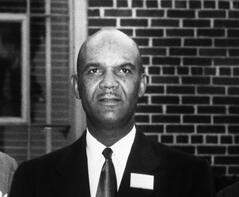
This collection consists of personal papers from Florida A&M University’s Arthur L. Kidd. Kidd, a native of Pennsylvania, earned a B.A. degree in 1924 from the University of Michigan, and in 1929, a Masters of Arts degree from Columbia University. Kidd also did additional studying at the University of Iowa, Columbia University, and New York University. He began his teaching career at Tuskegee Institute in 1924 before accepting a position at Florida A&M College (FAMCEE) in 1925 as Principal of the High School. Kidd worked at FAMCEE until 1944. During his nineteen years of service to the college, Kidd worked in numerous positions, including: Head of the Department of History, Acting Director of the Extension Division, Acting Dean for the College of Arts and Sciences and College Registrar. In October 1944, Kidd left his position at FAMCEE to work with the United Nations Relief and Rehabilitation Administration, where he worked in various capacities in Washington, D.C., and abroad in locations including France, Germany, and Holland. He returned to the United States in 1950 and worked for a year at Maryland State College before accepting a second appointment at FAMCEE in 1951 as Director of the Division of Social Studies. Upon the college reaching university status in 1954, in the academic re-organization, Kidd consequently became the Associate Dean of the College of Arts and Sciences. Until 1969, he served FAMU in various capacities, including director of institutional studies and director of university administrative planning.

The material type in this collection were mainly magazines, news articles, and news clippings from 1949-19687 that followed local and national events affecting Negro people and occurrences impacting their lives. The records of this collection are especially important and informative in that they as resources that document firsthand the many historic events that occurred during the American Negro Civil Rights Years. Most of the records document the passing of school integration and public desegregation legislation, mass boycotts, sit-ins, and other forms of protest, as well as the brutal, nationwide social turbulence that accompanied this period. Additionally, a small amount of materials related to Kidd's instructional duties at FAMU are included.

Biographical data and inclusive subjects were acquired from Murell Dawson circa 2002.

Joseph Lang Kershaw, Sr. Collection
Meek-Eaton Archival Collection MS_0009 · Collection

Location: AC.8.B.1.1.1-AC.8.B.1.1.3

Joseph “Joe” Lang Kershaw, Sr. (June 27, 1911–November 7, 1999) was the first African American elected to the Florida Legislature since Reconstruction. Born in Live Oak, Florida, he attended Florida A&M University in the 1930s, where he was involved in early campus life, including the beginnings of the football program, and pledged Kappa Alpha Psi. He later worked as a teacher in Miami-Dade County and as a janitor in the Florida Legislature before entering politics. Elected to the Florida House of Representatives in 1968, Kershaw served for fourteen years and chaired the Elections Committee, contributing to the establishment of the Florida Human Rights Commission.

The Joseph Lang Kershaw, Sr. Collection documents Kershaw’s life, career, and contributions to Florida’s political and educational history. The collection contains materials related to his personal and academic background, as well as records reflecting his tenure in the Florida House of Representatives.

Included are documents that highlight his legislative work, professional activities, and community involvement. The collection also contains materials pertaining to his family, including references to his father, A. J. Kershaw, as well as correspondence and documents related to colleagues and contemporaries such as Gwendolyn Cherry and Althea Gibson. Collectively, these records provide insight into Kershaw’s role as a pioneering African American legislator and his broader impact on civil rights and public service in Florida.

History of FAMU
Meek-Eaton Archival Collection AR_0007

For more than 130 years, Florida A&M University has served the citizens of the State of Florida and the nation by providing preeminent educational programs...programs that were the building blocks of a legacy of academic excellence with caring. FAMU, “Florida’s Opportunity University,” is committed to meeting the challenges and needs of future generations.

In 1884, Thomas Van Renssaler Gibbs, a Duval County educator, was elected to the Florida legislature. Although his political career ended abruptly because of the resurgence of segregation, Representative Gibbs successfully orchestrated the passage of House Bill 133 in 1884. This bill established a white normal school in Gainesville and a school for African Americans in Jacksonville. The bill passed, creating both institutions; however, the state decided to relocate the school for African Americans to Tallahassee.

After the bill’s passage, FAMU was founded on October 3, 1887. It began classes with 15 students and two (2) instructors. Thomas DeSaille Tucker (1887-1901), an attorney from Pensacola, was chosen as the first president. Former State Representative Gibbs joined Mr. Tucker as the second faculty member.

In 1891, the College received $7,500 under the Second Morrill Act for agricultural and mechanical arts education. The State Normal College for Colored Students became Florida’s land grant institution for African Americans, and its name was changed to the State Normal and Industrial College for Colored Students.

In 1905, the management of the College was transferred from the Board of Education to the Board of Control. This significant event officially designated the College as an institution of higher education.
In 1909 the name was changed from The State Normal College for Colored Students to Florida Agricultural and Mechanical College for Negroes (FAMC). The following year, with an enrollment of 317 students, the college awarded its first degrees.

President Nathan B. Young (1901-1923) directed the growth of the College to a four-year degree-granting institution, despite limited resources, offering the Bachelor of Science degree in education, science, home economics, agriculture, and mechanical arts.

Under the administration of John Robert Edward Lee Sr. (1924-1944), the College acquired much of the physical and academic image it has today. More faculty were hired, courses were upgraded, and accreditation was received from several state agencies. By the end of Lee’s term, FAMC had 812 students and 122 staff members.

In 1949, under William H. Gray Jr. (1944-1949), expansion and reorganization continued. The College obtained an Army ROTC unit, and student enrollment grew to more than 2,000.

D. E. Williams Collection
Meek-Eaton Archival Collection MS_0123

Location: AC.8.A.3.3.1 - AC.8.A.3.4.4

DeWitt Everett Williams served as the State Agent of Negro Schools in Florida from 1927 to 1962 under the Florida Department of Education. In this role, he was responsible for overseeing and supporting the development of African American education during the era of segregation. His work placed him in direct contact with schools across the state, documenting their conditions, operations, and communities during a critical period in the history of public education in Florida.

The D. E. Williams Collection consists of six boxes of materials documenting African American education in Florida during the Jim Crow era. The collection primarily contains photographs of segregated African American schools across the state, reflecting both rural and urban educational environments. These images provide visual documentation of school buildings, classrooms, students, and faculty, offering insight into the conditions and experiences within segregated educational systems.

The photographs are arranged alphabetically by county, facilitating geographic access and highlighting regional differences in school infrastructure and resources. Collectively, the collection serves as an important resource for understanding the historical landscape of African American education in Florida and the broader social and institutional context of segregation in the twentieth century.

Meek-Eaton Archival Collection MS_0014 · Collection · 2015 - 2021

Location: AC.8.A.2.2.4

The Attorney Armstrong Purdee Collection documents the life, legacy, and historical significance of one of Jackson County’s earliest African American legal professionals. The collection contains photographs, commemorative materials, newspaper articles, publications, and digital resources that highlight Purdee’s professional accomplishments and the lasting impact of his work within the community.

Materials include images of commemorative events, a photograph of Purdee’s gravesite, and newspaper coverage discussing his life and contributions. The collection also contains publications related to African American history in Jackson County, including a family reunion cookbook and a scrapbook documenting the legacy of African Americans in the region.

In addition to printed materials, the collection includes a video link documenting a Black History Month program featuring the Jackson County NAACP and the Jackson County School Board. Together, these materials provide insight into community efforts to preserve the historical legacy of Attorney Armstrong Purdee and the broader history of African American leadership and civic engagement in Jackson County, Florida.

The collection is arranged in a single box and organized by subject and material type, including commemorations, news articles, photographs, and publications related to Attorney Armstrong Purdee.

Reverend Elvis W. Spearman Collection
Meek-Eaton Archival Collection MS_0017 · Collection

Location: AC.3.A.3.5.6

The Reverend Elvis W. Spearman Collection consists of one box of materials documenting the professional and spiritual life of Rev. Elvis W. Spearman. Spearman served as postmaster at Florida A&M University until his retirement in 1964 and also held the role of hospital chaplain from 1955 to 1964. He earned an A.B. degree from Legal College and pursued additional studies at Florida A&M University, the University of Chicago, and Deering Community Center.

The collection primarily contains speeches and sermons delivered by Rev. Spearman, reflecting his work in ministry and his engagement with religious and community life. Most of the materials are undated, though they provide valuable insight into his theological perspectives, public speaking, and role as a spiritual leader.

In addition to sermons, the collection includes a small number of documents related to his administrative duties at Florida A&M University. Collectively, these materials offer a glimpse into Spearman’s dual roles in institutional service and religious leadership, highlighting his contributions to the university and its broader community.

Julian "Cannonball" Adderley Collection
Meek-Eaton Archival Collection MS_0005 · Collection · 1948 - 2001

Location:AC.1.B.1.4.1 - AC.1.B.1.4.2

The Julian “Cannonball” Adderley Memorial Jazz Collection documents the life, career, and legacy of renowned jazz saxophonist Cannonball Adderley. The collection includes both archival records and museum objects relating to Adderley’s professional achievements, public recognition, and cultural influence.

Materials in the collection consist of awards, photographs, publications, magazines, newspaper articles, sheet music, recordings, correspondence, and exhibit artifacts. Several items relate directly to Adderley’s connection with Florida A&M University, including his academic degree and alumni publications. Additional materials document his musical career, honors, memorial recognitions, and media coverage following his illness and death.

The collection also contains museum exhibit items, including plaques, medals, framed artwork, photographs, and audio recordings associated with Adderley and his brother Nat Adderley. Printed sources such as magazines and newspapers highlight his role in jazz history and the broader cultural recognition of his contributions to American music. The collection is arranged by subject and material type. Printed materials and memorabilia were first sorted by format, then organized alphabetically and placed in acid-free folders and boxes for long-term preservation.

Genevieve J. Wheeler Thomas Collection
Meek-Eaton Archival Collection MS_0105 · Dossier · 1949 - 1960

Location: AC.3.B.1.3.5 - AC.3.B.1.4.3

Genevieve Josephine Wheeler Thomas (1914–December 24, 2006) was an educator whose career spanned 36 years in the field of home economics. She served as a classroom instructor before becoming Dean of the School of Home Economics, where she played a significant role in advancing academic programming and facilities. During her administration, notable developments included the construction and furnishing of a new Home Economics annex within the Perry-Paige Agriculture and Home Economics Building. She concluded her tenure in 1977 after returning to classroom instruction, leaving a lasting impact on both students and institutional growth.

The Genevieve J. Wheeler Thomas Collection consists of three boxes of materials dating from 1949 to 1960, documenting her professional contributions to education and academic administration. The collection includes instructional materials, meeting minutes, correspondence, and related documents that reflect her work as both an educator and administrator.

These materials provide insight into curriculum development, departmental operations, and the evolution of home economics education during the mid-twentieth century. The collection also highlights Wheeler Thomas’s leadership and involvement in institutional planning, particularly during a period of expansion and modernization. Collectively, the records offer valuable documentation of her career and the broader educational landscape in which she served.

MS_0117

Location: AC.6.A.1.3.2 - AC.6.A.1.6.4

The Florida Counties Black Community News Collection consists of twenty boxes of materials documenting African American community life across Florida through local newspaper coverage. The collection contains newspaper articles and advertisements highlighting a wide range of events and experiences, including social gatherings, community programs, obituaries, and wedding announcements.

The materials are organized by county, providing a geographically structured view of Black life in various regions throughout the state. This arrangement allows for comparative research and offers insight into both shared and unique community experiences across Florida.

The collection serves as a valuable resource for understanding the social, cultural, and personal histories of African American communities, capturing everyday moments that are often underrepresented in traditional historical records. Through its focus on local news and announcements, the collection preserves the voices, relationships, and milestones that shaped community identity and cohesion across generations.