
Showing 5 results

Archival description
1 results with digital objects Show results with digital objects
Arthur L. Kidd Collection
Meek-Eaton Archival Collection MS_0013 · Collection · 1934 - 1967

Location: AC.2.B.3.2.2- AC.2.B.3.2.5

This collection consists of personal papers from Florida A&M University’s Arthur L. Kidd. Kidd, a native of Pennsylvania, earned a B.A. degree in 1924 from the University of Michigan, and in 1929, a Masters of Arts degree from Columbia University. Kidd also did additional studying at the University of Iowa, Columbia University, and New York University. He began his teaching career at Tuskegee Institute in 1924 before accepting a position at Florida A&M College (FAMCEE) in 1925 as Principal of the High School. Kidd worked at FAMCEE until 1944. During his nineteen years of service to the college, Kidd worked in numerous positions, including: Head of the Department of History, Acting Director of the Extension Division, Acting Dean for the College of Arts and Sciences and College Registrar. In October 1944, Kidd left his position at FAMCEE to work with the United Nations Relief and Rehabilitation Administration, where he worked in various capacities in Washington, D.C., and abroad in locations including France, Germany, and Holland. He returned to the United States in 1950 and worked for a year at Maryland State College before accepting a second appointment at FAMCEE in 1951 as Director of the Division of Social Studies. Upon the college reaching university status in 1954, in the academic re-organization, Kidd consequently became the Associate Dean of the College of Arts and Sciences. Until 1969, he served FAMU in various capacities, including director of institutional studies and director of university administrative planning.

The material type in this collection were mainly magazines, news articles, and news clippings from 1949-19687 that followed local and national events affecting Negro people and occurrences impacting their lives. The records of this collection are especially important and informative in that they as resources that document firsthand the many historic events that occurred during the American Negro Civil Rights Years. Most of the records document the passing of school integration and public desegregation legislation, mass boycotts, sit-ins, and other forms of protest, as well as the brutal, nationwide social turbulence that accompanied this period. Additionally, a small amount of materials related to Kidd's instructional duties at FAMU are included.

Biographical data and inclusive subjects were acquired from Murell Dawson circa 2002.
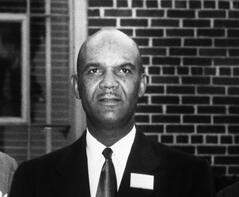
Meek-Eaton Archival Collection MS_0016 · Collection · 1942 - 2017

Location: AC.8.B.1.6.2

This file documents the life, military service, and posthumous recognition of Chester Lee Davis, Sr., one of the pioneering African American Marines trained at Montford Point during World War II. Spanning the years 1942 to 2017, this collection provides valuable insight into both Davis’s individual experiences and the broader historical significance of African American service members who served under segregated conditions in the United States Marine Corps.

Chester Lee Davis, Sr. (1923–1981) was born in Quincy, Florida, to Tommie and Iola Davis and was raised in a large farming family. Prior to the outbreak of World War II, his family relocated to Orlando, Florida. In 1943, at the age of eighteen, Davis enlisted in the United States Marine Corps, becoming part of the first generation of African American Marines admitted into service. Due to racial segregation, he trained at Montford Point Camp in North Carolina, a facility established specifically for Black Marines and located near Camp Lejeune, where white Marines trained. Despite facing systemic discrimination and harsh conditions, Davis served with distinction as a member of the 2nd and 3rd Marine Depot Companies. His responsibilities included transporting ammunition and supplies to troops on the frontlines, and he later participated in combat operations throughout the Pacific theater, including assignments in New Caledonia, Guadalcanal, the Solomon Islands, the Marshall Islands, Guam, and Okinawa. After completing his service, Davis returned home as a corporal and lived in Gadsden County, Florida, where he raised a family. He passed away in 1981 at the age of 58. In 2011, his service, along with that of fellow Montford Point Marines, was formally recognized when the United States Congress awarded them the Congressional Gold Medal, a distinction signed into law by President Barack Obama.

Donated to the Meek-Eaton Black Archives by Chester L. Davis, Jr. on June 13, 2017, the collection reflects a deliberate effort to preserve and share the legacy of Davis and other Montford Point Marines. The materials within the collection collectively document Davis’s military career, his contributions during World War II, and the national, state, and local recognition he received posthumously. The collection includes correspondence, legislative recognitions from the United States Congress, the State of Florida, and the City of Quincy, news articles, photographs depicting medals, military service, and commemorative events, as well as official service records and cassette tapes. These materials not only highlight Davis’s individual achievements but also situate his experiences within the broader narrative of African American military service and the struggle for equality within the armed forces.

At the time of processing in February 2017, the collection lacked an original order. As a result, the materials were organized by subject matter and date, then arranged alphabetically and housed in acid-free folders within a single archival storage box. Where applicable, items within individual files have been arranged chronologically to preserve contextual relationships. The collection was processed and cataloged by Dr. Murell Dawson, Senior Archivist, with assistance from undergraduate intern Shaarnè Morris, and is currently stored in the archival storage area on the third floor. As a cohesive body of records, this collection provides an important resource for understanding the experiences of Montford Point Marines and the enduring legacy of their service, sacrifice, and recognition within American military and social history.

D. E. Williams Collection
Meek-Eaton Archival Collection MS_0123

Location: AC.8.A.3.3.1 - AC.8.A.3.4.4

DeWitt Everett Williams served as the State Agent of Negro Schools in Florida from 1927 to 1962 under the Florida Department of Education. In this role, he was responsible for overseeing and supporting the development of African American education during the era of segregation. His work placed him in direct contact with schools across the state, documenting their conditions, operations, and communities during a critical period in the history of public education in Florida.

The D. E. Williams Collection consists of six boxes of materials documenting African American education in Florida during the Jim Crow era. The collection primarily contains photographs of segregated African American schools across the state, reflecting both rural and urban educational environments. These images provide visual documentation of school buildings, classrooms, students, and faculty, offering insight into the conditions and experiences within segregated educational systems.

The photographs are arranged alphabetically by county, facilitating geographic access and highlighting regional differences in school infrastructure and resources. Collectively, the collection serves as an important resource for understanding the historical landscape of African American education in Florida and the broader social and institutional context of segregation in the twentieth century.

MS_0040

Location: AC.2.A.1.5.7

Patricia Stephens Due (1939–2012) was a prominent civil rights activist and leader in the movement for racial equality, particularly in Florida. Born in Quincy, Florida, she became actively involved in the struggle against segregation while a student at Florida A&M University. As a key member of the Congress of Racial Equality (CORE), Due helped organize sit-ins and protests, including the historic 1960 Tallahassee “jail-in,” where she and other students chose imprisonment over paying fines for challenging segregation laws.
Throughout her life, Due remained committed to civil rights advocacy, working to desegregate public spaces and increase voter registration among African Americans. She later co-authored Freedom in the Family with her daughter, documenting her experiences in the movement. Her legacy endures as a symbol of courage, resilience, and lifelong dedication to justice.

https://www.thehistorymakers.org/biography/patricia-stephens-due-41

FAMU Hospital Collection
AR_0007_007 · 1931 - 1981

Location: R.4.A.4.1.1

The FAMU Hospital first started in 1911 as a sanitorium supervised by Nurse Virginia Hilyer. For many years this clinic served the student population and when an annex was added to the hospital in 1922 services were opened to the larger Tallahassee community, with services provided by doctors from all over the city to all ethnicities. African American physicians in Tallahassee also served at the hospital including, Drs. William G. Gunn, Alpha Omega Campbell, and L.H.B. Foote.

It was under L. H. B. Foote's directorship that the first annual Medical Clinic was hosted on campus in 1926. The Medical Clinic was created to host informational presentations and networking between medical professionals and education groups and later fused with Florida A&M Clinical Association. The clinical association's focus on sharing knowledge, resources, and training opportunities to medical professionals throughout Florida, Georgia, and Alabama added to the overall goal of getting modern medical care to Black patients.
The 1930s saw several initiatives blooming at the campus hospital; continued expansions to the hospital, the campaign to add a nursing training facility, and partnerships with the Florida State Board of Health to host midwife training workshops all created an air of growth, advancement, and modernity. It took twenty ear and two university presidents (J.R.E. Lee and George W. Gore) to establish the full hospital and nurse training unit on the basis of the already existing hospital that would serve African Americans from Tallahassee and surrounding counties.

It took federal grants, support from the Tallahassee City Commission, and a capital campaign that included donations from various civic leagues and from a stymied effort to build a Black hospital in Jacksonville to gather the $2,000,000 needed for the facility but finally it was done. The grand opening was opening liberally celebrated.

Through the 1960s, the FAMU Hospital continued to serve the community but advancements in civil rights for African Americans had a surprising adverse affect--in the effort to integrate both Tallahassee Memorial Hospital and FAMU Hospital both institutions were issued orders to integrate, which should not have been a problem for FAMU Hospital since it had always employed both Black and White doctors and been open to all patients. However, withdrawal of state and federal financial support for the hospital and accusations of mismanagement of funds began to compromise it's efficacy and by the end of the decade plans were already in motion for its closure. The hospital officially closed in 1971 and in 1981 the building housing the hospital was remodeled and rededicated as the Foote-Hilyer Administration Building, containing the University's administrative offices and Student Health Services.

This collection comprises primarily correspondence, reports, and publications of the FAMU Hospital Fund Committee--tasked with raising and organizing funds for the hospital expansion of 1951, and administrative records of the Hospital Advisory Board--tasked with governing the FAMU Hospital during its existence from 1951 to 1971. Much of the correspondence is to or from Dr. George W. Gore, FAMU's eighth University President. Other figures of note are then-Senator Leroy Collins, who served as the Chairman of the Advisory Board; Dr. LH.B. Foote who also served on the Hospital Advisory Board. Other organizations and offices whose activities are recorded in this collection are FAMU Clinical Association; the Board of Regents; the Board of Control; Leon County; and the City of Tallahassee as it relates to the establishment, management, and dissolution of the FAMU Hospital.

Some of the significant topics represented in these files are the complexities of desegregation and integration; Black hospital management; public health; nurse training and education; professional development; fundraising.

Items were arranged in series by type of communication object, sorted into folders chronologically, and each series arranged alphabetically. Attachments are listed alphanumerically starting with the item number of the document they were originally attached to. All hardware was removed and documents sleeved. Some documents will require flattening, cleaning, and other conservation efforts.